Key Takeaways
- Tree removal leaves behind compacted, nutrient-depleted soil that grass seed cannot survive in without proper preparation.
- Stump grinding creates wood chip debris that ties up nitrogen in the soil, making topsoil application essential before seeding.
- Skipping topsoil after tree removal is one of the most common reasons newly seeded lawns fail to establish.
- The right grass seed blend for Pittsburgh’s climate makes a measurable difference in long-term lawn density and durability.
- Professional restoration after tree removal protects your property value and prevents erosion on sloped Pittsburgh lots.
Most homeowners think the job is done once a tree comes down and the stump is ground. The crew packs up, debris disappears, and there’s nothing left but a bare patch of earth. It looks like a blank canvas. The reality is that what’s underneath is anything but ready for new growth.
Tree removal, especially combined with stump grinding, leaves behind soil that is compacted, structurally disrupted, and stripped of the organic material grass needs to take root. Scatter seed over that bare patch and call it done, and you’re headed toward thin, patchy grass at best and a muddy, eroded mess at worst.
What Tree Removal Actually Does to Your Soil
A mature tree’s root system holds soil in place, channels water deep into the ground, and creates pathways for air and organic matter to move through the earth. When the tree is removed and the stump ground down, those root channels collapse. The soil shifts. Gaps form underground as old roots decay, and the ground can settle unevenly for months.
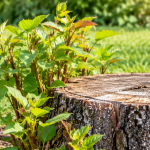
Stump grinding compounds the problem. The process shreds wood and root material into chips, mixed into the top several inches of soil. Wood chips are high in carbon, and as they decompose, soil microbes consume significant nitrogen to break them down, nitrogen that would otherwise feed new grass. This nitrogen drawdown is one of the main reasons grass seed sown directly into a ground stump area fails to germinate or grows weakly and yellow.
The physical texture of stump debris is also wrong for grass seed. Healthy lawn establishment requires fine, firm soil with consistent moisture and seed-to-soil contact. Wood chip debris is coarse, drains unevenly, and creates air pockets that dry out before roots can establish.
Why Compaction Is a Bigger Problem in Pittsburgh
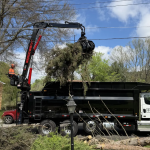
Pittsburgh’s soils skew heavily toward clay. Clay compacts easily under equipment weight and foot traffic. After a tree removal crew has worked a site, machinery, bucket trucks, and ground workers moving repeatedly over the same ground, the topsoil is often significantly compressed.
Compacted clay forms a near-impermeable layer that grass roots cannot penetrate. Even if the seed germinates at the surface, the roots hit a hard barrier within an inch or two and stop developing. The result is shallow-rooted grass that browns in summer heat, fails in drought, and pulls out easily under mowers.
Adding quality topsoil breaks this cycle. A two-to-four-inch layer worked lightly into the surface gives seed a loose, oxygen-rich environment, buffers the clay below, improves drainage, and provides a nutritional foundation that stump debris simply cannot offer.
Choosing the Right Seed for Western Pennsylvania
Pittsburgh’s climate, with humid summers, cold winters, ice loads, and heavy shade from older neighborhood canopies, rules out many seed blends. Cool-season grasses are the right foundation. Kentucky bluegrass offers excellent density and color but requires full sun. Tall fescue adapts better to clay soils and partial shade. Fine fescues handle heavy shade well. Most professional applications use a blend rather than a single variety, spreading risk across varying conditions on a single property.
Timing matters as much as variety. Late August through early October is the ideal Pittsburgh window. Soil temperatures are still warm enough for germination, but cooler air reduces heat stress on new seedlings. Spring seeding works as a secondary option, though summer heat often arrives before roots develop enough to survive it.
What Happens When You Skip This Step
The consequences are gradual but costly. Pittsburgh receives roughly 40 inches of annual precipitation, and bare soil erodes steadily. On sloped lots common from South Side to Mt. Washington to Fox Chapel, unprotected bare patches after tree removal can erode significantly within a single rainy season, creating channels, low spots, and sediment runoff onto neighboring properties.
Weeds colonize disturbed soil fast. Within one growing season, a skipped restoration area is often dominated by crabgrass, dandelions, and invasive species far harder to displace once established. Reclaiming that ground requires herbicide treatment, re-tilling, and a full seeding cycle, all costing considerably more than doing it right the first time. Unrestored patches also damage curb appeal and property value in ways that linger for years.
The Right Restoration Process
Proper restoration follows a clear sequence.
- First, remove or heavily dilute stump grinding debris; high wood chip concentrations must come out before topsoil goes down.
- Second, spread quality topsoil evenly and rake lightly to break the surface crust.
- Third, broadcast seed at the correct rate; too light leaves gaps, too heavy creates seedling competition.
- Fourth, lightly press the seed into the soil contact.
- Finally, maintain consistent moisture for the first several weeks through germination and early root establishment. Starter fertilizer applied at seeding provides phosphorus for early root development without triggering nitrogen problems that standard lawn fertilizers can cause when applied too early.
Protect Your Lawn with Tripoli Tree Care
If you’re looking to hire a professional tree service firm in Pennsylvania to get your tree removed, Tripoli Tree Care is the best choice to make. We handle every step, including topsoil and grass seeding restoration, after the work is done. Tripoli Tree Care is a locally-owned, ISA Certified Arborist-led company serving Allegheny County and surrounding areas, from Squirrel Hill and Mt. Lebanon to Fox Chapel and Wexford. Our crews use equipment built specifically for Pittsburgh’s steep, tight, clay-heavy terrain. After removal and stump grinding, we restore the site with quality topsoil and seed blends matched to the local climate so your lawn comes back faster, thicker, and built to last.
As ISA Certified Arborists and Tree Care Industry Association (TCIA) members, we provide wide range of services like – tree removal, tree trimming & pruning, tree maintenance, stump grinding, 24/7 emergency tree service, storm damage cleanup, debris removal, tree planting, shrub planting, commercial tree services, land clearing, and topsoil & grass seeding that ensure your new trees have the best start possible.
Every project comes with a workmanship guarantee, transparent pricing, full debris cleanup, and complete liability and workers’ compensation coverage. Financing is available, and estimates are always free. Schedule your free estimate today.
Frequently Asked Questions About Topsoil and Grass Seeding in Pittsburgh, Pennsylvania
Do I need topsoil after stump grinding?
Yes. Stump grinding leaves wood chip debris that depletes nitrogen and prevents healthy grass establishment. Quality topsoil provides the right foundation for germination.
What grass seed works best in Pittsburgh, Pennsylvania?
Cool-season blends of tall fescue, Kentucky bluegrass, and fine fescues perform best in Western Pennsylvania’s climate and clay-heavy soils.
When is the best time to seed after tree removal in Pittsburgh, PA?
Late August through early October is the optimal window for cool-season grass seeding in Pittsburgh.
Can I seed myself after tree removal?
You can, but surface preparation is essential. Seeding directly into raw stump grindings almost always produces poor results.
Will grass grow back on its own after tree removal?
Rarely well. Disturbed, compacted soil favors weed establishment over grass recovery in most cases.
How much topsoil do I need after tree removal?
Generally, two to four inches spread evenly over the bare area provides sufficient depth for healthy root development in Pittsburgh’s clay soils.
Summary Checklist: What Needs to Happen After Tree Removal
| Condition | Risk Level | Recommended Action |
| Stump debris present | High | Remove or dilute wood chip grindings before topsoil application |
| Compacted soil after equipment use | High | Loosen surface and add 2–4 inches of quality topsoil |
| Raw bare patch with no prep | Critical | Apply topsoil before any seeding to prevent germination failure |
| Wrong seed variety selected | Moderate | Choose cool-season blend suited to sun, shade, and clay conditions |
| Seeding outside optimal window | Moderate | Target late August through early October for Pittsburgh lawns |
| No starter fertilizer applied | Moderate | Use phosphorus-focused formula at seeding time |
| Insufficient watering after seeding | High | Keep seeded area consistently moist for 3–4 weeks |
| Bare patch left unrestored long-term | Critical | Address immediately to prevent weed colonization and erosion |
Final Advice
Pittsburgh’s tree removal season doesn’t slow down, and neither does the window for proper lawn restoration. Every week a bare patch sits unaddressed, compaction worsens, weeds gain ground, and erosion does quiet damage, especially on the sloped lots that define so much of Pittsburgh’s residential landscape. Topsoil and grass seeding are not optional finishing touches. They are the difference between a restored property and a problem that compounds season after season.
Doing it right the first time is almost always cheaper than reclaiming neglected ground a year later. If you’ve had a tree removed recently or have one scheduled, make soil restoration part of the plan from the start. The right seed blend, applied at the right time, over properly prepared topsoil, will hold through Pittsburgh winters and fill in thick by the following growing season. An experienced tree service firm in Pennsylvania can help you by conducting professional inspections, offering full-service tree removal, and completing lawn restoration across the Pittsburgh metro area. Book a Free Estimate with our team to help your property recover the right way.