Compact Spider Lifts
Fit through 36-inch gates and reach 70+ feet without tearing up your lawn.

Tripoli Tree Care
2525 Winchester Dr, Pittsburgh, PA 15220, USA
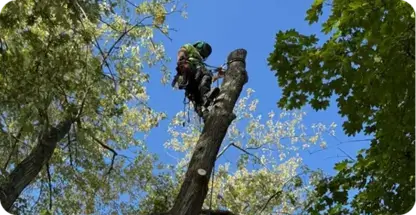
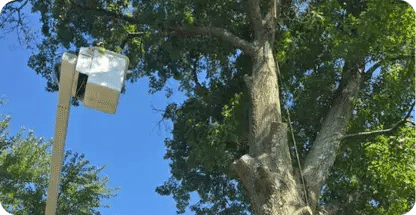
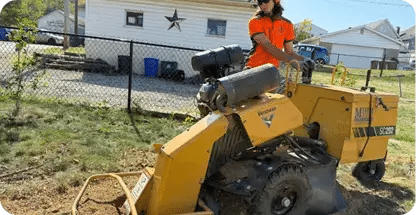
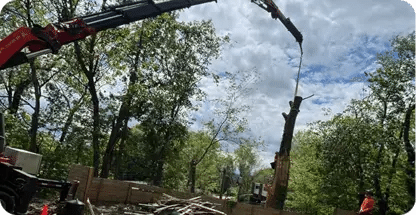
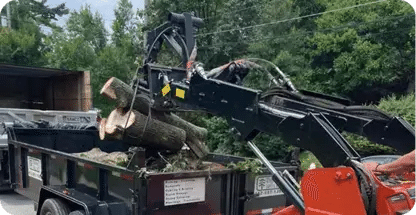
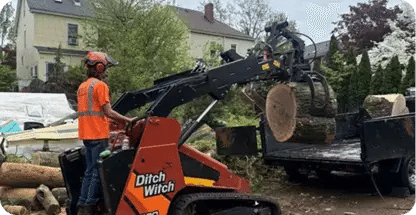
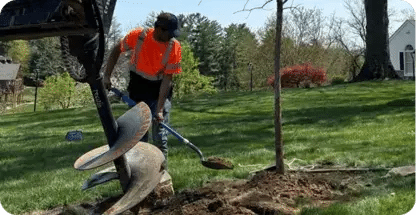
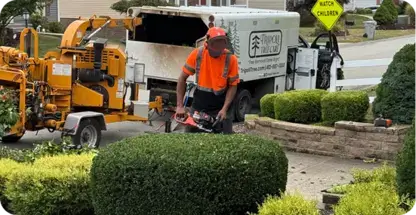
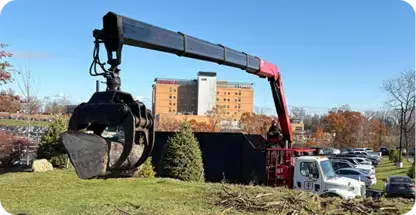
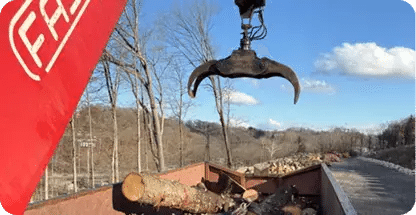
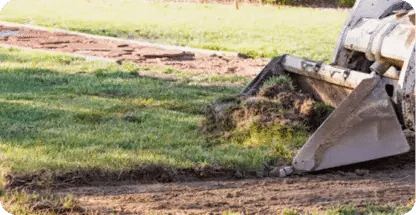
Pittsburgh isn't flat. Your yard might be on a steep slope in South Side, behind a narrow gate in Shadyside, or wedged between historic homes with zero margin for error. That's why we've built out a fleet of specialized equipment specifically chosen for Western PA's landscape - not just whatever was cheapest to buy.
The right tool means less risk to your property, faster work, and better results. Here's what we bring to the job:
Fit through 36-inch gates and reach 70+ feet without tearing up your lawn.
Safe, stable access for tall trees on large residential and commercial properties.
Removes limbs with hands-free precision directly over structures - zero impact.
Heavy mats distribute equipment weight to prevent lawn ruts on soft or wet ground.
Controlled lowering of limbs in tight residential spaces - no surprises, no damage.
Grind deep to clear root systems and leave a surface ready for new planting.
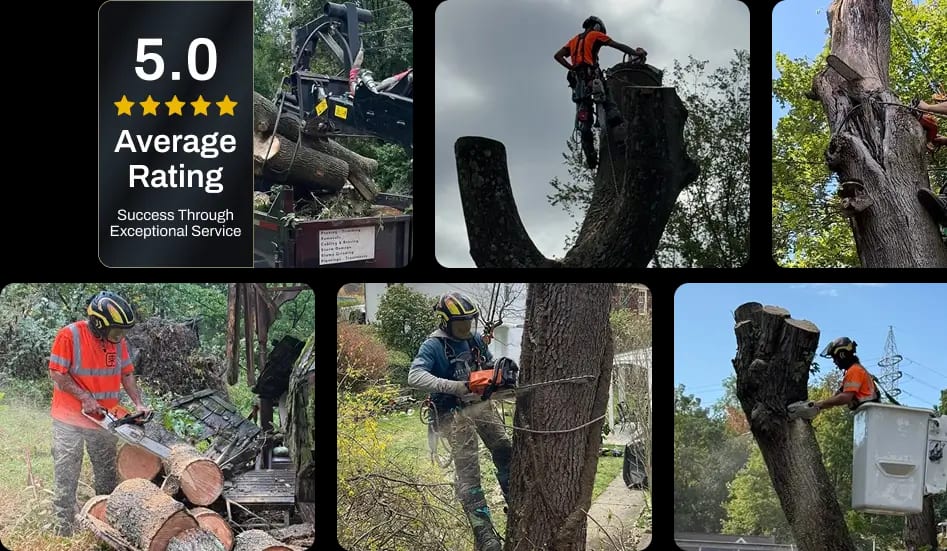
Founded by brothers Gabriel and Austin Tripoli, the company started with a few chainsaws and a dump trailer and has grown into a full-service tree care company serving homeowners throughout the Pittsburgh area. We handle everything from routine tree trimming and pruning to large tree removals, stump grinding, storm cleanup, and crane-assisted removals. As the company has grown, we've continued investing in better equipment and training so our crews can take on difficult jobs while protecting your home and property. We believe good tree work starts with doing things the right way. That means showing up when we say we will, explaining what needs to be done, working safely, and cleaning up when the job is finished. We're also committed to responsible disposal and recycling of the wood and brush we remove whenever possible.
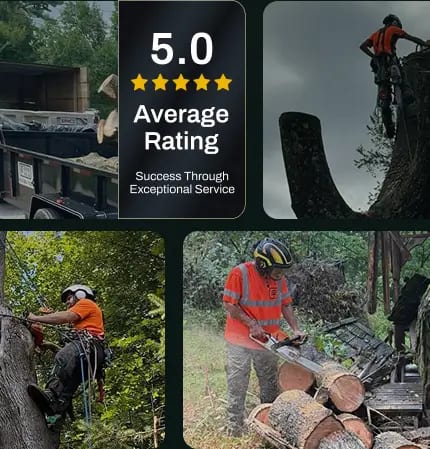
We proudly serve homeowners and businesses throughout the Greater Pittsburgh area.
Fox Chapel, Edgeworth, Franklin Park, Wexford, Upper St. Clair, Mount Lebanon, O’Hara Township, Sewickley / Sewickley Heights, Shadyside, Squirrel Hill, Bethel Park, Allison Park, Pleasant Hills, Oakmont, Collier Township, White Oak, Carnegie, Pine Township, Cranberry, Coraopolis
Peters Township
 ISA Certified Arborists and TCIA Standard
Pittsburgh's weather — ice storms, wet snow, summer microbursts — puts real stress on trees and real risk on property.
We carry complete coverage and treat your yard like it's our own.
Your home and property are protected against accidental damage during operations. Full coverage, no exceptions.
Our crew is covered — which means you're not liable for anything that happens while we're working on your property.
Every crane, bucket truck, and lift is fully insured for safe operation on Pittsburgh's steep streets and tight lots.
We provide written assessments and photographic documentation so your insurance provider has everything they need to process your claim efficiently.
Pittsburgh lots are rarely simple. Historic homes, tight property lines, sloped terrain — all of it requires a plan before anyone picks up a saw. Every job starts with a strategic safety assessment where we evaluate access points, nearby structures, and ground conditions.
From there, we use precision rigging to lower limbs with complete control, protecting your roof, fence, and garden beds. Heavy-duty ground mats distribute equipment weight to prevent ruts in soft or clay-heavy soil. When we're done, we clear every last piece of debris and rake the site clean.
We map access points, identify hazards, and plan every cut before work begins.
Mats, rigging, and precision equipment keep your lawn, fence, and home safe throughout the job.
We don't consider the job done until your property is clean, clear, and ready to use.
Not every tree thrives in Western Pennsylvania. The combination of clay-heavy soils, freeze-thaw cycles, humid summers, and heavy wet snow rules out a lot of popular ornamentals — and plants the wrong tree can mean decades of problems.
Our arborists recommend species that are proven performers in this climate. These trees develop strong root systems, handle storm stress better, and tend to outlive less adapted alternatives by a significant margin.
All native or well-adapted to Western PA. Our arborists can advise on the best fit for your specific site, soil type, and goals.
Pittsburgh's climate isn't brutal, but it is relentless. Ice loads in January, volatile spring storms, high humidity in summer — each season brings its own version of stress for your trees. Understanding those patterns is part of how we plan better tree care.
| Month | Avg High (°F) | Avg Low (°F) | Avg Mean (°F) | Precipitation (in) | Snowfall (in) | Snow Days |
|---|---|---|---|---|---|---|
| January | 35.7 | 20.9 | 28.3 | 2.96 | 13.3 | 12 |
| February | 39.3 | 23.3 | 31.3 | 2.65 | 11.7 | 10 |
| March | 49.3 | 30.6 | 40.0 | 3.41 | 7.6 | 7 |
| April | 62.2 | 40.6 | 51.4 | 3.32 | 1.0 | 2 |
| May | 72.1 | 50.4 | 61.3 | 4.02 | 0.0 | 0 |
| June | 80.3 | 59.5 | 69.9 | 4.30 | 0.0 | 0 |
| July | 83.5 | 63.3 | 73.4 | 4.12 | 0.0 | 0 |
| August | 82.3 | 62.3 | 72.3 | 3.48 | 0.0 | 0 |
| September | 75.3 | 54.9 | 65.1 | 3.30 | 0.0 | 0 |
| October | 63.4 | 43.8 | 53.6 | 2.83 | 0.4 | 1 |
| November | 50.8 | 34.4 | 42.6 | 3.17 | 2.1 | 4 |
| December | 39.5 | 26.2 | 32.9 | 3.20 | 8.0 | 9 |
| Annual | 61.1 | 42.5 | 51.8 | 40.76 | 44.1 | 45 |
| Climate Factor | What It Does to Your Trees |
|---|---|
| Heavy Ice & Wet Snow | Causes severe limb breakage and structural stress on native hardwoods — the number one cause of emergency calls in winter. |
| Saturated Clay Soil | Very common in Pennsylvania springs. When soil is waterlogged, root systems lose grip, increasing uprooting risk during storms. |
| Spring Thunderstorms | Sudden microbursts can snap or topple trees that look healthy but have hidden structural stress from winter. |
| Strong Wind Gusts | Frequent during seasonal transitions and storm fronts that funnel through Pittsburgh's three river valleys. |
| Freeze-Thaw Cycles | Rapid temperature swings cause frost cracks in bark and can destabilize root systems over multiple winters. |
| High Humidity & Pests | Summer conditions are ideal for fungal growth and invasive pests like the Spotted Lanternfly, which weaken trees over time. |
Before starting any tree work in Pittsburgh, it's worth knowing how the city handles it. The rules aren't complicated, but they catch people off guard — especially when a tree turns out to be considered public property even if it's growing right next to your house.
Public vs. Private Trees: The biggest distinction is who actually owns the tree. Street trees, park trees, and anything in the right-of-way between the sidewalk and street belong to the city. You can't prune or remove them without going through Pittsburgh's forestry department — usually via a 311 request that triggers an inspection. Trees entirely on your private property give you more flexibility, but there are still exceptions.
When You Might Need a Permit: Even on your own property, you may need approval if the tree is near a utility line or public sidewalk, if your project involves significant land clearing or grading, or if your property falls within a historic or regulated zoning district. Commercial and new-construction projects almost always trigger additional requirements.
Assuming a tree is private when it's actually in the public right-of-way. Removing a tree during a renovation project without checking if it's tied to zoning requirements. Starting clearing work that exceeds city thresholds without a Land Operations Permit. The city can require replacement planting, issue fines, or cause project delays — none of which are fun.
Covers tree planting requirements, species spacing, and landscaping standards for residential and commercial properties.
View Zoning CodeThe official source for guidelines on pruning, removing, or working on public trees and right-of-way areas.
Visit Forestry DivisionNot sure if you need a permit? Give us a call — our team is familiar with local ordinances and can tell you what applies to your specific situation before any work begins.




Tripoli Tree Care offers a full range of tree service in Pittsburgh, including tree removal, tree trimming and pruning, stump grinding, emergency storm cleanup, fallen tree removal, and tree health inspections.
There isn’t one price that fits every situation. The cost depends on the size of the tree, where it’s growing, and how difficult it is to access. Trees that are leaning, damaged, or close to a roof or power lines take more time and equipment. The easiest way to know is to let us stop by for a free estimate. We look at everything on-site and explain the cost before any work starts.
If you live in Pittsburgh or anywhere in Allegheny County, you can call Tripoli Tree Care. We’re local, we answer the phone, and we show up when you need us. Whether it’s a removal, trimming, stump work, or a storm emergency, our crew handles it from start to finish.
Some Pittsburgh neighborhoods and surrounding boroughs in Allegheny County have ordinances covering large or protected trees, especially street trees or those in historic districts. Many don’t. When you book with us, we check local requirements for your address and handle the permit paperwork if one is needed.
Dead branches, deep trunk cracks, fungus at the base, a new lean, and heaving soil around the roots are all warning signs. Read our guides on the signs a tree needs removal and when to remove a tree instead of trimming it.
Yes. We provide 24/7 emergency tree service throughout the Pittsburgh metro area. When storms drop trees on homes, block driveways, or pull down branches onto power lines, call (412) 659-8267 any time, day or night. We respond fast, clear the hazard, and help with insurance documentation.
Yes. Tripoli Tree Care carries full liability insurance and workers’ compensation coverage. We’re happy to provide our certificate of insurance before any work begins — always ask any Pittsburgh tree company for this before hiring.
We serve the entire Pittsburgh metro area, including Squirrel Hill, Shadyside, Fox Chapel, Sewickley, Mt. Lebanon, Upper St. Clair, Wexford, Cranberry, Allison Park, Oakmont, Bethel Park, Carnegie, Coraopolis, and Peters Township, plus most of Allegheny and Washington County.
Most residential tree removals in Pittsburgh are done in a single day. Large trees, tight spaces, or trees leaning over homes and power lines can take longer. We’ll give you a time estimate when we quote the job.
Yes. Trees near homes, garages, and fences are common in Pittsburgh neighborhoods. Our crew takes the tree down in sections and lowers the pieces carefully to protect your property.
Tree trimming and tree removal are the two most requested jobs. Pittsburgh’s older neighborhoods have a lot of mature trees that need regular care, and storms often leave behind broken limbs and damaged trees that need attention.
Yes. We work with property managers, businesses, and HOAs as well as homeowners. Our commercial tree service in Pittsburgh covers hazard limb removal, clearing sightlines, and keeping trees away from buildings and parking areas. Learn more about our commercial and HOA tree services.
Yes. Crown thinning and selective pruning can open up light and views without removing the whole tree. We’ll shape the tree in a way that keeps it healthy.
The easiest way is to call us at (412) 659-8267. Tell us what’s going on with your trees, and we’ll set up a time to come out, look at the job, and give you an estimate.
Yes. We help landlords and property owners clear overgrown trees, remove dead ones, and bring properties back into shape. This is often needed before a sale or new tenant move-in.
Insurance often covers tree removal when a fallen tree damages a covered structure like your home, garage, or fence. Removing a standing tree before it fails is usually not covered, even if the tree is dead or leaning. Learn more about preventive tree removal and insurance in Pittsburgh, and check with your insurance provider for the details of your policy.
Yes. We help HOAs keep common areas, entrances, walking paths, and shared green spaces safe and well maintained. Learn more about the commercial and HOA tree services in Pittsburgh, or call (412) 659-8267 to set up a walkthrough of your community.