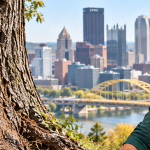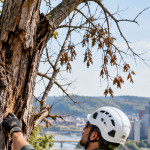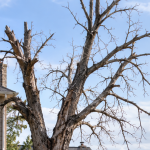
Overgrown trees start hurting your Pittsburgh lawn when their canopy gets thick enough to block the sunlight your grass needs to survive. The signs show up gradually: bare patches spreading under the tree, moss replacing grass, thin and pale turf that never fills in no matter how much you water or fertilize. The problem is not your lawn care routine. The problem is overhead.
Trees and grass are in direct competition for the same three resources: sunlight, water, and soil nutrients. When a tree’s canopy grows dense and its root system expands unchecked, it wins that competition every time. The grass underneath slowly starves. Understanding exactly how this happens, and what you can do about it, is the difference between a yard that works and one that frustrates you every season.
Key Takeaways
• Dense tree canopies block the 4 to 6 hours of daily sunlight that cool-season grasses need to maintain healthy growth in Pittsburgh.
• Tree roots outcompete grass for water and nutrients in the top 12 to 18 inches of soil, especially in clay-heavy ground where resources are already limited.
• Excess shade traps moisture, creating conditions where moss, fungus, algae, and lawn disease thrive instead of grass.
• Crown thinning is the most effective solution for restoring light under dense trees. It allows filtered sunlight through without removing the tree.
• Not every bare patch under a tree can be fixed with grass. Sometimes mulch beds or shade-tolerant ground covers are the smarter long-term answer.
• Professional pruning restores the balance between tree health and lawn health without damaging either one.
How Overgrown Trees Kill Your Lawn
They Block Sunlight
Grass is a photosynthetic organism. It needs sunlight to produce the energy that drives root growth, blade development, and the density that makes a lawn look full. According to Wikipedia’s entry on photosynthesis, plants convert light energy into chemical energy to fuel their metabolism. When a tree canopy blocks that light, the grass below cannot manufacture enough food to sustain itself.
Most cool-season grasses grown in Pittsburgh, including Kentucky bluegrass, perennial ryegrass, and tall fescue, need a minimum of 4 to 6 hours of direct or filtered sunlight per day. Even fine fescue, the most shade-tolerant option in the region, still requires at least 3 to 4 hours of filtered light. When a tree’s canopy thickens beyond what allows that minimum through, the grass thins, weakens, and eventually dies.
They Steal Water and Nutrients
A mature tree’s root system can extend well beyond its canopy drip line, and roughly 90% of those roots are in the top 18 inches of soil, the exact same zone where grass roots feed. In Pittsburgh’s clay-heavy soils, water and nutrients are already slower to move and harder for shallow-rooted grass to access. Add a large tree drawing from the same limited supply, and the grass loses every time. You might notice the grass turning brown during dry spells, even when the rest of your lawn is green. That is the tree outcompeting it underground.
They Trap Moisture and Create Disease
Dense canopies do not just block light. They also block air circulation and prevent the ground beneath them from drying properly after rain. In Pittsburgh, where spring and summer rainfall is heavy and clay soils already drain slowly, this creates a persistently damp environment at ground level. Moss moves in where grass cannot grow. Fungal diseases like brown patch and dollar spot thrive in the low-light, high-moisture conditions. Algae forms slick green mats on compacted, shaded soil. These are not lawn problems. They are tree problems expressing themselves through your lawn.
They Drop Debris That Smothers Grass
Leaves, seed pods, twigs, and bark fragments fall from overgrown trees and accumulate on the lawn below. If not removed regularly, this debris forms a thatch-like layer that blocks even more light and air from reaching the grass. In autumn, heavy leaf drop from large oaks and maples can smother entire sections of lawn in just a few weeks. The combination of reduced sunlight, root competition, excess moisture, and physical debris coverage makes it nearly impossible for grass to survive under a neglected tree.
5 Signs Your Trees Are Hurting Your Pittsburgh Lawn
• Bare soil or mud patches directly under the canopy where grass used to grow but has given up entirely.
• Moss spreading across shaded areas, especially on the north side of trees where sunlight is weakest.
• Thin, pale, leggy grass that stretches upward, reaching for light instead of growing thick and dense.
• Grass that dies in dry spells under trees while the rest of the lawn stays green, indicating root competition for water.
• Persistent fungal patches, algae, or slimy soil beneath the canopy that never fully dries out between rain events.
How to Fix Lawn Damage from Overgrown Trees
Crown Thinning: The Most Effective Solution
Crown thinning is the selective removal of branches throughout the interior of the canopy to reduce density and allow more sunlight and air to pass through. This is the single best solution for restoring a lawn under an overgrown tree without removing the tree itself. The Arbor Day Foundation’s tree care guide notes that proper pruning practices preserve tree strength while improving conditions below the canopy.
A professional arborist will remove no more than 25% of the living crown in a single session. The goal is not to strip the tree bare but to open enough gaps in the canopy that filtered sunlight can reach the ground for 4 to 6 hours per day. This is often enough to bring grass back in areas that were thinning. Crown thinning also improves air circulation, which helps the ground dry faster after rain and reduces fungal disease pressure.
Crown Raising: Let Light In from the Sides
Crown raising removes the lowest branches to increase the gap between the ground and the bottom of the canopy. This allows more low-angle morning and afternoon sunlight to reach the lawn underneath. In Pittsburgh, where the sun tracks at a lower angle for much of the year compared to southern states, raising the canopy even 8 to 12 feet off the ground can make a significant difference in how much light the grass receives.
Root Zone Management
Pittsburgh sits in USDA Hardiness Zone 6b, where cool-season grasses dominate. These grasses have shallow root systems that compete directly with tree roots in the top layer of soil. You can help by applying a 2- to 4-inch layer of organic mulch over the root zone rather than forcing grass to grow where it cannot win. Mulch reduces root competition, retains moisture for the tree, and eliminates the frustration of trying to grow grass in an impossible spot.
Overseed with Shade-Tolerant Grass
If crown thinning restores enough light, overseeding with a shade-tolerant mix gives the lawn its best chance. Fine fescue blends are the most shade-tolerant cool-season grasses available for western Pennsylvania. They require less sunlight, tolerate acidic soil (common under oaks and maples), and handle the lower fertility conditions found in root-heavy ground. Mow shade areas slightly higher than the rest of the lawn to give grass blades more surface area for capturing available light.
Accept the Shade: Mulch Beds and Ground Covers
Sometimes the honest answer is that grass will never thrive in a particular spot. If the tree is too large, too valuable, or too close to structures to thin aggressively, the smarter move is to replace struggling grass with a mulch ring or shade-tolerant ground covers like pachysandra, hosta, or native ferns. A clean mulch bed under a mature tree looks intentional, protects the root system, eliminates mowing headaches, and stops the cycle of reseeding, failing, and reseeding again.
Why Pittsburgh Lawns Are Especially Vulnerable
Pittsburgh’s combination of clay soils, steep lots, and mature tree canopy makes lawn-tree competition worse than it is in most regions. Clay holds water near the surface where tree roots concentrate, intensifying the competition with grass. Many Pittsburgh neighborhoods were planted with large shade trees 50 to 80 years ago that have grown far beyond their original intended size. Properties on hillsides face the additional challenge of reduced sun exposure on north-facing slopes, where even moderate canopy density can push sunlight below the minimum grass needs.
The region’s cool-season grasses also enter a natural stress period during hot, humid summers. Trees with dense canopies compound that stress by trapping heat and humidity at ground level while simultaneously blocking the light grass needs to recover. What looks like a summer lawn problem is often a tree density problem that has been building for years.
Frequently Asked Questions
How do I know if my tree is killing my grass?
Look for a direct correlation between canopy coverage and lawn decline. If the bare or thin patches in your lawn fall entirely within the shadow of a tree’s canopy, and the grass outside that shadow is healthy, the tree is the cause. Moss growth, persistent dampness, and grass that stretches tall and thin instead of growing dense are all confirmations.
Will trimming my tree bring my grass back?
In many cases, yes. Crown thinning that allows 4 to 6 hours of filtered sunlight to reach the ground is often enough for cool-season grasses to recover. You may need to overseed the area with a shade-tolerant mix after thinning. Results typically appear within one to two growing seasons. If the area has been bare for years, the soil may also need aeration and topdressing before grass will take hold again.
How much of the tree can be removed without hurting it?
The general rule is to remove no more than 25% of a tree’s living crown in a single pruning session. Removing more than that stresses the tree and can trigger a flush of weak, fast-growing sprouts that shade the area again within a few years. A professional arborist knows how to distribute thinning cuts throughout the canopy to maximize light penetration while keeping the tree healthy and structurally sound.
What grass grows best in shade in Pittsburgh?
Fine fescue blends are the most shade-tolerant cool-season grasses for western Pennsylvania. Creeping red fescue, chewings fescue, and hard fescue all perform reasonably well with 3 to 4 hours of filtered sunlight per day. They tolerate the acidic, lower-fertility soil commonly found under trees. Tall fescue is moderately shade-tolerant and handles Pittsburgh’s clay better than most other options.
Should I remove a tree to save my lawn?
Tree removal should be a last resort, not a first response. Most lawn-tree conflicts can be resolved through crown thinning, crown raising, and selective root zone management. However, if a tree is diseased, structurally compromised, or planted too close to the house and creating additional problems beyond lawn damage, removal may be the best long-term decision. Weigh the value of the tree against the ongoing cost and frustration of fighting a losing battle with the grass beneath it.
Does mulching around a tree help my lawn?
Mulching helps the overall landscape by reducing the area where you are trying to force grass to grow in an impossible environment. A mulch ring 3 to 6 feet from the trunk eliminates the worst competition zone and protects tree roots from mower damage. The grass outside that ring receives more light and faces less root competition, which improves its health. Mulch is not giving up on your lawn. It is strategic.
Can tree roots damage my lawn mower?
Yes. Surface roots from large trees, especially silver maples and pin oaks, can lift above soil level and create tripping hazards, scalp marks on turf, and damage to mower blades. Running over exposed roots with a mower also wounds the tree, opening entry points for disease and decay. If roots have surfaced significantly, covering them with a thin layer of soil and mulch or converting the area to a mulch bed protects both the tree and your equipment.
How often should I thin my tree canopy to protect my lawn?
For most mature shade trees in Pittsburgh, crown thinning every 3 to 5 years keeps canopy density in check and maintains enough light for lawn health. Fast-growing species like silver maple or sweetgum may need attention more frequently. Young trees benefit from structural pruning every 2 to 3 years to establish wide branch spacing that prevents excessive density as the tree matures.
Why does moss grow under my trees instead of grass?
Moss thrives in the exact conditions that dense tree canopies create: shade, consistent moisture, and acidic soil. It is not a cause of lawn decline but a symptom. The moss is growing because conditions favor it over grass. Removing the moss without addressing the shade and moisture problem will only result in bare soil or more moss. Thinning the canopy to restore sunlight and improving drainage are the real fixes.
When is the best time to address tree-related lawn damage in Pittsburgh?
Late winter through early spring is ideal. Trees are dormant, which makes canopy structure clearly visible and reduces stress from pruning. Spring also gives newly exposed lawn areas a full growing season to recover before summer heat arrives. If you plan to overseed after thinning, early fall (September through mid-October) is the best window for cool-season grass establishment in western Pennsylvania.
Fix the Shade Problem. Fix the Lawn
Your lawn is not failing because of bad soil, wrong seed, or insufficient fertilizer. It is failing because the trees above it have grown beyond the point where grass can coexist beneath them. That is a solvable problem. Crown thinning, crown raising, and honest decisions about where grass can and cannot grow will transform a frustrating yard into one that actually works.
If overgrown trees are hurting your lawn in Pittsburgh, Tripoli Tree Care can restore the balance. Our crews handle crown thinning, canopy raising, deadwood removal, and full tree removal when that is the better option. Call (412) 659-8267 for a free on-site estimate.