Key Takeaways
- Emerald Ash Borer (EAB) has killed millions of ash trees across Pennsylvania and continues to threaten Allegheny County.
- Early detection is critical for saving ash trees through treatment.
- Trees with less than 30% canopy loss often respond well to professional intervention.
- Dead or severely infested ash trees become hazardous and usually require removal.
- Regular inspections by ISA Certified Arborists help prevent irreversible damage.
For decades, ash trees were a defining part of Allegheny County’s landscape. Their fast growth, dense shade, and adaptability made them a popular choice for neighborhoods across Pittsburgh and surrounding communities. That changed with the arrival of the Emerald Ash Borer. This invasive beetle has destroyed millions of ash trees across North America and continues to spread throughout Western Pennsylvania. Today, many homeowners are left asking a difficult question:
Is it too late to save my ash tree? The answer depends on timing. Early detection can still make treatment effective, but once significant canopy loss occurs, options become limited. Let’s explore this topic in detail –
What Is the Emerald Ash Borer?
The Emerald Ash Borer (EAB) is an invasive beetle from Asia first detected in the U.S. in 2002. Adult beetles cause minimal damage, but their larvae destroy trees by feeding under the bark. These larvae tunnel through the cambium layer, disrupting the flow of water and nutrients. As the infestation spreads, the tree slowly starves and dies from the inside out.
What makes EAB especially dangerous is that it often goes unnoticed for years before visible symptoms appear.
Why Allegheny County Is So Vulnerable
Allegheny County once had thousands of mature ash trees in residential streets, parks, and commercial landscapes. Cities like Pittsburgh, Fox Chapel, Sewickley, Mt. Lebanon, and Wexford were heavily planted with ash species. Today, nearly every untreated ash tree in the region is at risk. Once EAB becomes established in an area, it spreads quickly and uniformly. Combined with Pittsburgh’s storms, heavy snow, and saturated soils, weakened ash trees often fail unexpectedly, creating serious safety risks.
How to Identify Emerald Ash Borer Damage
EAB symptoms are subtle at first but become more obvious over time.
- Thinning Canopy
Upper branches begin losing leaves, creating a sparse appearance.
- Excessive Sprouting
Trees produce shoots along the trunk as they struggle to survive.
- Bark Splitting
Vertical cracks appear as internal damage expands beneath the surface.
- Woodpecker Activity
Increased feeding on larvae leads to visible bark damage.
- D-Shaped Exit Holes
Small D-shaped holes indicate adult beetle emergence.
- Peeling Bark
Sections of bark may fall away, revealing larval tunnels underneath.
Can an Ash Tree Still Be Saved?
Yes but only if action is taken early.
General guidelines:
- Less than 30% canopy loss: High chance of successful treatment.
- 30–50% canopy loss: Treatment may still help depending on condition.
- Over 50% canopy loss: Recovery is unlikely.
Arborists also evaluate structural stability, trunk health, and site risk before recommending treatment or removal.
Treatment Options for Emerald Ash Borer
- Systemic Injections
Insecticides are injected into the trunk and move through the tree’s vascular system, killing larvae as they feed.
- Soil Treatments
Products applied to the root zone are absorbed naturally and distributed throughout the tree.
- Preventative Care
Healthy trees in high-risk areas are often treated before symptoms appear, offering the best chance of long-term protection. Most treatments require reapplication every 1–3 years depending on severity and product type.
When Removal Is the Safest Option
Not all ash trees can be saved. Once structural integrity declines, removal becomes necessary to prevent hazards.
Removal is recommended when:
- More than half the canopy is dead.
- The trunk shows signs of decay or instability.
- The tree is near homes, driveways, or power lines.
- Large sections of bark have fallen off.
Dead ash trees are especially dangerous because they become brittle quickly and can fail without warning.
Why Early Action Matters
Delaying treatment reduces survival chances and increases long-term costs. A tree that could have been treated early may eventually require complex removal using cranes or advanced rigging systems. Early inspections provide the widest range of options and the lowest overall risk. A professional ISA-certified arborist in Allegheny County, Pennsylvania can help you in saving your ash trees from Emerald Ash Borer by conducting professional evaluation.
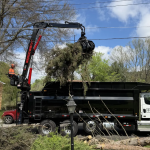
Tripoli Tree Care provides expert ash tree inspections across Pittsburgh and Allegheny County to determine whether treatment or removal is the safest option. Our ISA-Certified Arborists assess canopy loss, structural stability, and pest activity to create clear, actionable recommendations. If a tree can be saved, we help guide treatment decisions to extend its life. If removal is required, our crews use specialized equipment such as spider lifts, bucket trucks, and precision rigging systems to safely remove hazardous trees from tight residential areas.
As a locally owned Pittsburgh company, we serve Fox Chapel, Sewickley, Wexford, Ross Township, Allison Park, Shadyside, Squirrel Hill, and surrounding communities. Tripoli Tree Care is fully licensed, insured, BBB A+ rated, and committed to safe, professional tree care with honest recommendations and transparent pricing. Contact us today for a free estimate and ash tree evaluation before EAB damage becomes irreversible.
Frequently Asked Questions About EAB in Allegheny County, Pennsylvania
How do I know if my ash tree has Emerald Ash Borer?
Look for canopy thinning, bark splitting, exit holes, woodpecker activity, and trunk sprouting. A professional inspection confirms diagnosis.
Can the Emerald Ash Borer kill a healthy tree?
Yes. Even healthy ash trees can be infested and killed within a few years.
Is treatment worth it?
Yes, especially for mature trees with low to moderate damage. Early treatment is often more cost-effective than removal.
How long do ash trees survive after infestation?
Typically 2–5 years depending on severity and tree health.
Can dead ash trees fall suddenly?
Yes. They become brittle and can fail without warning, especially during storms.
Should I remove my ash tree preemptively?
Only if it is severely infested or poses a safety risk. Otherwise, treatment may be preferable.
Does Tripoli Tree Care inspect ash trees?
Yes. We provide full assessments and treatment or removal recommendations.
What areas do you serve?
We serve Pittsburgh and surrounding Allegheny County communities including Fox Chapel, Wexford, Sewickley, Mt. Lebanon, and others.
Summary Checklist: Managing Emerald Ash Borer Damage
| Condition | Risk Level | Recommended Action |
| Minor canopy thinning | Low | Inspect early |
| Visible exit holes | High | Immediate evaluation |
| Less than 30% loss | Moderate | Consider treatment |
| More than 50% loss | Severe | Removal likely |
| Dead or hazardous tree | Critical | Emergency removal |
Final Advice
If you have ash trees in Allegheny County, it is not automatically too late to save them, but timing is critical because Emerald Ash Borer spreads quickly and causes internal damage long before visible symptoms become severe. Trees that still retain most of their canopy and only show early signs such as light thinning, minor bark splitting, or increased woodpecker activity may still respond well to professional treatment, while those with advanced canopy loss are often beyond recovery and may require removal. The key is not to wait until the tree is clearly dying, since by that stage treatment options become limited and less effective.
Homeowners should schedule a professional inspection as soon as any warning signs appear so a professional ISA-Certified Arborist in Allegheny County, Pennsylvania, can accurately assess the level of infestation and determine whether preservation is still possible. Early treatment, when recommended, significantly improves survival chances and is usually more cost-effective than emergency removal or property damage repairs caused by failing trees. If removal is necessary, it is safer and more affordable to act before the tree becomes brittle and hazardous, especially near homes, driveways, or power lines. Relying on DIY judgment is risky because Emerald Ash Borer damage often progresses unseen inside the tree. Regular monitoring and preventative treatments remain the best defense for healthy ash trees in high-risk areas. Finally, it may not be too late in every case, but delay quickly narrows your options, making early professional action the most important step in protecting both your trees and your property. Contact Tripoli Tree Care for a professional ash tree assessment and free estimate.