Discovering a cracked tree trunk on your property after a severe storm can be alarming. In Pittsburgh, PA, where winter ice and summer thunderstorms bring unpredictable weather, knowing the right steps to take immediately is crucial for safety and property protection. This guide helps you assess the damage, understand your options, and find expert assistance from qualified professionals.
Key Takeaways
- Prioritize safety by staying clear of the damaged tree and contacting utility companies if power lines are involved.
- Assess the damage using the ‘50% rule’ and check for ‘heaving soil’ to determine immediate risk.
- Document all damage with photos for potential insurance claims; coverage in Pittsburgh often requires damage to a ‘covered structure’.
- Consult an ISA Certified Arborist for a professional assessment and to discuss repair (cabling/bracing) or removal options.
- Understand local regulations, especially for ‘street trees,’ and be aware of common billing practices for services like stump grinding and debris removal.
- Proactive tree care, including regular pruning and species selection, can significantly reduce future storm damage.
What Is a Cracked Tree Trunk and Why Is It Dangerous?
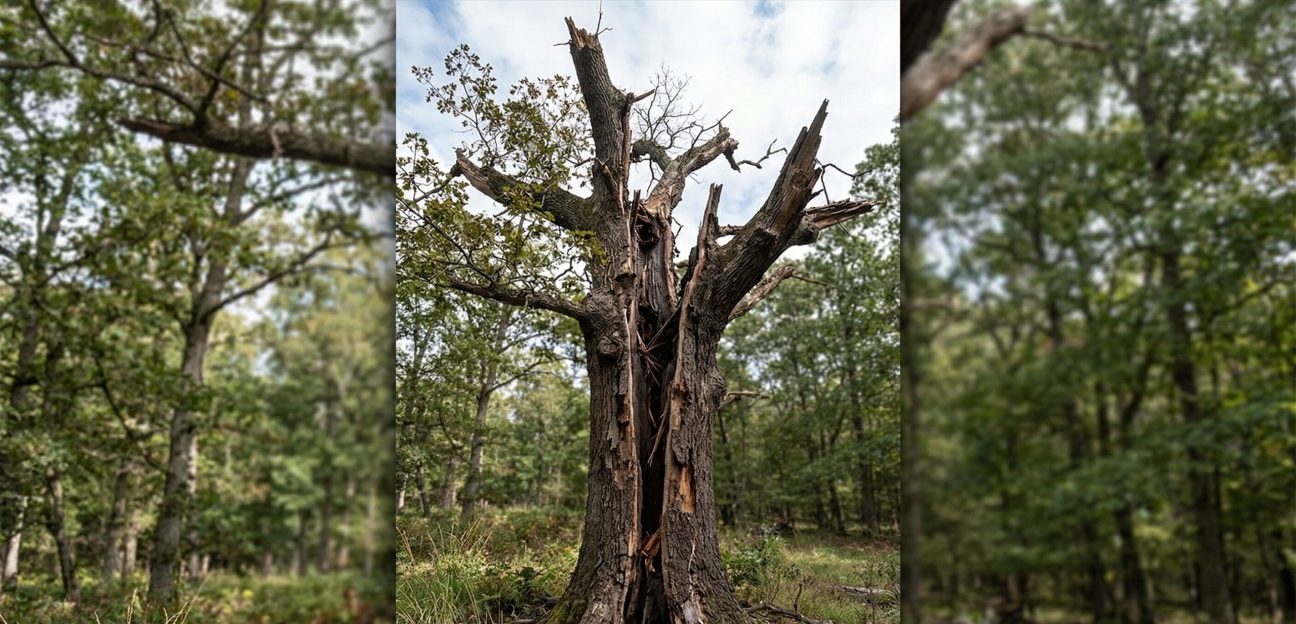
A cracked tree trunk signifies a structural failure in the tree, making it a significant hazard. These cracks compromise the tree’s stability, leaving it vulnerable to further splitting, falling limbs, or complete collapse, especially during subsequent high winds or heavy precipitation.
Common Causes of Trunk Cracks
Tree trunks can crack for several reasons, often exacerbated by the harsh weather conditions common in Pittsburgh. Understanding the cause helps in determining the best course of action.
- Storm Damage: High winds, heavy ice, and wet snow exert immense pressure, causing trunks to split.
- Weak Crotches: Poor branch unions, common in species like Maples, which make up a large portion of Pittsburgh’s street trees, are prone to splitting under stress.
- Pre-existing Conditions: Decay, disease, or insect infestations weaken wood, making it brittle and susceptible to cracking.
- Sudden Temperature Changes: Rapid freezing and thawing can cause ‘frost cracks’ as the wood expands and contracts.
- Mechanical Injury: Past damage from landscaping equipment or construction can create entry points for decay.
The Immediate Risks Posed by a Cracked Trunk
The danger of a cracked trunk isn’t just about the tree itself; it extends to everything around it. A compromised tree is a structural risk.
- Falling Hazards: Cracked trunks can lead to large limbs or the entire tree falling onto homes, vehicles, or people.
- Power Outages: Tree failure near utility lines can cause widespread outages and electrocution risks.
- Property Damage: The cost of repairing damage to structures, fences, or landscaping can be substantial.
- Further Instability: A crack often indicates underlying weakness, making the tree more susceptible to damage from future weather events.
Immediate Steps After Discovering a Cracked Tree Trunk
After discovering a cracked tree trunk, your immediate priority must be safety. Do not approach the tree until you’ve assessed the situation and taken necessary precautions.
Prioritize Safety First
Your personal safety and the safety of your family and pets should be your first concern. A compromised tree can fall at any moment.
- Maintain Distance: Stay at least 1.5 times the tree’s height away from the damaged tree.
- Check for Power Lines: If any part of the tree is near power lines, contact your local utility provider. In Pittsburgh, homeowners should follow the Duquesne Light outdoor electrical safety guidelines to avoid electrocution hazards.
- Secure the Area: Rope off the area and prevent children and pets from playing near the tree.
Initial Damage Assessment & Documentation
Once the area is secured, a visual inspection can provide crucial information, though this is not a substitute for a professional assessment.
- The 50% Rule: If more than 50% of the tree’s crown is missing, or if the main trunk is split deep into the heartwood, the tree is likely unsalvageable.
- Inspect for ‘Heaving’ Soil: If soil is lifting or cracking on one side of the base, it indicates root failure and an immediate emergency.
- Document Everything: Take clear photos and videos of the cracked trunk and surrounding damage for insurance claims.
- Check for ‘Street Tree’ Status: If the tree is on the public right-of-way, contact the City of Pittsburgh Forestry Division for permit requirements.
Assessing the Trunk Damage: When to Repair vs. Remove
Deciding whether to repair or remove a cracked tree trunk is a complex decision, weighing safety, tree health, and financial factors. An ISA Certified Arborist provides the definitive assessment.
When Repair Might Be Possible
Not all cracks mean the end for a tree. Some can be mitigated with professional intervention.
- Minor Cracks: Surface cracks or splits in non-structural limbs might be manageable with pruning.
- Good Overall Health: If the tree is otherwise healthy and has a strong root system.
- Younger Trees: Immature trees often have a higher recovery potential from minor damage.
- Specific Crack Types: Certain vertical cracks can sometimes be cabled or braced effectively.
When Removal Becomes Necessary
Unfortunately, many storm-related cracks are severe enough to warrant complete removal to ensure safety.
- Deep Main Trunk Splits: Cracks extending into the heartwood near the base compromise structural integrity.
- Extensive Root Damage: Root movement or instability makes the tree a high-risk hazard.
- Significant Crown Loss: Loss of over 50% of the canopy inhibits the tree’s ability to recover.
- Decay or Disease: Internal decay exposed by a crack significantly increases the likelihood of failure.
- Proximity to Structures: Trees posing an immediate threat to homes or garages often require removal.
Repair vs. Removal: A Decision Matrix
The following matrix outlines the core differences between intervention strategies.
| Factor | Tree Repair (Cabling / Bracing) | Tree Removal |
| Cost (Initial) | Typically lower, $300 to $1,500 | Typically higher, $500 to $5,000+ |
| Long-Term Maintenance | Requires inspection every 3 to 5 years | Minimal after removal and stump grinding |
| Safety Risk | Reduced, but ongoing monitoring is required | Eliminated once the tree is removed |
| Tree Health Outcome | Extends the life of structurally valuable trees | Permanent removal of the hazard |
| Best For | Trees with minor splits or structural weakness | Severely damaged or high-risk trees |
Professional Tree Care Solutions for Cracked Trunks
When a cracked tree trunk needs professional attention, several expert solutions are available, designed for the unique challenges of the Pittsburgh landscape.
Cabling and Bracing
For trees that can be saved, structural support systems are a viable option to stabilize compromised trunks or limbs.
- Cabling: Installing steel cables between major limbs to limit movement and prevent further splitting.
- Bracing: Using steel rods inserted through limbs to provide rigid support for severe structural issues.
- Benefits: Prolongs the life of valuable trees and maintains local canopy cover.
- Considerations: Requires installation by an ISA Certified Arborist and regular maintenance.
Professional Tree Removal Techniques
When repair isn’t an option, safe and efficient tree removal becomes essential, particularly in dense urban environments.
- Hazardous Tree Removal: Specialized techniques used for unstable or leaning trees near property structures.
- Sectional Removal: Utilizing cranes and rigging to dismantle trees in sections, preventing damage to lawns or driveways.
- Stump Grinding: A separate service that removes the remaining stump below ground level for replanting.
- Debris Hauling: Comprehensive removal of all wood and branches to leave the property clear.
- Safety Standards: Reputable providers adhere to strict safety protocols and use professional-grade equipment for complex removals.
Preventing Future Storm Damage
Proactive care significantly reduces the risk of storm damage, especially given the regional climate and common species.
Proactive Tree Health and Maintenance
Strategic maintenance throughout the year builds tree resilience against severe weather.
- Regular Pruning: Removing dead or weak branches reduces the ‘wind sail’ effect during storms.
- Preventative Cabling: Identifying and supporting weak crotches before a storm occurs.
- Annual Inspections: Professional assessments can catch disease or decay early.
- Species Selection: Planting storm-resistant species suited for clay-heavy soils.
Regional Considerations
Understanding regional environmental factors helps tailor your maintenance approach.
- Winter Loading: Pruning to minimize ice and snow accumulation.
- Soil Stability: Monitoring trees on steep topography for root heave after heavy rains.
- Pest Management: Addressing issues like the Emerald Ash Borer that weaken the structural integrity of local trees.
Frequently Asked Questions
What should I do if a cracked tree trunk is near power lines?
If a cracked tree trunk is near power lines, immediately contact Duquesne Light or West Penn Power. Do not approach the tree or attempt to clear debris yourself. Power lines can be extremely dangerous, and only utility professionals should handle situations involving them.
Does homeowner’s insurance cover cracked tree trunk removal?
Insurance typically covers tree removal costs in Pittsburgh only if the tree has damaged a ‘covered structure’ like your house, garage, or fence. If the tree is merely cracked and still standing, even if it poses a risk, an out-of-pocket payment is usually required. Always document damage with photos.
Why is it important to hire an ISA Certified Arborist?
An ISA Certified Arborist has demonstrated a high level of knowledge in tree care through rigorous testing and continuing education. This certification ensures they understand tree biology, safety, and proper techniques for assessment, pruning, and removal, providing a reliable and professional service.
Can I temporarily brace a cracked tree trunk myself?
While temporary bracing might seem like a quick fix, it’s generally not recommended for severely cracked trunks. Arborists install professional cabling and bracing systems to support weak limbs or split trunks, but they are only effective for specific types of damage and require ongoing maintenance.
What is the ‘50% rule’ for storm-damaged trees?
The ‘50% rule’ suggests that if more than 50% of a tree’s crown is missing, or if a main trunk is split deep into the heartwood, the tree is likely unsalvageable. This rule helps arborists and homeowners determine if a tree is too damaged to recover and poses a high risk.
Do I need a permit to remove a cracked tree in Pittsburgh?
In Pittsburgh, you generally need a permit from the City of Pittsburgh Forestry Division for any work (pruning or removal) on ‘street trees’ located on the public right-of-way. Trees on private property usually don’t require a city permit unless they are deemed a public safety hazard.
Act Quickly and Safely After Storm-Damaged Trees in Pittsburgh
A cracked tree trunk after a storm is a serious issue that demands immediate action. Prioritize safety, understand the extent of the damage, and know your options before doing anything else.
For assessment, repair, or removal, the ISA-certified arborists at Tripoli Tree Care are the tree service Pittsburgh homeowners call when it matters. Don’t risk further damage or injury. Let the professionals handle it with precision and care.