Pittsburgh’s hillsides make tree removal more complicated because steep ground, narrow access, and nearby homes or retaining walls can limit where a crew can work and where cut sections can go. A tree that might be felled in a clear direction on an open, level lot may need a different plan on a slope, where gravity can carry branches or logs downhill. Before work begins, a qualified crew needs to assess the tree, the route in and out, equipment setup areas, overhead hazards, and the space available for controlled lowering and cleanup.
This post focuses on how those practical decisions shape a removal, from the first site walk to the final debris pickup. Tripoli Tree Care’s earlier article about Pittsburgh hills and tree-removal costs addresses the cost angle; this guide is about access, work sequence, equipment positioning, property protection, and what homeowners can expect during an assessment.
How a Hillside Changes the Work Plan
A slope changes how crews reach the tree, position equipment, and control each section as it comes down. Pittsburgh properties may have steep backyards, terraced slopes, narrow side yards, stairs, fences, or homes close together. In some cases, the tree is easy to see from the street but difficult to reach from the yard.
The ground itself is part of the worksite. A crew must consider the grade, the available footing, and whether access routes cross areas that should be protected. They also need to identify where people can stand safely, where branches or trunk sections might travel, and how debris can be moved without crossing an unsafe path.
This planning starts before a saw is used. OSHA says tree-care safety programs should address site-specific hazards and worksite changes, including pre-job briefings and work-zone safety. That is why an on-site assessment for tree removal in Pittsburgh should account for the whole property, not just the tree’s height and condition.
Site Factors Reviewed During a Hillside Assessment
A hillside assessment looks at the tree, the slope, and the route the crew and equipment would use. The assessor may need to view the tree from several directions, including above and below it, to understand its lean, branch structure, condition, and relationship to the ground. The goal is to identify constraints that affect the removal method and sequence.
Access is a major part of that review. The crew will consider the width and grade of driveways, gates, paths, stairs, and side yards, along with overhead wires, fences, landscaping, and nearby structures. The ISA Basic Tree Risk Assessment instructions include access limitations and slopes among the factors an assessor may consider when evaluating a tree and possible mitigation.
Homeowners can help by pointing out features that may not be obvious during a quick walk-through: a drain outlet, a buried line, a shared fence, a narrow gate, or a route used by neighbors. If the tree is near a utility line, mention it before work is scheduled; utility hazards require specialized precautions. The assessment should also clarify what the job includes, such as removal of the trunk and branches, stump work, and debris handling.
Narrow Access and Equipment Positioning
Limited access may determine which equipment can reach the work area and where it can be set up. A large truck may not fit through a narrow gate or around a tight turn, while a steep or uneven route may rule out some possible setup locations. The crew must consider not only whether equipment can reach the tree, but also whether it can be operated from a suitable position.
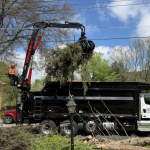
Tripoli Tree Care describes its equipment options, including cranes, bucket trucks, spider lifts, and a grapple truck for debris handling. The company’s spider lift service is intended for tight access and hillside properties. Which method is appropriate depends on the site; a homeowner shouldn’t assume a particular machine can be used simply because it is available.
Equipment positioning also affects the rest of the property. The crew needs a plan for moving tools and material, keeping work areas clear, and protecting surfaces that could be affected by traffic or falling debris. The assessment is a good time to ask where equipment will be staged, which areas need to remain clear, and whether access will be needed through a side yard or gate.
Sectional Removal and Controlled Lowering
When a tree cannot come down safely in one open direction, a crew may remove it piece by piece. This is called sectional dismantling: workers remove branches and trunk sections in a planned sequence instead of felling the entire tree at once. On a hillside, that sequence can help keep material from rolling or falling into a house, walkway, fence, or lower yard.
Some pieces may be lowered with rigging. Rigging uses ropes and hardware to manage how a cut section moves; it requires a plan for the tree, the anchor points, the load, and the landing area. The Tree Care Industry Association’s article on approaching difficult removals stresses that a workable plan should be based on information gathered during an assessment and include input from the crew.
The removal sequence matters because each cut can change what remains in the tree and how later sections can be handled. An experienced crew plans where material will travel and keeps workers clear of drop zones. Homeowners should expect the work area to be restricted while cutting and lowering are underway.

Slope Stability and Ground Conditions
Crews need to understand how the tree and equipment relate to the slope before choosing a work method. A steep grade can make it harder to reach the tree, move material, or find a place for workers to stand. Conditions may also vary across a single yard, with firmer ground near a path and softer or more exposed soil farther down the slope.
The tree’s root system and the soil around it can affect stability. Penn State Extension notes that trees may uproot in wet soil, lifting the root plate on the side opposite the fall. That’s one reason an assessment should consider visible root movement, exposed roots, recent soil disturbance, and drainage patterns rather than relying on the slope’s appearance alone.
Heavy rain or recent storms may change site conditions, so the plan may need to account for the ground as it is on the day of work. The crew should identify where workers can safely move and whether equipment can be positioned without crossing an unsuitable route. Homeowners should mention recent ground changes or drainage issues they have noticed, but leave decisions about tree stability and work methods to qualified professionals.
Protecting Homes, Landscaping, and Neighbors
Protection starts with deciding where the crew will work and where cut material can be controlled. On a steep lot, the shortest route downhill may lead toward a home, patio, garden, parked car, or neighboring property. A good plan accounts for those features before cutting begins and establishes areas where homeowners and visitors should not enter.
The crew may use sectional removal, rigging, or equipment selected for the access conditions to manage how material is handled. That does not mean every branch can be lowered in the same way; the plan depends on the tree, the site, and the available landing area. OSHA’s tree-care safety guidance calls for identifying worksite hazards and using appropriate protections based on the job.
Before the crew arrives, homeowners can move vehicles and outdoor furniture from areas the company identifies, keep pets and children away from the work zone, and let neighbors know if access or temporary restrictions may affect them. If removal follows a storm, Tripoli Tree Care’s storm-damage cleanup service covers related cleanup needs. Confirm the work area and expected access arrangements with the company before the job begins.
Removal and Cleanup Expectations
Expect the crew to work through the planned sequence and adjust if site conditions differ from what was visible during the assessment. On a confined hillside, branches and trunk sections may need to be cut into manageable pieces before they can be moved. The crew may also keep parts of the yard closed until equipment and debris are cleared.
Cleanup is part of the plan, not an afterthought. Ask whether the scope includes hauling branches and logs, chipping brush, or handling the stump. Tripoli Tree Care’s debris removal service describes its approach to removing unwanted material, while the company’s large-tree removal information covers work involving large trees and confined areas.
A useful pre-job checklist is:
- Confirm the work area and any temporary access restrictions.
- Ask how branches, logs, and other debris will be handled.
- Point out gates, stairs, drains, fences, and neighboring structures.
- Move vehicles and outdoor items if the crew asks you to clear an area.
- Keep people and pets outside the work zone until the crew says it is clear.
Site-Specific Planning for Hillside Tree Removal
Hillside tree removal requires decisions about access, equipment position, tree condition, controlled lowering, property protection, and cleanup. Those decisions are connected: an access route can limit equipment choices, the slope can affect where material is handled, and nearby homes can change the safe order of work. A plan made for an open, level lot may not fit a steep Pittsburgh property.
When you request an assessment, ask the tree-care company to explain the proposed work sequence and how it accounts for your access and surrounding structures. Share details about the yard that may affect access or staging, and confirm what cleanup is included. Tripoli Tree Care serves Pittsburgh and nearby communities; homeowners can review its service areas and request an assessment for their property.