Key Takeaways
- Invasive species require urgent removal to prevent pest infestation from spreading across your property
- Removing massive trees near structures demands precision planning, not just raw power
- Professional pruning restores tree health, shape, and storm resilience without harming surrounding landscaping
- Same-day responsiveness and clear communication build trust before the crew ever arrives
- Full-service professionalism means asking if the homeowner is satisfied, not just assuming the job is done
Pittsburgh’s climate makes this a recurring reality. Wet clay soils, saturated spring ground, and seasonal wind events all create conditions where trees that looked stable one year can become high-risk hazards the next. A professional tree service in Pittsburgh, Pennsylvania, is therefore not a luxury; it is an essential property management function that combines arboricultural science, structural risk assessment, and precision field execution.
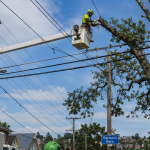
Tripoli Tree Care operates at this level of responsibility. As a locally-owned Pittsburgh company staffed by ISA-Certified Arborists and TCIA-standard crews, Tripoli handles everything from same-day invasive removals to the controlled extraction of 100-foot pine trees in tight residential spaces.
The following four case studies illustrate how different tree challenges were resolved through structured planning, responsive communication, and skilled execution with results that consistently exceeded client expectations.
Case Study 01: Same-Day Invasive Tree Removal to Stop Spotted Lanternfly Spread
The Situation
When the client named – Carrie M. noticed two Tree of Heaven trees on her property, the concern went beyond aesthetics. Tree of Heaven (Ailanthus altissima) is one of the most aggressively invasive species in Western Pennsylvania and critically, it serves as a primary host plant for the Spotted Lanternfly, an invasive pest that has been spreading rapidly across the Pittsburgh region.
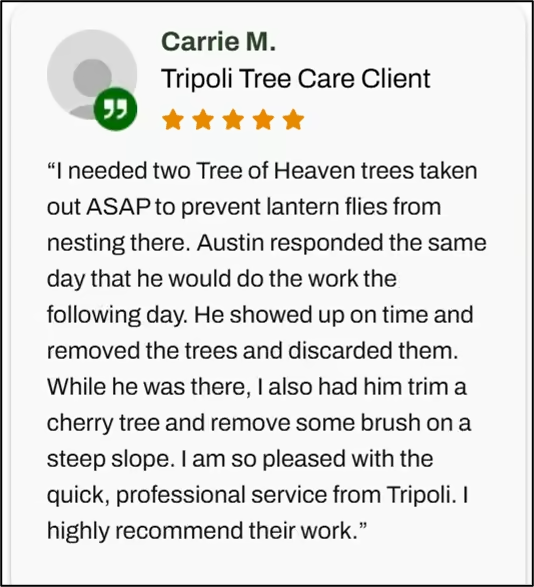
The Spotted Lanternfly feeds on over 70 plant species and poses a serious threat to Pennsylvania’s agricultural and residential landscapes. Trees of Heaven, left standing, can function as a breeding and feeding hub that draws infestations toward a property and its neighbors. Timing was everything, every additional day of delay increased the risk of pest activity taking hold. Carrie contacted Tripoli Tree Care needing the trees removed as quickly as possible. Austin, a Tripoli crew member, responded the same day with a confirmed plan to perform the removal the very next morning.
Execution Strategy
Tripoli Tree Care’s crew arrived on time as scheduled. The removal prioritized not only safe cutting but also appropriate disposal of the material, since improper handling of invasive tree debris can inadvertently spread pest populations to new locations.
While on-site, our team member, Austin was also asked to address additional work:
- trimming a cherry tree
- clearing brush on a steep slope adjacent to the property
Rather than treating this as a separate job, our crew incorporated the additional scope into the same visit, handling the slope work safely and efficiently.
Results
- Two Tree of Heaven trees fully removed within 24 hours of initial contact
- Invasive material properly discarded to prevent Spotted Lanternfly spread
- Cherry tree trimmed during the same service visit
- Steep slope brush cleared without incident
- No damage to surrounding landscaping or structures
- Pest infestation risk eliminated before it could escalate
Client’s Feedback
Case Study 2: Precision Removal of a 100-Foot Pine Tree in a Tight Residential Space
The Situation
A massive pine tree standing over 100 feet tall had grown into a position of serious structural risk on the client – Bridget W.’s property. The tree was located in close proximity to the home, with a confined access zone that left minimal margin for error. Trees of this scale introduce compounding risks:
- Trunk weight and canopy mass create significant momentum during any fall
- Proximity to a residential structure eliminates the option of standard directional felling
- Confined space means equipment placement must be carefully engineered
- Root systems in Pittsburgh’s clay-heavy soils may be saturated, affecting base stability
A job of this type is not simply large; it is technically demanding in ways that require certified arborist planning, precision rigging, and experienced crew coordination.
Gabriel and his crew at Tripoli Tree Care assessed the site and developed a removal plan built around controlled sectional dismantling, with rigging systems used to direct each section away from the structure.
Execution Strategy
The removal proceeded in carefully managed segments.
- Each section was rigged and lowered in a controlled sequence, with the crew maintaining ground control throughout.
- The approach eliminated the risk of unintended structural contact at every stage of the operation.
- Particular attention was paid to the final trunk sections, where proximity to the home demanded the most precise directional work.
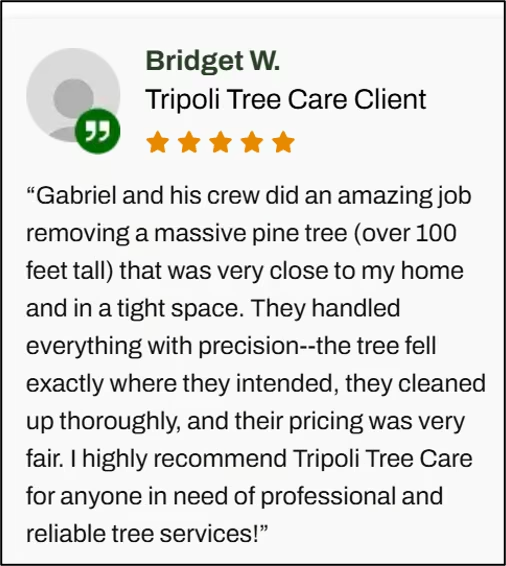
- The tree fell exactly where the crew intended a result of deliberate planning and skilled execution, not chance.
Following removal, the crew completed a thorough site cleanup, clearing all debris before leaving the property.
Results
- 100+ foot pine tree safely removed from a tight residential space
- Tree fell precisely on the planned fall line with no structural contact
- Zero damage to the home, landscaping, or surrounding property
- Thorough debris cleanup completed post-removal
- Pricing assessed as fair for the scope and complexity of the work
Client’s Feedback
Case Study 03: Full-Day Multi-Tree Pruning with Shape Restoration and Complete Cleanup
The Situation
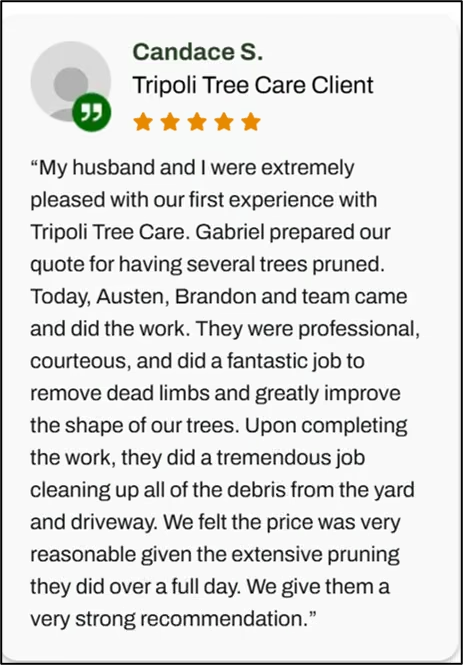
The client – Candace S. and her husband contacted Tripoli Tree Care to address several trees on their property that required professional pruning. Gabriel visited the property first to conduct a formal assessment and prepare a detailed quote ensuring the homeowners understood the full scope of work before any crew arrived.
The job involved multiple trees requiring dead limb removal and canopy reshaping. Improperly pruned or neglected trees in Pittsburgh’s climate carry compounding risks:
- dead limbs can fail during wind or ice events
- crossed branches create friction wounds that invite disease, and
- dense canopies that restrict airflow accelerate fungal development during the humid summer months.
The work called for ANSI A300 pruning standards and a crew capable of sustaining precise, methodical work across a full day of operation.
Execution Strategy
Austen, Brandon, and Tripoli’s crew arrived and worked through the property systematically. Their approach followed a structured pruning sequence:
- Dead and structurally compromised limbs were identified and removed first
- Crossing branches were addressed to reduce future wound points
- Canopy shape was improved to enhance airflow and storm resilience
- The team maintained ongoing communication with the homeowners throughout, checking satisfaction at multiple points during the job
Upon completing the primary scope, Tripoli’s crew went beyond the agreed work proactively trimming additional smaller limbs they identified as needing attention, at no extra cost to the client. Debris removal was treated as a core part of the job, not an afterthought. The yard and driveway were left completely clean.
Results
- Multiple trees pruned and reshaped across a full day of work
- Dead limbs and crossing branches fully removed
- Tree canopies improved for airflow, light penetration, and storm resistance
- Additional limbs proactively trimmed by crew at no extra charge
- Complete debris removal from yard and driveway
- Client satisfaction confirmed through direct communication during the job
Client’s Feedback
Case Study 04: Overgrown Multi-Tree Trimming with Neighbor Clearance and Ongoing Attention to Detail
The Situation
The client named – Dale contacted Tripoli Tree Care to address 3 overgrown trees on his property. The trees had grown to a point where clearance from both his home and a neighboring structure had become a concern, a situation common on Pittsburgh’s densely spaced residential lots, where property lines are close and tree canopies can extend across boundaries.
Overgrown trees near structures create multiple risk layers.
- Limb contact with rooflines or siding accelerates moisture damage and pest entry points.
- Heavy canopies with poor clearance become amplified hazards during Pittsburgh’s wind, ice, and wet snow events.
- From a neighborly standpoint, overhanging growth into an adjacent property can create friction before it ever creates damage.
The job required not just cutting, but considered canopy management/balancing clearance goals with the long-term structural health of each tree.
Execution Strategy
The Tripoli crew approached the job with a client-centered methodology. Rather than completing a predetermined scope and moving on, our team maintained active communication with Dale throughout, asking multiple times during the operation whether he was satisfied with the work and whether anything additional was needed.
This approach led the crew to identify and trim smaller limbs that had not been part of the original request but which, in their professional judgment, warranted attention. The client had not flagged these; the crew noticed them independently and acted.
Cleanup was completed to a high standard, with the trees left looking visibly improved in both structure and appearance.
Results
- 3 overgrown trees trimmed with meaningful clearance from both structures
- Neighbor-side clearance achieved as a primary outcome
- Additional limbs trimmed proactively by crew based on professional assessment
- Thorough cleanup completed post-operation
- Client satisfaction confirmed through direct, ongoing communication during the job
- All trees left in improved structural condition
Why Property Owners Choose Tripoli Tree Care
Across all four cases, a consistent set of operational strengths explains why Pittsburgh homeowners trust Tripoli Tree Care over other options in the region.
- Same-day responsiveness sets the tone before any crew ever arrives on-site. When a situation involves invasive species, storm damage, or urgent structural risk, the ability to confirm a plan within hours and execute the following morning materially reduces harm and gives homeowners confidence that the situation is under control.
- ISA-Certified Arborist oversight ensures that every job is evaluated through a professional lens, not just a labor lens. From the initial site assessment to the final pruning decision, certified expertise shapes how work is planned and carried out.
- Precision execution on difficult jobs, whether a 100-foot pine in a confined residential space or steep slope brush clearing reflects a team that has invested in both the right equipment and the right skills. Pittsburgh’s terrain demands this. Tight lots, sloped ground, narrow gates, and historic homes with zero margin for error are the norm here, not the exception.
- A genuine commitment to client satisfaction runs through every case. Tripoli crews don’t complete the agreed scope and leave they ask. They check in. They proactively identify additional work that should be done and address it without being asked. This isn’t customer service language; it shows up in what clients actually describe.
- Complete site restoration is treated as part of the job, not an add-on. Yards, driveways, and surrounding landscaping are left clean and ready for use. No debris, no shortcuts.
Tripoli Tree Care at a Glance
- ISA Certified Arborists trained to the highest standards in tree health, removal, and risk assessment
- Tree Care Industry Association (TCIA) Member: Tripoli Tree Care operates under strict safety and ethical standards on every job
- BBB A+ Rated consistent record of professional conduct and client satisfaction
- Fully Licensed and Insured liability and workers’ compensation coverage for complete protection
- 24/7 Emergency Tree Service available around the clock across Pittsburgh and Allegheny County
- Free Estimates: no upfront cost, transparent pricing with no surprises
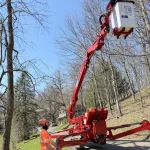
- Advanced Equipment Fleet: spider lifts, bucket trucks, grapple saws, AlturnaMATS, and precision rigging built for Pittsburgh’s terrain
- 5-Star Rated: Over 1000 satisfied clients across the Pittsburgh metro
- Serving all of Allegheny County: Fox Chapel, Shadyside, Mt. Lebanon, Sewickley, Wexford, Squirrel Hill, Bethel Park, and beyond
Summary Checklist: Tree Risk Assessment
| Condition | Risk Level | Recommended Action |
| Tree on or against house | Critical | Immediate emergency response |
| Invasive tree near structures | Critical | Remove and dispose properly |
| 100+ foot tree near home | Critical | Certified arborist assessment required |
| Uprooting or leaning tree | Critical | Remove before collapse |
| Dead limbs over structures | High | Controlled pruning or removal |
| Decaying trunk or crown | High | Schedule removal promptly |
| Overgrown canopy near neighbor | Moderate | Professional trimming |
| Dense canopy with poor airflow | Moderate | Structural pruning |
| No visible damage | Low | Monitor and schedule routine inspection |