One tree company wouldn’t even quote the job. Another priced it nearly three times higher than everyone else. Tripoli Tree Care removed the 44-inch-diameter diseased Pin oak, power lines and all, in a single day.
Tripoli Tree Care | Dormont / Pittsburgh, PA | ISA Certified Arborists, TCIA Member
At a Glance
| Result | Outcome |
| Tree Removed | 44-inch-diameter diseased Pin oak |
| Location | Dormont, PA |
| Completion Time | Same day |
| Utility Coordination | Dormont borough, completed before work began |
| Salvaged Material | Burls, branches, and part of the stump saved for woodworking |
| Site Cleanup | Completed to the homeowner’s satisfaction |
| Customer Feedback | “Highly recommended” |
Executive Summary
A mature Pin oak in Dormont, PA, 44 inches in diameter, had developed disease following damage from nearby water company work. The tree stood in a dense urban borough with electric wires running through and around its own canopy, conditions difficult enough that one company wouldn’t bid the job at all, and another priced it nearly three times higher than competing quotes. Tripoli Tree Care coordinated with the Dormont borough before cutting, then completed the full removal in a single day, in bitter cold and heavy wind, while setting aside wood the homeowner wanted to keep. The property was cleaned up to the homeowner’s satisfaction.
Client Profile
| Detail | Information |
| Client Type | Residential Homeowner |
| Location | Dormont, PA |
| Service Provided | Hazardous Tree Removal |
| Tree Species | Pin Oak |
| Diameter | 44 Inches |
| Project Complexity | High: disease, active power lines, dense urban lot |
| Completion Time | Same day |
Project Facts
| Project Facts | |
| Cause of Decline | Disease following water company excavation damage |
| Key Hazard | Electric wires through and around the canopy |
| Setting | Dense urban borough, tight lot |
| Coordination | Dormont borough, completed before work began |
| Conditions | Bitter cold, heavy wind |
| Bids Received by Homeowner | 3 (one additional company declined to bid) |
| Material Salvaged | Burls, branches, part of the stump |
Why the Homeowner Needed a Hazardous Tree Removal
The Pin oak had shaded the property for years, and the homeowner was sorry to lose it. The decline wasn’t old: it traced back to damage from work the water company had done near the tree, the kind of root or trunk injury that can open a mature tree to disease it would otherwise resist. Excavation near a tree’s root zone can sever or compress roots built up over decades, and the resulting stress often doesn’t show up right away. It tends to surface gradually, over one or more growing seasons, which matches the pattern this homeowner described: a tree that had been fine, then wasn’t.
Once a large, diseased tree is wired into overhead power lines a few feet from a house in a dense borough, an inspection isn’t optional and neither is a plan for getting it down safely.
The Challenge
Disease with No Clear Timeline
The tree’s disease stemmed from utility excavation damage rather than age or storm impact, which meant there was no single dramatic event marking when it became urgent, just a homeowner watching a tree they’d trusted for years start to decline.
Live Wires Through the Canopy
Electric wires didn’t just run near the tree, they ran through and around it. Any removal plan had to account for cutting and dropping wood around live lines on the property, not just clearing a wide berth.
A Dense Urban Lot
Dormont is a dense, urban borough: tight lot lines, close-set homes, and little margin for error on a tree this size. That combination is exactly what makes some companies avoid a job rather than price the risk into a fair bid.
Why One Company Declined and Another Overpriced It
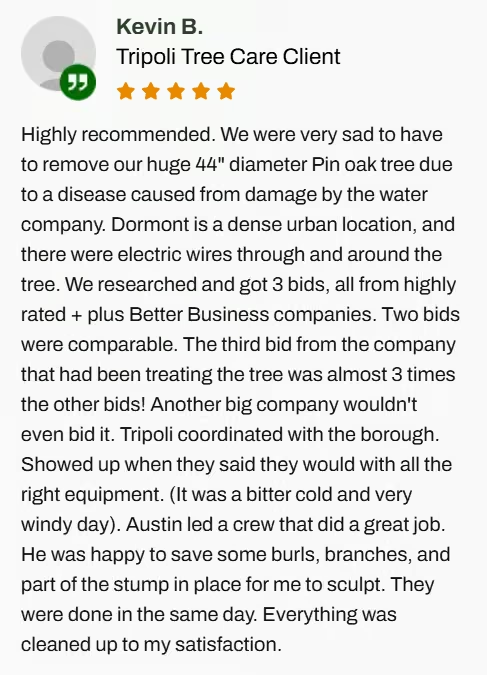
The homeowner did their homework, collecting three bids from highly rated, BBB-affiliated companies. Two of the three were in a comparable range. The third, from the company that had already been treating the tree for disease, came in at almost three times the other quotes. A separate, larger company wouldn’t submit a bid at all. Between a company unwilling to take on the risk and another pricing as if the homeowner had no other option, the field narrowed fast.
Why the Homeowner Chose Tripoli Tree Care
The review doesn’t spell out a single deciding factor, but the pattern is clear from what happened next: Tripoli’s bid was one of the two reasonable, comparable quotes, not the inflated one. The company coordinated with the Dormont borough ahead of time instead of leaving that step for later, showed up on the day they said they would even as the weather turned bitter and windy, and was willing to work around the homeowner’s request to keep part of the wood rather than defaulting to a standard haul-everything-away job.
The Approach
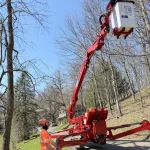
The review doesn’t specify which pieces of equipment were used on this particular removal, only that the crew “showed up when they said they would with all the right equipment.” Tripoli’s general fleet, built for tight Pittsburgh-area lots, includes compact spider lifts, bucket trucks, grapple saw attachments for hands-free limb removal near structures, and rigging systems for controlled lowering in confined spaces, the kind of equipment a job like this, live wires and all, would call for. What’s confirmed is the sequence: borough coordination first, then a same-day removal despite the weather, with specific pieces set aside at the homeowner’s request.
Project Execution
- Coordinated with the Dormont borough before any cutting began
- Crew arrived on the scheduled day despite bitter cold and heavy wind
- Removed the 44-inch Pin oak from around the electric wires running through its canopy
- Set aside burls, branches, and part of the stump in place, at the homeowner’s request, for later woodworking
- Completed the full removal and cleanup in a single day
Results
| Result | Outcome |
| Diseased Pin Oak | Removed safely from a power-line-tangled canopy |
| Timeline | Completed in one day |
| Borough Coordination | Completed before work began |
| Weather | Bitter cold, heavy wind, no delay to the schedule |
| Salvaged Wood | Burls, branches, and part of the stump preserved |
| Cleanup | Completed to the homeowner’s satisfaction |
In Kevin’s Words
Why This Project Succeeded
Permit and utility coordination came first. Contacting the borough before cutting, rather than after a problem came up, is what let the crew work around live wires on a tight lot without incident.
The crew showed up as promised, in bad conditions. Bitter cold and heavy wind are exactly the kind of day a less committed crew reschedules. This one didn’t.
The job was planned around what the homeowner wanted, not a default process. Saving burls, branches, and part of the stump for woodworking meant treating the material as something to preserve, not just debris to clear.
Tripoli was willing to take a job others weren’t. One competitor wouldn’t bid it at all. Tripoli did, at a price in line with other qualified companies rather than the near-triple quote from the company already familiar with the tree.
Frequently Asked Questions
Can a Diseased Tree Be Removed if Power Lines Run Through It?
Yes, but it requires more planning than a standard removal. This Dormont job involved a 44-inch Pin oak with electric wires running through and around the canopy, and Tripoli coordinated with the borough before any cutting began.
How Long Does a Hazardous Tree Removal Like This Take?
It depends on the tree’s size, condition, and access. In this case, a 44-inch-diameter diseased oak tangled in power lines on a dense urban lot was fully removed in a single day, despite bitter cold and heavy wind.
Can Homeowners Keep Parts of a Removed Tree?
Often, yes, if you ask ahead of time. In this job, the crew set aside burls, branches, and part of the stump at the homeowner’s request so the wood could be used for woodworking instead of being hauled away.
Why Do Tree Removal Estimates Vary So Much for the Same Job?
Risk and specialization affect the price. On this job, two of the three bids were in a similar range, but a third, from a company already familiar with the tree, came in at nearly three times the others. Another large tree company declined to bid on the project because of its complexity.
Do You Need Approval Before Removing a Tree in an Allegheny County Borough?
Requirements vary by municipality. Tripoli Tree Care checks local requirements for the property address and handles permit or borough coordination when needed, as it did with the Dormont borough before this tree removal project began.
About Tripoli Tree Care
| Company Profile | |
| Location | 2525 Winchester Dr, Pittsburgh, PA 15220 |
| Certifications | ISA Certified Arborists, TCIA Member |
| Rating | BBB A+ |
| Insurance | Full liability and workers’ compensation coverage |
| Estimates | Free, on-site |
| Ownership | Locally owned and operated |
Tripoli Tree Care grew out of a friendship between Gabriel and Austin, starting with a few chainsaws and a dump trailer before growing into a full-service tree care company serving homeowners and businesses across Allegheny County and parts of Washington County, PA. Services include tree removal, trimming and pruning, stump grinding, storm damage cleanup, and land clearing.
Been Told a Tree Is Too Dangerous to Remove?
If you’ve been told a diseased or hazardous tree near power lines is too risky to touch, or you’ve gotten wildly different estimates for a complex removal, it’s worth talking to a team experienced in permit-coordinated, utility-adjacent tree work. Call Tripoli Tree Care at (412) 659-8267 for a free, on-site estimate.