You may be able to remove a tree that blocks your view in Pittsburgh, but ownership and applicable restrictions must be confirmed first. Wanting a clearer view does not automatically give you the right to remove or substantially alter a tree.
The answer depends on whether the tree is entirely on your property, belongs to a neighbor, grows on a boundary, or stands within a public right-of-way. Municipal rules, HOA requirements, utility easements, deed restrictions, or development conditions may also affect the work.
Removal is not always the only practical option. Selective pruning may improve a sightline while preserving a healthy tree, provided the work can be completed without damaging its structure.
Tripoli Tree Care can evaluate the tree and explain suitable pruning or removal options. We do not determine legal ownership, establish property boundaries, or provide legal advice.
Can You Remove a Tree on Your Own Property for a Better View?
Removing a tree entirely on your private property may be possible, but you should verify ownership and any applicable restrictions before approving the work. A healthy tree may still be subject to municipal, zoning, development, easement, or HOA requirements.
The reason for removal also affects how you should approach the decision. A tree that blocks part of a view presents a different situation from one that is dead, unstable, damaging a structure, or interfering with necessary property use.
Before removing a healthy tree, confirm that the trunk and root flare are fully within your property. Fences, hedges, retaining walls, and mowing patterns do not always follow the recorded boundary.
You should also consider whether the desired sightline can be created through selective pruning. Removing a tree can change shade, privacy, wind exposure, and the appearance of the property. Those changes may be difficult to reverse.
If removal remains the preferred option, our tree removal service can assess the tree’s condition, access, nearby structures, utilities, and cleanup requirements.
Can You Remove a Neighbor’s Tree That Blocks Your View?
You should not authorize pruning or removal of a neighbor’s tree without the owner’s permission. A blocked view does not, by itself, establish ownership or create permission to enter another property and alter the tree.
Start with a direct conversation about the concern. Explain which part of the canopy affects the view and ask whether the owner would consider an arborist assessment.
Any agreement should clearly identify:
- Which tree will be evaluated
- What work the owner is willing to consider
- Who will arrange and pay for the service
- Where workers and equipment may enter
- How debris and cleanup will be handled
- Whether written permission is needed before work begins
Do not rely on a verbal assumption when significant pruning or removal is proposed. Written approval can help prevent confusion about the authorized work.
Pennsylvania property questions involving overhanging branches, tree damage, ownership, or boundary disputes can be fact-specific. Consult a qualified attorney before cutting when legal rights or responsibilities are unclear.
What If the Tree Is Growing on the Property Line?
A tree with its trunk on or very near a property line may involve ownership and consent questions for both properties. Verify the boundary before authorizing removal or major pruning.
Visual markers are not always reliable. A fence may sit inside one property, while a hedge or retaining wall may follow the terrain rather than the legal boundary. Old landscaping can also make the ownership of a mature tree appear clearer than it is.
A licensed surveyor can identify the recorded property line. An attorney can advise you about ownership, consent, and potential liability if the tree is found to be shared or disputed.
Our arborists can evaluate the tree’s health, structure, and pruning options after the work boundary is established. We cannot replace a survey or make a legal ownership determination.
What If It Is a Street or Public Tree?
A tree in a Pittsburgh right-of-way, City park, or other public property may be controlled by the City rather than the adjacent property owner. Do not remove or prune it until ownership and authorization are confirmed.
A tree planted between the sidewalk and street is a common example, but location alone should not be used as proof of ownership. Right-of-way boundaries vary, and some public trees may stand in locations that appear to be part of a private yard.
The City of Pittsburgh states that requests involving pruning, removal, stump work, or root work on City street and park trees must go through its Forestry Division tree-work request process. Residents can submit a request through 311 for the City to evaluate the tree.
The City also has a permit process for residents who want to hire a private contractor to work on a City-controlled tree. Approval should be obtained before the contractor begins.
Trees on public land should not be altered solely to open a private view. The responsible agency must evaluate and authorize the requested work.
Do Pittsburgh Property Owners Need a Tree-Removal Permit?
A permit is not automatically required for every tree-removal project, but the answer depends on the tree’s ownership, location, and connection to other regulated work. Confirm the requirements for the individual property before scheduling removal.
City-owned street and park trees are maintained through the Pittsburgh Forestry Division. The City’s Forestry FAQ directs residents to use 311 when requesting pruning or removal of a City-owned tree.
Private tree work may raise separate questions if the property is subject to zoning conditions, an approved development plan, an easement, an HOA agreement, or another recorded restriction. Tree removal connected to grading, construction, or a larger land-development project may also require additional review.
Requirements outside Pittsburgh’s city limits can differ by municipality. A Pittsburgh mailing address does not always mean a property is governed by the City of Pittsburgh. Contact the municipality responsible for the parcel when its jurisdiction is unclear.
Before approving removal, verify:
- Who owns the tree
- Whether it stands in a public right-of-way
- Whether the property is inside Pittsburgh city limits
- Whether an HOA or recorded agreement applies
- Whether removal is part of construction or development work
- Whether a utility easement affects access or authority
- Whether another owner’s written consent is necessary
Our team can discuss the physical tree work, but the property owner remains responsible for confirming ownership and required authorization.
Can Pruning Restore the View Without Removing the Tree?
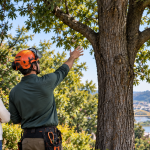
Selective pruning may improve a view while preserving a healthy tree. The amount of improvement depends on the species, canopy structure, tree condition, desired sightline, and amount of foliage that can be safely removed.
Vista pruning focuses on selected branches that obstruct a specific sightline. It is not the same as cutting off the entire top or heavily stripping the interior canopy.
A suitable plan may involve:
- Removing selected small branches
- Reducing specific portions of the canopy
- Raising limited lower growth where appropriate
- Removing dead, broken, or crossing branches
- Creating a framed sightline through the canopy
Not every requested view can be opened without harming the tree. Some trees have a growth pattern or branch structure that offers few safe pruning options. Removing too much live foliage can place stress on the tree and create long-term maintenance problems.
Our tree trimming and pruning service can determine whether selective pruning is a reasonable alternative to removal.
Why Is Tree Topping a Poor Way to Open a View?
Tree topping removes large portions of the upper canopy without following the tree’s natural structure. It can create large wounds, remove excessive foliage, and stimulate weakly attached regrowth.
The immediate opening may appear to solve the view problem, but the result is often temporary. Rapid new shoots can refill the space and require repeated corrective work.
Topping can also leave the remaining branches more exposed to sunlight and weather. Weak regrowth may become a concern during Pittsburgh’s wind, snow, and ice events.
We do not recommend indiscriminate topping as a view-management method. A qualified assessment should identify pruning cuts that respect the tree’s structure and limits.
When Might Removal Be More Appropriate Than Pruning?
Removal may be more appropriate when pruning cannot safely provide the desired result or the tree has a separate condition that makes retention impractical. The decision should account for tree health, structure, placement, and long-term property plans.
Professional removal may be considered when:
- The tree is dead or severely declining
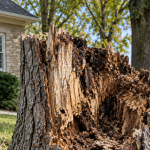
- The trunk or major branches are structurally compromised
- Roots have been extensively damaged
- Storm damage has left the tree unstable
- The tree is poorly placed for its mature size
- The tree conflicts with necessary construction or property access
- Safe pruning would not meaningfully improve the sightline
- The required pruning would remove too much living canopy
- A long-term landscape plan includes suitable replacement planting
A healthy view-obstructing tree does not automatically need to come down. Our arborists can compare the realistic pruning options with the consequences and scope of removal.
If the tree presents an immediate threat because of active cracking, sudden leaning, hanging limbs, or storm failure, contact our emergency tree service. Stay clear of the tree and contact the utility provider if any part is touching a power line.
What Should You Consider Before Removing a Healthy Tree?
Removing a healthy tree may solve the view problem, but it can also change how the property looks and functions. Consider the full effect before making an irreversible decision.
Review the following:
- Shade and cooling: Removing the canopy may increase direct sunlight on the yard, windows, walls, or paved surfaces.
- Privacy: A tree may screen your property from neighboring homes, roads, or commercial areas.
- Drainage and slopes: Roots interact with the surrounding soil, which deserves consideration on sloped or erosion-prone areas.
- Wildlife: Mature trees may provide food, cover, or nesting space.
- Wind exposure: Removal can leave previously sheltered trees or outdoor areas more exposed.
- Replacement planting: A smaller or better-positioned tree may support long-term landscape goals.
- Property appearance: The yard, home, and surrounding view may look substantially different after removal.
- Stump management: Decide whether the stump will remain or be addressed through professional stump grinding.
- Ownership and approval: Confirm boundaries, public ownership, HOA requirements, and any required authorization.
If replacement planting is part of the plan, consider the mature height and spread of the new tree. Our tree planting service can help evaluate placement, available space, and future clearance needs.
How Do We Evaluate a Tree That Is Blocking a View?
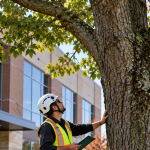
We evaluate the requested sightline together with the tree’s health, structure, location, and work boundaries. The goal is to identify what can be done safely without promising a result that the tree cannot support.
During an on-site assessment, our team may consider:
- Confirmed ownership and authorized work boundaries
- Tree species, age, and growth pattern
- Overall health and structural condition
- The branches creating the obstruction
- The amount of foliage that would need to be removed
- Nearby homes, utilities, fences, roads, and landscaping
- Hillside conditions or retaining walls
- Equipment and crew access
- Suitable pruning options
- Whether removal can be completed safely
- Stump grinding and cleanup needs
- Possible replacement planting locations
Closely spaced homes and narrow yards may limit how workers and equipment reach the tree. Sloped ground, saturated soil, neighboring property, and overhead lines can also affect the work plan.
Tripoli Tree Care provides tree assessments throughout our Greater Pittsburgh service area. We recommend confirming property rights and permissions before the scheduled work date.
What Affects the Cost of Pruning or Removing the Tree?
The cost depends on the tree, property, access, and approved scope of work. A tree that appears simple from the ground may require additional planning because of its condition or surroundings.
Pricing factors may include:
- Tree height and trunk diameter
- Tree health and structural stability
- Canopy density and branch size
- Amount of pruning requested
- Yard and equipment access
- Slope and ground conditions
- Proximity to buildings, fences, and landscaping
- Utility conflicts
- Required equipment
- Debris hauling and cleanup
- Stump grinding
- Permit or public-agency coordination
- Number of trees included in the project
Removal and pruning are different scopes, so they should be evaluated separately. A limited pruning project may cost less than removal, but unsafe or excessive pruning is not a suitable shortcut.
An on-site assessment allows us to develop a written estimate based on the actual work rather than an unsupported price range.
Questions to Ask Before Approving the Work
Ask practical questions about ownership, the tree’s condition, and the expected result before signing off on pruning or removal. Clear answers can prevent boundary disputes and unrealistic expectations.
Useful questions include:
- Is the tree entirely on my property?
- Could it be a street, public, or boundary tree?
- Do I have written permission from every required owner?
- Does the property have HOA, easement, or deed restrictions?
- Can selective pruning create a useful view?
- How much live canopy would need to be removed?
- Would the proposed pruning affect tree health or structure?
- Is removal justified by any health or safety concern?
- What equipment access will the project require?
- How will nearby structures and landscaping be protected?
- Does the estimate include debris cleanup?
- Will the stump remain after removal?
- Would replacement planting be appropriate?
If ownership or legal authority remains uncertain, pause the project. A surveyor, municipal department, HOA representative, utility provider, or attorney may need to answer those questions before tree work begins.
Frequently Asked Questions
Can I remove a healthy tree simply because it blocks my view?
Possibly, if you own the tree and no municipal, zoning, HOA, easement, or other restriction prevents the work. A desire for a better view does not authorize work on a public, boundary, or neighboring tree. Confirm ownership and required approvals before scheduling removal.
Can I cut branches from my neighbor’s tree?
Do not cut branches from a neighbor’s tree without first confirming your legal rights and the effect on the tree. Pennsylvania property disputes can depend on specific facts. Speak with the owner, obtain appropriate permission, and consult a qualified attorney if the rights or potential liability are unclear.
Who owns a tree growing on a property line?
Ownership may require a boundary survey and legal review when the trunk stands on or near the recorded property line. Do not rely only on a fence, retaining wall, hedge, or landscaping pattern. Tripoli Tree Care can assess the tree but cannot establish the legal boundary.
Does vista pruning permanently restore a view?
No. Trees continue growing, and the sightline may gradually close again. How long the view remains open depends on the species, growth rate, pruning method, and amount of foliage involved. Future maintenance may be necessary, but pruning should remain within limits the tree can tolerate.
Do I need permission to remove a street tree in Pittsburgh?
Yes. The City of Pittsburgh requires requests for work on City-owned street and park trees to go through the Forestry Division and 311. Residents who want to hire a private contractor for a City-controlled tree must follow the City’s application and permit process before work begins.
Can Tripoli Tree Care determine who owns the tree?
No. We can evaluate the tree’s health, structure, location, and suitable work options, but we do not establish property ownership. A surveyor may be needed to confirm a boundary, while a municipal department or attorney may need to resolve public ownership or legal questions.
Ask Our Team to Evaluate Your Options
A tree blocking your view may be a candidate for selective pruning, removal, or continued maintenance. The appropriate choice depends on ownership, permission, tree condition, structure, location, and the amount of canopy involved.
Contact Tripoli Tree Care or call (412) 659-8267 to request a professional assessment or estimate. Our team can explain the practical tree-care options after you have confirmed the property boundary and authority to approve the work.