Winter in Pittsburgh and Allegheny County brings unique challenges for tree health. While our mature trees display remarkable resilience against cold temperatures, winter conditions can stress even the hardiest specimens. Understanding how Pittsburgh’s Zone 6b climate affects your trees and implementing strategic protection measures ensures they emerge healthy and vigorous when spring arrives.
Key Takeaways
- Pittsburgh’s Zone 6b winters bring temperature swings, ice storms, and drying winds that stress both young and mature trees.
- Protect trees with deep fall watering, proper mulching, trunk wraps, and anti-desiccant sprays on evergreens.
- Avoid pruning spring-flowering species during winter; focus instead on structural and safety pruning for shade trees.
- Prevent snow, ice, and wildlife damage with timely snow removal, cabling, bracing, and protective barriers.
- Hire ISA-certified arborists for high-risk or storm-damaged trees especially near structures.
- Early preparation in late fall and inspections before spring thaw help trees recover stronger and healthier.
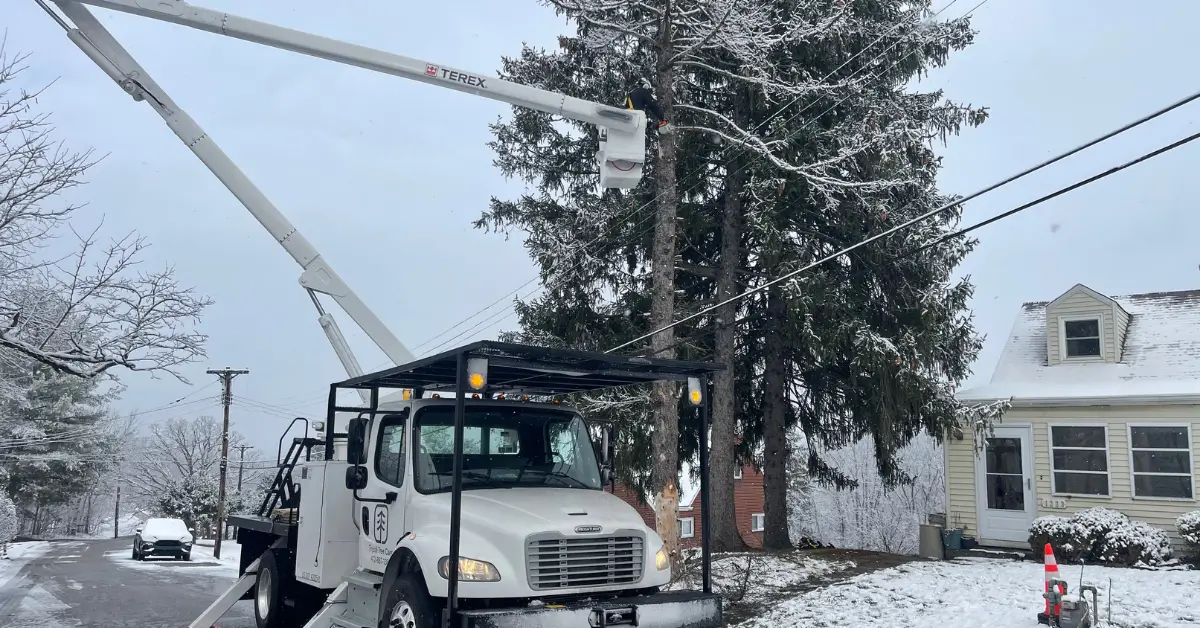
Pittsburgh’s winter weather patterns (characterized by temperature fluctuations, heavy snow loads, ice storms, and drying winds) demand proactive tree care. This comprehensive guide provides Pittsburgh homeowners with practical, science-based strategies to protect landscape investments throughout the coldest months.
Understanding Pittsburgh’s Winter Climate and Tree Impacts
Our Unique Zone 6b Environment
Pittsburgh sits firmly in USDA Hardiness Zone 6b, where average annual minimum temperatures range between 5°F and 0°F. The USDA Plant Hardiness Zone Map, developed by the United States Department of Agriculture, is the standard by which gardeners and growers determine which perennial plants are most likely to thrive at a location. However, recent climate patterns show warming trends, with some areas shifting toward Zone 7a characteristics. These temperature ranges mean:
- Cold Hardy Trees Thrive: Species adapted to significant cold periods flourish
- Temperature Swings Create Stress: Rapid warming followed by sudden freezes damages unprepared tissues.
- Extended Freeze Periods: Ground remains frozen for weeks, limiting water availability
- Variable Snowfall: Heavy snow events alternate with ice storms and rain
Common Winter Threats to Pittsburgh Trees
- Freeze-Thaw Cycles: Pittsburgh’s location creates volatile temperature patterns. Sunny winter days warm tree bark, activating cellular activity. When temperatures plummet overnight, these active cells freeze, causing internal damage. South and southwest-facing trunks are particularly vulnerable.
- Sunscald and Frost Cracking: Young trees and those with thin bark experience sunscald (vertical cracks running up trunks from freeze-thaw stress). These wounds never fully heal and create entry points for disease and insects. The dramatic temperature differences between daytime warmth and nighttime cold cause bark to expand and contract beyond its tolerance.
- Winter Drought and Desiccation: Evergreens lose moisture through their needles throughout winter. When the ground freezes solid, roots cannot absorb replacement water. This imbalance leads to winter burn (browning foliage on yews, hemlocks, arborvitae, and pines). Deciduous trees also require moisture reserves to sustain dormant tissues.
- Snow and Ice Damage: Pittsburgh’s winter storms deposit heavy snow and ice on branches. Accumulated weight bends limbs beyond their breaking point, snapping branches and splitting trunks. Multi-leader trees with weak V-shaped crotches are especially susceptible. Evergreens with dense foliage catch more snow, increasing damage risk.
- Wildlife Damage: Food scarcity drives rabbits, voles, mice, and deer to chew tree bark. Girdling (bark removal encircling the trunk) severs the tree’s nutrient transport system, causing death. Young trees face the greatest risk as their thin bark provides easier access to nutritious inner layers.
Pittsburgh Winter Tree Threats: Quick Reference Guide
| Winter Threat | Trees Most Affected | Peak Risk Period | Warning Signs | Prevention Method |
| Sunscald/Frost Cracking | Young trees, maples, cherries, and thin-barked species | December – February | Vertical cracks on the south/southwest trunk | Tree wrap, white trunk paint |
| Winter Burn | Evergreens (yews, arborvitae, hemlocks, boxwoods) | January – March | Brown/bronze foliage, especially on the windward side | Anti-desiccant spray, burlap windbreaks, deep watering |
| Snow/Ice Damage | Multi-leader trees, evergreens, Bradford pears | December – March | Bent branches, split crotches, broken limbs | Structural pruning, cabling, and prompt snow removal |
| Wildlife Damage | Young trees, fruit trees, maples, smooth-bark species | November – March | Stripped bark at base, gnaw marks, girdling | Tree guards, hardware cloth, repellents |
| Winter Drought | Newly planted trees, evergreens, and stressed trees | All winter | Wilting, brown foliage in spring, dieback | Deep fall watering, mulching |
| Salt Damage | Roadside trees, foundation plantings near sidewalks | January – March | Brown leaf margins, stunted growth in spring | Burlap barriers, rinse foliage in spring |
Essential Winter Tree Care Practices for Pittsburgh
Deep Watering Before Ground Freeze
Water constitutes the first line of defense against winter stress. Penn State Extension recommends proper watering practices to ensure trees enter dormancy with adequate moisture reserves when properly hydrated before freeze-up.
When to Water:
- Begin supplemental watering in early November if fall rainfall is below average
- Continue through late November until the ground freezes solid
- Focus on newly planted trees, evergreens, and trees in exposed locations
How to Water Effectively:
- Apply water slowly at the drip line (outer edge of canopy)
- Deliver 10 gallons per inch of trunk diameter
- Water deeply rather than frequently to encourage deep root development
- Use soaker hoses for extended slow watering sessions
- Avoid watering during warm spells when the ground thaws
Strategic Mulch Application
Mulch performs multiple winter protection functions, making it perhaps the most cost-effective care practice Pittsburgh homeowners can implement.
Mulch Benefits:
- Temperature Moderation: Insulates soil, preventing freeze-thaw cycling that damages roots
- Moisture Retention: Reduces water loss from frozen ground during temporary thaws
- Root Protection: Buffers extreme temperature impacts on shallow root systems
- Spring Preparation: Breaks down over winter, enriching the soil for spring growth
Proper Mulching Technique:
- Apply 2-4 inches of organic mulch (shredded hardwood, wood chips, or bark)
- Create a donut shape around the tree, not a volcano against the trunk
- Extend mulch to the drip line when possible
- Leave 3-6 inches of space between mulch and trunk to prevent moisture buildup and rodent nesting
- Apply mulch after the ground freezes to discourage mice from establishing winter homes
Trunk Protection for Young and Vulnerable Trees
Trees under five years old and those with thin, smooth bark require physical protection from winter hazards.
Tree Wrap Application:
- Use light-colored tree wrap or plastic tree guards
- Begin wrapping at ground level, overlapping each layer by one-third
- Wrap upward to just below the lowest branches
- Secure at the top without constricting the trunk
- Remove wrapping in early spring (late March) to prevent moisture accumulation
Which Trees Need Wrapping:
- Newly planted specimens (less than 3 years in the ground)
- Thin-barked species: maples, cherries, crabapples, lindens, ashes
- Trees planted on south or southwest exposures
- Young fruit trees
Protective Measures for Evergreens
Evergreen trees and shrubs face unique winter challenges in Pittsburgh’s climate due to continuous moisture loss through foliage.
Anti-Desiccant Sprays:
- Apply protective coatings in late November and again in late January
- These products create a waxy barrier, reducing moisture loss
- Focus on yews, arborvitae, boxwoods, and hemlocks
- Reapply after heavy rain or ice storms
- Follow product instructions regarding temperature requirements
Physical Wind Barriers:
- Construct burlap screens on the windward sides of exposed evergreens
- Stake burlap 12-18 inches from the plant to allow air circulation
- Protect the south and southwest faces from sun exposure and drying winds
- Use evergreen boughs propped against small specimens for natural protection
Strategic Winter Pruning
Pittsburgh’s dormant season provides optimal timing for many pruning activities, but understanding what to prune and what to avoid prevents problems.
Advantages of Winter Pruning:
- Enhanced Visibility: Leafless deciduous trees reveal structural issues
- Disease Prevention: Cold temperatures suppress pathogens and insects at wound sites
- Reduced Stress: Dormant trees tolerate pruning without active growth interruption
- Storm Preparation: Removing damaged and weak branches prevents winter storm damage
What to Prune in Winter:
- Dead, diseased, or damaged branches (anytime)
- Weak, crossing, or rubbing branches
- Water sprouts and suckers
- Structural corrections on young trees
- Most shade trees (maples, oaks, ashes, elms)
What NOT to Prune in Winter:
- Spring-flowering trees and shrubs (lilacs, forsythia, dogwood, magnolia)
- Birches, maples, and elms in late winter (heavy sap flow)
- Storm-damaged branches on oaks (wait until March to reduce oak wilt risk)
Snow and Ice Management
Heavy snow and ice accumulation damage branches and permanently deform tree structure when not properly managed.
Safe Snow Removal:
- Gently brush snow from branches using an upward motion
- Remove snow after each storm before it freezes solid
- Focus on evergreens that collect heavy loads
- Never shake branches or use force (you’ll cause more damage)
- Leave ice accumulation alone; removal attempts break branches
Preventive Structural Support:
- Cable and brace trees with weak crotches before winter
- Thin dense evergreen canopies in fall to reduce snow catch
- Prune competing leaders and poor attachments in late fall
- Consider professional support systems for valuable specimens
Wildlife Damage Prevention
Protecting bark from hungry animals preserves tree health and prevents girdling mortality.
Effective Deterrents:
- Install hardware cloth cylinders around young tree trunks (24-30 inches high)
- Extend protection above the expected snow line
- Wrap trunks with plastic tree guards
- Apply deer repellents monthly on foliage and branches
- Create a 3-inch gap between mulch and trunk to discourage vole travel
Species Most at Risk:
- Fruit trees (apples, pears, cherries)
- Maples and birches
- Young evergreens
- Ornamental trees with thin bark
Special Considerations for Common Pittsburgh Trees
Sugar Maples and Norway Maples
Our abundant maple population requires specific winter attention. Late winter brings heavy sap flow; avoid pruning from January through March. Wrap young maples to prevent sunscald on smooth gray bark. Watch for brittle branches on Norway maples during ice storms.
Oak Trees
Pittsburgh’s magnificent oaks should be pruned only during winter dormancy (December through February) to minimize oak wilt transmission risk. Remove dead branches promptly, but avoid major pruning during spring and summer when beetles spread disease.
Evergreens (Yews, Arborvitae, Hemlocks)
These foundation plantings suffer winter burn from desiccation. Apply anti-desiccant sprays, ensure adequate fall watering, and construct burlap windbreaks for exposed specimens. Heavy snow flattens arborvitae; brush snow off promptly.
Crabapples and Ornamental Cherries
These spring bloomers develop flower buds in the fall. Avoid winter pruning that removes flowering wood. Wrap trunks to prevent sunscald. Watch for storm damage on brittle cherry branches.
Bradford Pears
Despite their popularity, Bradford Pears have weak wood prone to winter storm damage. Professional cabling and bracing can extend their lifespan, but consider replacement with stronger alternatives.
Recognizing and Responding to Winter Damage
Identifying Winter Injury
Winter damage manifests in various forms, some immediately apparent and others emerging during spring growth:
Immediate Signs:
- Broken or hanging branches
- Split trunks or major limbs
- Stripped or chewed bark
- Leaning or uprooted trees
Delayed Symptoms (Visible in Spring):
- Browning evergreen foliage
- Dieback of branch tips
- Reduced leaf emergence
- Wilted or discolored new growth
- Vertical bark cracks
Appropriate Responses
For Broken Branches:
- Remove hanging branches immediately to prevent further damage
- Make proper pruning cuts at branch collars
- Don’t leave stubs that invite decay
- Call professionals for large branches or high work
For Sunscald Cracks:
- Clean loose bark from wound edges
- Allow the tree to naturally compartmentalize damage
- Do not apply wound dressings or paints
- Wrap trunk following winter to prevent recurrence
For Winter Burn on Evergreens:
- Wait until mid-to-late spring to assess damage
- Brown foliage is dead and won’t recover
- Buds often survive and produce new growth
- Prune dead material only after new growth confirms what survived
- Fertilize and water well during the growing season
Why is Professional Winter Tree Care Important
While homeowners can implement many protective measures, professional arborists provide valuable expertise for Pittsburgh’s demanding winter conditions. Penn State Extension offers guidance on when to seek professional arborist services, emphasizing that arborists certified by the International Society of Arboriculture (ISA) have passed rigorous knowledge tests and follow industry standards.
Professional Services Include:
- Structural assessments identifying weak branches and crotches before storms
- Cabling and bracing systems prevent storm damage to valuable trees
- Crown thinning reduces wind resistance and snow accumulation
- Strategic pruning maintains tree health while improving storm resistance
- Emergency response for storm-damaged trees threatening property
- Treatment planning for disease and pest issues discovered during dormancy
When to Call Professionals:
- Trees near structures or high-traffic areas
- Large branches requiring removal
- Trees showing signs of disease or structural weakness
- Storm damage assessment and cleanup
- Cabling and bracing installations
- Any work requiring climbing or aerial equipment
Preparing for Spring Success
Winter care investments pay dividends when spring arrives. Trees protected from winter stress break dormancy with vigor, producing robust growth and resisting pest and disease challenges. Pittsburgh’s variable spring weather (late frosts, heavy rains, and rapid temperature changes) demands that trees enter the growing season in strong condition.
Late Winter Checklist (February-March):
- Remove tree wraps before active growth
- Inspect for winter damage requiring pruning
- Plan spring fertilization programs
- Schedule professional pruning for non-flowering species
- Prepare for spring watering as the ground thaws
- Order mulch for spring application
Local Resources for Pittsburgh Tree Care
Pittsburgh-area homeowners have access to valuable resources supporting winter tree care efforts:
- Pennsylvania State Extension: Provides research-based information on tree care practices adapted to Pennsylvania conditions.
- Tree Pittsburgh: Local nonprofit offering education, resources, and sometimes subsidized tree care services for Pittsburgh residents.
- Allegheny County Conservation District: Assists with conservation planning and may guide on protecting significant trees.
- Pennsylvania DCNR: Offers information on native tree species well-adapted to Pennsylvania winters.
Protecting Your Pittsburgh Landscape Investment
Trees represent significant investments in property value, energy efficiency, and quality of life. Pittsburgh’s winter conditions challenge even established specimens, making proactive care essential rather than optional. The combination of proper watering, mulching, physical protection, and strategic pruning creates resilient trees capable of thriving through our unpredictable winters.
Understanding your trees’ specific needs, monitoring winter conditions, and responding appropriately to challenges ensures your landscape emerges from winter ready for another season of growth and beauty.
Need expert help with winter tree care? Tripoli Tree Care provides comprehensive winter tree services throughout Pittsburgh and Allegheny County, including professional pruning, storm damage assessment, protective treatments, and emergency services. Our certified arborists understand local conditions and deliver solutions protecting your valuable landscape investments.
Call 412-659-8267 for a consultation or visit us at Winchester Dr, Pittsburgh, PA.