What Is Tree Removal?
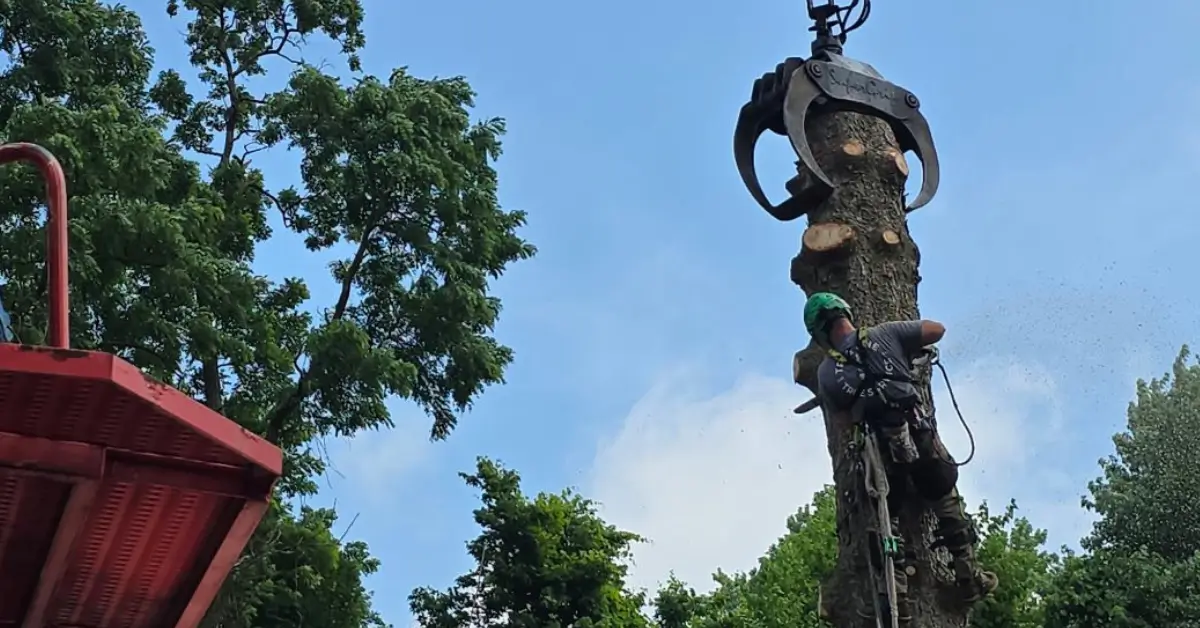
Tree removal is the complete elimination of a tree from a property, involving systematic dismantling of the trunk, branches, and sometimes root system through specialized cutting, rigging, and equipment techniques. This process requires professional expertise to safely remove trees that have become hazardous, diseased, structurally compromised, or incompatible with property use, while protecting surrounding structures, landscapes, and utility infrastructure throughout the operation.
Reviewed by an ISA-Certified Arborist
Key Takeaways
- Dead or dying trees pose immediate safety hazards, including falling branches, complete collapse, and attracting wood-boring insects that can spread to healthy trees.
- Storm damage often creates hidden structural issues that make trees unstable even when they appear intact, requiring professional assessment.
- Disease and pest infestations can spread rapidly through your landscape if infected trees aren’t removed, threatening the health of surrounding vegetation.
- Trees too close to structures threaten foundations, roofs, and utilities through invasive root systems and overhanging branches.
- Construction and landscape renovation frequently necessitate removal to accommodate building projects, utility installations, or design changes.
- Professional arborist assessment is essential before deciding on removal, as some situations can be resolved through pruning, cabling, or treatment.
- Pittsburgh’s urban forestry regulations require permits for removing trees in public right-of-way areas, though private property trees generally don’t need permits.
This comprehensive guide examines the legitimate reasons homeowners throughout the Pittsburgh area need professional tree removal services. Understanding these situations helps you recognize genuine hazards, make informed decisions about your property’s trees, and know when to consult with qualified arborists.
Safety Hazards: When Trees Become Dangerous
The most compelling reason for tree removal involves protecting people and property from harm. Trees can develop conditions that make them genuinely hazardous, requiring prompt attention before catastrophic failure occurs.
Dead and Dying Trees
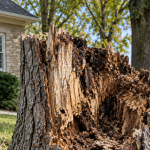
A dead tree is a structural failure in progress. Once a tree dies, decay fungi break down the wood, turning solid fibers into soft, unstable material that can’t support weight. As a certified arborist, I’ve seen many emergencies caused by postponed removals. One dead ash tree in Shadyside snapped during a 40-mph windstorm and crushed two vehicles. The damage cost four times more than removing the tree proactively.
How to identify a dead tree:
- Complete absence of leaves during the growing season
- Bark falling off in large sections, exposing bare wood
- Brittle branches that snap easily rather than bend
- Mushrooms or fungal growths on the trunk or at the base
- Woodpecker activity and holes indicating insect infestation
- No green cambium layer when you scratch the bark with a knife
Dying trees present similar hazards, though the timeline before failure may be longer. According to the Pennsylvania Department of Conservation and Natural Resources, trees showing progressive dieback, where portions of the canopy die back from the tips, often have root problems, vascular diseases, or severe stress that will ultimately prove fatal.
Structural Defects and Damage
Trees can develop structural problems that compromise their stability, even when they’re technically alive. These defects create unpredictable failure points where branches or entire trunks can break without warning.
- Split trunks and crotches: Trees with multiple trunks often develop included bark, where bark becomes embedded in the junction between stems, rather than wood-to-wood contact forming. This creates a weak attachment that can split apart, particularly during storms or under ice and snow loads. Bradford pear trees, commonly planted throughout Pittsburgh neighborhoods in the 1980s and 1990s, are notorious for this problem.
- Visible cracks and cavities: Large cracks running vertically through trunks indicate serious structural compromise. These can develop from storm damage, lightning strikes, extreme temperature fluctuations, or internal decay. Similarly, cavities, hollow areas inside the trunk, reduce the amount of sound wood supporting the tree’s weight. While trees can survive for years with cavities, the remaining shell may not withstand storm forces.
- Root problems and lean: Trees that begin leaning suddenly indicate root failure. While some trees naturally grow at angles, a new lean, particularly after storms or during wet weather when soil becomes saturated, means roots have lost their anchoring capacity. You might notice soil heaving on one side or cracks in the ground around the base.
Storm Damage Assessment
Pittsburgh’s weather subjects trees to multiple stress events throughout the year, including winter ice storms that load branches with heavy ice, severe summer thunderstorms with straight-line winds, and occasional tornado activity that causes devastating damage.
After any significant storm, survey your trees for damage. Even if they remain standing, they may have sustained critical injuries requiring removal. According to the U.S. Forest Service, storm-damaged trees should be evaluated by professionals as hidden damage often proves more serious than visible injuries suggest.
Storm damage requiring professional evaluation:
- Large branches broken but hanging in the canopy (widow makers)
- Bark stripped from the trunk, exposing the wood
- Soil disruption around the base or visible roots
- Cracks in the trunk or major limbs
- Significant lean that wasn’t present before the storm
- Trees struck by lightning, which can cause internal damage not visible externally
Health and Disease Issues: Protecting Your Landscape
Trees suffer from numerous diseases and pest infestations that can necessitate removal, both to eliminate hazards and prevent spread to healthy trees.
Emerald Ash Borer Devastation
Emerald ash borer (EAB) has decimated ash tree populations throughout Pennsylvania since the invasive beetle was first detected in the state in 2007. According to the Pennsylvania Department of Agriculture, this invasive insect has killed hundreds of millions of ash trees across North America.
Pittsburgh’s ash population has been severely impacted. The beetle’s larvae feed on the cambium layer just beneath the bark, disrupting the tree’s ability to transport water and nutrients. Infested trees typically die within two to four years, though the process can be faster in stressed trees.
Signs of emerald ash borer infestation:
- D-shaped exit holes in the bark, about 1/8 inch in diameter
- Serpentine galleries are visible under loose or missing bark
- Canopy dieback starts at the top and progresses downward
- Excessive woodpecker activity is creating rectangular holes as they feed on larvae
- Epicormic sprouting, new shoots emerging from the trunk below dead branches
- Bark splitting and falling off in sections
I’ve removed countless EAB-infested ash trees throughout Allegheny County. Once an ash tree shows advanced symptoms, treatment is generally no longer effective, and removal becomes necessary. Dead or dying ash trees become extremely brittle and dangerous to remove, making early intervention important.
Other Diseases Requiring Removal
- Oak wilt: This vascular disease affects oak trees, particularly red oak species. The fungus blocks water-conducting vessels, causing rapid decline and death. Oak wilt spreads through root grafts between nearby trees and through insect vectors. According to the Pennsylvania State University Extension, infected trees should be removed promptly to prevent spread, and stumps must be ground to sever root connections.
- Dutch elm disease: While American elm populations have been devastated since the mid-20th century, occasional mature survivors still exist in Pittsburgh. When these trees contract Dutch elm disease through bark beetle vectors, they decline rapidly. Removal is necessary both for safety, as dead elms become brittle, and to reduce disease pressure on any remaining elms.
- Fire blight on ornamental trees: Ornamental pear and apple trees can develop fire blight, a bacterial disease that causes branches to die back with a characteristic “scorched” appearance. While pruning can sometimes manage minor infections, severely affected trees often require removal.
- Root rot diseases: Fungi like Armillaria and Phytophthora attack root systems, causing trees to decline and become unstable. Trees with extensive root rot cannot be saved and must be removed before they fall.
Pest Infestations Beyond EAB
- Spotted lanternfly: This invasive pest, first detected in Pennsylvania in 2014, feeds on numerous tree species, including tree-of-heaven, maples, black walnut, and fruit trees. While feeding damage alone rarely requires removal, heavily infested trees already stressed by other factors may decline beyond recovery.
- Wood-boring beetles: Various beetle species bore into stressed or dying trees, accelerating their decline. Large infestations can make trees structurally unstable as beetles create networks of galleries that weaken the wood.
- Tent caterpillars and gypsy moths: While defoliation from these pests rarely kills healthy trees, repeated defoliation combined with other stressors can push trees beyond their ability to recover.
Property and Infrastructure Conflicts
Trees growing in locations that interfere with structures, utilities, or property use often require removal to prevent damage or accommodate necessary changes.
Foundation and Structural Threats
Tree roots don’t actually “attack” foundations, but they do seek water and can exploit existing cracks, widening them as roots expand. More commonly, large trees growing too close to homes create problems through:
- Soil moisture depletion: Large trees extract substantial water from the soil, particularly during dry periods. Pittsburgh’s clay soils shrink when dried, potentially causing foundation settlement. This is especially problematic with large maples, willows, and poplars that have high water demands.
- Physical pressure: Roots growing beneath shallow foundations or spreading under driveways and sidewalks can lift concrete slabs as they enlarge. I’ve seen numerous situations where tree roots buckled sidewalks, created trip hazards, and pushed against foundation walls.
- Branch contact with structures: Trees with branches touching or overhanging roofs create multiple problems. Rubbing branches abrades shingles, shortening the roof’s lifespan. Leaves and organic debris accumulate in gutters, causing water damage. Branches provide highway access for squirrels and other wildlife to reach your attic. Most seriously, branches hanging over your house become potential battering rams during storms.
Septic System and Underground Utility Conflicts
Trees with aggressive root systems can infiltrate septic drain fields, sewer lines, and water pipes. Tree roots seek water sources and will exploit any small opening in pipes, eventually filling them with root mass that blocks flow.
Tree species notorious for invasive roots in Pittsburgh:
- Willows (especially weeping willow)
- Silver maples
- Poplars and cottonwoods
- Elm trees
- Sycamores
Repairing sewer lines damaged by roots costs thousands of dollars. In severe cases, entire drain fields require replacement. If a tree is confirmed to be damaging underground utilities, typically through camera inspection of pipes, removal becomes necessary to prevent ongoing problems.
I worked with a homeowner in Bethel Park whose basement drains backed up repeatedly. After a plumber ran a camera through the sewer line, they discovered roots from a large willow had filled a section of pipe. We removed the tree, but the homeowner still faced expensive pipe repair and replacement. The willow had been planted decades earlier by a previous owner, too close to the sewer line.
Tree Removal for Construction and Development
Residential and commercial development projects frequently require tree removal to accommodate new structures, additions, or landscape changes.
Home Additions and Renovations
Planning a home addition, garage, pool, or other structure may necessitate removing trees in the construction footprint. Beyond the actual building site, construction equipment needs access and staging areas that may not accommodate existing trees.
Even trees outside the immediate construction zone can be damaged during building projects. Heavy equipment compacting soil around trees crushes roots and reduces oxygen infiltration. Changing soil grades or adding fill around trees can suffocate root systems. Trenching for utilities severs major roots. According to the International Society of Arboriculture, construction-related stress is a leading cause of decline and death in landscape trees.
When to plan for tree removal during construction:
- Trees directly in the building footprint
- Trees within the root protection zone where excavation will sever major roots
- Trees that will be undermined by the required excavation
- Trees that cannot survive planned grade changes
- Trees are blocking necessary access for equipment and materials
Utility Installation and Infrastructure Projects
Installing underground utilities, electric service upgrades, natural gas lines, fiber optic cables, or drainage systems often requires trenching that conflicts with tree roots. While it’s sometimes possible to route trenches around valuable trees, removal may be necessary when:
- Trenches must pass through the critical root zone
- Directional boring would still damage extensive roots
- Trees are already in poor health and unlikely to survive root disturbance
Driveway, Patio, and Hardscape Installation
Adding or expanding driveways, patios, walkways, and retaining walls changes soil conditions around trees. Compaction from heavy equipment, grade changes, and covering soil with impervious surfaces all stress trees by limiting water and oxygen to roots.
Large trees rarely survive having paving installed over their root zones. Small ornamental trees growing in planned paving areas should be removed before construction rather than attempting to work around them.
Improving Your Landscape Through Smart Tree Management
Aesthetic and practical landscaping considerations sometimes justify tree removal even when no immediate hazard exists.
Overcrowding and Poor Placement
Trees planted too close together compete for light, water, and nutrients. Crowded trees develop poor form, with asymmetrical canopies and weak branch structure. They’re more susceptible to disease as reduced air circulation promotes fungal problems.
Pittsburgh properties, particularly in older neighborhoods, often have trees that were planted without adequate consideration for mature size. What seemed appropriately spaced when planted becomes overcrowded as trees grow. Selective removal can improve overall landscape health and appearance.
Undesirable Species and Volunteer Trees
Not all trees are assets. Some species create more problems than benefits:
- Bradford pear (Callery pear): These ornamental trees have weak branch structure prone to splitting, produce masses of volunteer seedlings, and are invasive in some regions. Many homeowners choose removal to eliminate ongoing problems.
- Tree-of-heaven: This invasive species spreads aggressively through root suckers and seeds, outcompeting native vegetation. Its presence decreases property values and creates ecological problems. Removal requires careful technique to prevent resprouting.
- Mulberry trees: These produce copious fruit that stains everything beneath them and attracts wildlife that creates additional messes. Near driveways, sidewalks, or patios, mulberries are more nuisance than asset.
- Volunteer trees: Self-seeded trees often emerge in inconvenient locations, sprouting in fence lines, too close to structures, or in landscape beds. Removing them while young prevents bigger problems later.
Improving Views and Light
Mature trees can block desirable views or create excessive shade that prevents grass growth or makes yards perpetually damp. Strategic tree removal can open vistas, allow more sunlight to reach your home and landscape, and improve property functionality.
Pittsburgh’s hilly topography means many properties have potentially excellent views of the city skyline, rivers, or surrounding hills. Trees that block these views might be candidates for removal, particularly if they’re not specimen-quality trees.
When Removal May Not Be Necessary: Alternative Solutions
Before committing to removal, consult with a certified arborist about whether alternatives might address your concerns. Some situations that seem to require removal can actually be managed through other approaches.
Pruning and Structural Support
Strategic pruning removes hazardous branches, improves structure, and creates clearance around homes. Crown reduction can safely reduce height and spread while keeping a natural look. For trees with weak unions or multiple trunks, cabling and bracing add stability and reduce failure risk. This approach often saves mature trees that would otherwise be removed.
Disease Treatment and Management
Many diseases and pests can be managed when caught early. Emerald ash borer can be treated with trunk injections in healthy ash trees. Oak wilt may be contained through root trenching. Fungal issues often improve with better drainage, soil care, and pruning that increases airflow. Root stress can recover with soil amendments and proper watering.
Selective Limb Removal
Rather than removing an entire tree, removing specific problematic limbs may solve the issue. A tree touching your roof might only need a few branches removed rather than complete removal. Trees blocking views can often be thinned or crown-raised to open vistas while preserving the tree.
Working with Certified Arborists: Making Informed Decisions
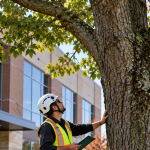
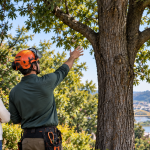
The decision to remove a tree should be based on professional assessment rather than assumptions or convenience. Certified arborists have the training to evaluate tree health, identify hazards, and recommend appropriate actions.
What an Arborist Assessment Includes
Professional tree assessment involves:
- Visual inspection: Examining the entire tree from base to crown for signs of decline, disease, damage, or structural defects.
- Site evaluation: Considering the tree’s location relative to targets (structures, people, property) that could be damaged if the tree fails.
- Risk assessment: Determining the likelihood of failure and the potential consequences.
- Species-specific knowledge: Understanding how different tree species respond to stress, disease, and aging.
- Tool-based diagnostics: Using tools like resistograph drills, sonic tomographs, or pulling tests to assess internal wood condition and root stability.
I conduct dozens of these assessments throughout the Pittsburgh area each year. Sometimes homeowners are surprised when I tell them a tree they assumed needed removal is actually salvageable with proper care. Other times, trees that appear healthy to untrained eyes reveal serious hidden problems upon closer inspection.
Questions to Ask Your Arborist
When consulting about potential tree removal:
- What specific problems make this tree a candidate for removal?
- Are there alternatives to removal that might address the concerns?
- What’s the urgency? Can this wait, or does it need immediate attention?
- What risks exist if we postpone removal?
- Can this tree be treated or managed rather than removed?
Legitimate arborists will explain their reasoning and not pressure you toward unnecessary removal. However, they’ll also be direct about genuine hazards that require action.
FAQs: Why You May Need Tree Removal in Pittsburgh, PA
How do I know if a tree on my property needs to be removed?
Trees with dead branches, severe leaning, visible decay, root damage, or major cracks often require removal. If you notice no leaves in spring, mushrooms at the base, or peeling bark, have the tree assessed by a certified arborist.
Are dead trees dangerous even if they haven’t fallen yet?
Yes. Dead trees lose structural strength quickly. As wood decays, branches and entire trunks can fail without warning. In Pittsburgh, wind and storms increase the risk of collapse, making proactive removal the safer and more affordable option.
Can storm-damaged trees be saved, or do they always need removal?
Some storm-damaged trees can be saved with pruning, cabling, or structural support. But trees with split trunks, major canopy loss, or compromised roots often require removal. A professional assessment is the only way to determine the safest option.
Do diseased trees always need to be removed?
Not always. Certain diseases and pests can be treated if caught early. But advanced infections like emerald ash borer, oak wilt, and severe root rot usually require removal to prevent failure and protect nearby trees.
Do I need a permit to remove a tree in Pittsburgh?
Private property trees usually do not require permits. Trees in the public right of way do. If your tree is between the sidewalk and the street, you must get approval from the City of Pittsburgh Forestry Division before removal.
Protecting Your Property Starts With the Right Tree Care
Tree removal decisions involve balancing safety, property protection, landscape aesthetics, and environmental stewardship. While trees provide substantial benefits to Pittsburgh properties and communities, certain situations make removal the appropriate choice.
Is a tree on your Pittsburgh property causing concern? Contact Tripoli Tree Care at 412-659-8267 for a professional assessment by our certified arborists. We’ll provide honest evaluation, explain your options, and help you make informed decisions about your property’s trees.
About the Author
ISA Certified Arborist – Tripoli Tree Care
Tripoli Tree Care Team has served the Pittsburgh area for years, specializing in tree risk assessment, hazardous tree removal, and urban forest health. As an ISA-certified arborist and TCIA member, Michael has completed thousands of assessments across Allegheny County. His experience includes emergency storm response, complex removals, and consulting on tree preservation during construction and development.