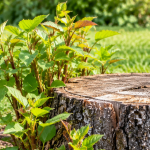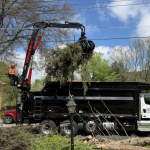
Cutting down a tree removes its trunk, but living tissue and stored energy may remain in the stump or roots. Some trees respond by pushing out shoots near the stump or farther away along surviving roots. Whether that happens depends on the tree, its condition, the time of year it was cut, and what removal work was done. Stump grinding can clear the visible stump, but it does not necessarily remove every living root.
How a Cut Stump Produces New Shoots
A tree can send out new growth when dormant buds near the base or on surviving roots become active after the trunk is removed. While the tree was standing, its main stem and canopy shaped where growth occurred. Cutting the trunk changes that pattern, and a living stump or root system may respond by producing shoots. Penn State Extension explains that stump sprouts can develop from dormant buds around the root collar after injury or other stressful changes.
The stump and root system may also have stored carbohydrates available to support early growth. Once a shoot produces leaves, it can make more energy through photosynthesis, which may help the plant continue growing. That is why a small sprout can appear vigorous even when the original tree has been cut down.
Stump Sprouts and Root Suckers Are Different
Stump sprouts emerge from the cut stump or near the base of the trunk. Root suckers emerge from living roots, sometimes a short distance from where the tree stood. A homeowner may notice a cluster beside the stump, a line of shoots across the lawn, or isolated growth farther out in the yard.
The location can offer a clue, but it does not confirm the cause. Shoots away from the stump could come from a root sucker, a seed, or a nearby plant. If the source is unclear or the growth keeps appearing, a professional assessment can help identify what is happening before you decide how to manage it.

Why Some Stumps Regrow and Others Do Not
Regrowth varies because trees differ in their ability to produce shoots, and each tree’s condition and removal history are different. Species is one factor: some trees are more likely to sprout from stumps or roots than others. The University of Minnesota Extension notes that sprouting ability varies by species, and Mississippi State University Extension identifies species, size, and age as factors in stump-sprouting potential.
The condition of the stump and roots matters too. A tree that was alive and vigorous when cut may have more living tissue and stored reserves than a tree that was already dead or severely declining. Root damage, decay, or other stress can change the outcome, so there is no dependable rule based on stump appearance alone.
Season can influence the response, but it does not provide a guaranteed way to prevent shoots. Trees have different growth cycles and energy reserves through the year, and seasonal effects can vary by species and conditions. A stump cut in one season may sprout differently from another, but the timing alone cannot tell a homeowner whether regrowth will occur.
Removal method also plays a part. Cutting a tree at ground level leaves the stump and roots in place. Grinding removes much of the visible stump, while full root excavation is a different and more disruptive scope of work. Even after grinding, some roots or remaining stump tissue may still be alive and capable of producing shoots.
What Stump Grinding Removes and What It Leaves Behind
Stump grinding reduces the stump to wood chips below the soil surface; it is not the same as pulling every root out of the ground. Tripoli Tree Care’s stump grinding service page describes grinding stumps below grade and removing surface roots. The depth and scope of a particular job depend on the site and the work agreed upon.
Underground roots may remain after the visible stump is ground away. Those roots generally decay over time, but stump grinding does not guarantee that every possible source of new growth has been eliminated. Iowa State University Extension explains that stump removal and natural decay vary with the tree and site; Illinois Extension distinguishes grinding from mechanical excavation, which can remove more of the stump and larger roots but disturb more of the surrounding area.
If your main goal is to remove a tripping hazard or reclaim the surface for lawn use, grinding may address that need even if underground roots remain. If you are planning construction, grading, or a new planting in the same spot, tell the tree care company. The preparation needed for a new use may differ from what is needed to clear the visible stump.
Tripoli’s tree removal service covers tree removal, while stump grinding is listed separately as a service. Keeping those steps distinct helps set expectations: taking down the tree does not automatically mean the stump or entire root system has been removed.
What Homeowners Can Do When Shoots Appear
Start by observing where the shoots are growing and whether they return after being cut. Note whether they emerge from the stump, at ground level nearby, or farther out in the yard. Avoid assuming that every shoot is connected to the removed tree; a young seedling or another plant can look similar.
For small shoots that are easy to reach, cutting them back can keep the area manageable. However, removing visible growth does not remove the source, and sprouts may return. University of Maryland Extension explains that shoots can use stored energy in the roots and that repeated removal may be needed; the time required to stop regrowth is difficult to predict.
A practical approach is to:
- Keep track of where new shoots appear and how often they return.
- Cut or remove accessible shoots before they become difficult to manage.
- Avoid mowing over woody shoots if doing so could damage equipment or create flying debris.
- Get advice before applying a stump or vegetation control product.
- Contact a tree care professional if shoots keep spreading or interfere with your plans for the yard.
Chemical products are not a universal fix. The right treatment, if any, depends on the plant, the product label, nearby vegetation, and local requirements. Penn State Extension notes that stump treatments can have different effects on the stump and the roots, so homeowners should not assume that treating the cut surface will stop every root sucker.
When Professional Help May Make Sense
Professional help may be useful when recurring shoots cover a wider area, the source is uncertain, or you want to use the space for another purpose. An assessment can help determine whether the growth is connected to the old tree and whether grinding, further removal, or continued monitoring makes sense. Avoid digging or using heavy equipment around an old root system without understanding what is nearby, especially where underground utilities or hardscape may be present.
Tripoli Tree Care serves the greater Pittsburgh area, including communities such as Green Tree. The company’s Green Tree service page lists tree removal and stump grinding among its services. Its Cherry Tree removal case study also describes a project that included stump grinding and removal of the grindings.
If you are deciding between waiting for natural decay and clearing the stump, Tripoli’s guide to how long a tree stump takes to decay discusses the tradeoffs. This article focuses on a narrower question: why shoots can return and what the remaining stump or roots may be doing. For property owners across the region, the Tripoli service area page lists the communities the company serves. An assessment can help match the removal scope to how you plan to use the yard.