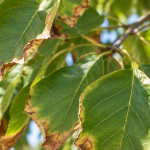
Brown edges on tree leaves usually mean that stress is preventing the leaf tissue from receiving enough usable moisture. Dry soil can cause this problem, but so can saturated soil, damaged roots, compacted ground, salt exposure, extreme heat, and certain diseases.
This symptom is often called marginal leaf scorch. It describes what the leaves look like, not necessarily what caused the damage.
Before watering, fertilizing, spraying, or pruning, look at the entire tree and the conditions around it. The pattern of browning, when it began, recent weather, and changes to the property can help narrow down the possible cause.
What Do Brown Leaf Edges Usually Mean?
Brown leaf margins usually indicate that the tissue along the outside of the leaf has dried out and died. The outer edges are often affected first because they are among the farthest areas from the leaf’s water-conducting vessels.
Several conditions can interfere with water absorption or movement:
- Soil that has become too dry
- Roots damaged by construction or landscaping
- Compacted soil that restricts root growth
- Saturated soil with too little oxygen
- Hot, dry, or windy weather
- Salt or chemical exposure
- Vascular or foliar disease
The same appearance can develop from very different problems. That is why brown leaf edges should be treated as a clue rather than a complete diagnosis.
Brown leaves also do not automatically mean the tree is dying. A tree may develop scorched tree leaves during a period of temporary stress and still retain a healthy structure, viable buds, and enough functional foliage to continue growing.
What Is Marginal Leaf Scorch?
Marginal leaf scorch is visible browning that begins along the tips and outside edges of leaves. The damaged area may gradually move inward as the underlying stress continues.
Some leaves develop a yellow or reddish band between the healthy green tissue and the dry brown margin. Other leaves may curl, wilt, or drop early. The exact pattern can vary by tree species, severity, and cause.
Environmental leaf scorch can result from heat, dry soil, excessive moisture, salt, root injury, or other growing conditions. Bacterial leaf scorch is a specific disease that can produce a similar appearance. Using the word “scorch” alone does not distinguish between them.
A reliable diagnosis requires more than looking at one leaf. We consider the tree species, symptom pattern, soil moisture, root area, recent weather, and property history together.
Can Drought Make Leaf Edges Turn Brown?
Yes, drought can cause leaf margins to turn brown when the roots cannot replace moisture as quickly as the leaves lose it. This imbalance becomes more likely during extended dry periods, especially when temperatures and winds are high.
Possible signs of a drought-stressed tree include:
- Browning across exposed parts of the canopy
- Wilting or curling leaves
- Premature leaf drop
- Dry soil several inches below the surface
- Shorter or weaker new growth
- Symptoms that appeared after prolonged dry weather
Recently planted trees may be especially sensitive because their roots have not spread far into the surrounding soil. Large established trees can also experience tree water stress, particularly where pavement, construction, or limited rooting space reduces access to moisture.
Drought is only one possible explanation. Our guide to drought-stressed trees in Pittsburgh provides more detailed information about recognizing dry-soil stress and making appropriate watering decisions.
Can Too Much Water Cause Similar Browning?
Yes. An overwatered tree can develop brown leaf edges because saturated soil reduces the oxygen available to its roots. Tree roots need both moisture and oxygen to function properly. When soil remains saturated, water fills pore spaces that would normally contain air, which can restrict root function and water uptake. how overwatering causes brown leaf edges and root stress.
Soil may remain excessively wet because of frequent irrigation, poor drainage, compacted ground, heavy clay soil, changes in grading, or runoff collecting around the root zone. Poorly drained soil can contain plenty of water while still having too little oxygen for healthy roots. how saturated soil affects tree roots.
If root function declines, the canopy can show symptoms that resemble drought stress even though plenty of water is present. Overwatering may cause yellowing, marginal scorch, wilting, leaf loss, and canopy decline.
Possible clues include:
- Soil that stays wet long after rainfall or irrigation
- Standing water near the tree or root zone
- Yellow leaves combined with brown margins
- Sparse or weak canopy growth
- Decline around the trunk base or root flare
- Symptoms that continue despite frequent watering
- A recent grading, drainage, or irrigation change
- Compacted or poorly drained soil
University of Minnesota Extension recommends checking actual soil moisture rather than relying only on a fixed watering schedule. Overwatering can be particularly harmful in clay and compacted soils, where drainage and oxygen movement are already restricted. tree watering and soil moisture guidelines
Do Not Assume Brown Leaves Need More Water
Brown leaf edges do not automatically mean a tree needs more water. Both drought and excess moisture can produce water-stress symptoms.
If the soil is already saturated, adding more water can prolong oxygen deprivation around the roots and increase stress. Utah State University specifically notes that overwatering can create browning symptoms similar to drought, which can lead people to add even more water and worsen the problem.
How Can Root Damage Affect the Leaves?
Damaged or restricted roots can cause brown leaf margins by reducing the tree’s ability to absorb and move water. Canopy symptoms may appear weeks or months after the root disturbance occurred.
Common sources of root stress include excavation, trenching, driveway installation, patio construction, grade changes, and utility work. Repeated vehicle or equipment traffic can also compress the soil and reduce the spaces that normally hold air and water.
Other possible concerns include restricted planting areas, incorrect planting depth, cut roots, and excessive mulch piled against the trunk. A tree near a sidewalk, retaining wall, parking area, or recent construction project may have more than one source of root stress.
Our article about activities and conditions that damage tree roots explains this connection in greater detail. If construction occurred before the leaves started browning, include that information when requesting a tree health assessment.
Can Soil Compaction Cause Brown Leaf Margins?
Yes, soil compaction can contribute to brown leaf margins by restricting root growth and reducing the movement of air and water through the ground. Compacted soil may shed water at the surface while remaining dry underneath, or it may drain too slowly after heavy rain.
Urban and suburban trees frequently share limited soil space with sidewalks, driveways, lawns, buildings, and utilities. Foot traffic, parked vehicles, construction equipment, and repeated activity over the root zone can gradually change the soil structure.
Avoid judging moisture by the surface alone. The top layer may look dry while the root zone remains wet, or the surface may be damp while deeper soil receives little moisture.
Can Heat, Wind, and Reflected Sun Scorch Leaves?
Yes, high temperatures, dry wind, and reflected heat can increase moisture loss from leaves faster than stressed roots can replace it. This can produce browning even when the tree has not experienced a long drought.
Symptoms may be more noticeable:
- On the sunny or wind-exposed side of the canopy
- Along outer branches
- Near large driveways, parking lots, walls, or roofs
- During hot and windy periods
- On recently planted or previously stressed trees
A tree growing near pavement will not automatically develop scorch. Its species, root space, soil moisture, existing health, and level of exposure all affect how it responds.
Western Pennsylvania’s shifts between wet spring conditions and drier summer weather can place trees under changing kinds of stress. Our overview of Pittsburgh weather and tree health explains how seasonal conditions can affect local trees throughout the year.
Can Road Salt or Fertilizer Burn Leaf Edges?
Yes, salt exposure can interfere with water uptake and contribute to dry, brown leaf margins. However, leaf appearance alone cannot confirm salt damage to trees.
Possible sources include winter deicing salt, roadside spray, salty runoff, excessive fertilizer, improper chemical application, and irrigation water with elevated salt levels. Trees near streets, sidewalks, parking lots, and drainage paths may have greater exposure.
The location and timing of symptoms matter. Browning that is worse on the road-facing side of a tree, for example, may justify a closer look at winter salt exposure. It still does not prove salt is the cause.
Do not automatically flush the soil, add amendments, or apply another product. Those actions can be ineffective or harmful when drainage is poor or the original diagnosis is incorrect.
Could a Disease Cause Brown Leaf Margins?
Yes, some diseases can produce brown margins, but disease cannot be confirmed from that symptom alone. Drought, root damage, excess moisture, salt injury, and seasonal stress can create a similar appearance.
Bacterial leaf scorch may cause progressive marginal browning in susceptible tree species. A yellow or reddish transition band can sometimes appear between brown and green tissue, but this pattern is not exclusive to the disease. Appropriate professional evaluation and, when needed, laboratory testing are important before identifying bacterial leaf scorch.
Anthracnose and other foliar diseases are more likely to produce spots, blotches, distorted leaves, or damage that follows leaf veins, although symptoms vary. Cankers and vascular diseases may also interfere with water movement and cause browning in one branch or section of the canopy.
Look for supporting evidence rather than relying on the leaf edge alone. Recurring symptoms, branch dieback, unusual spotting, bark changes, and species-specific patterns can help guide the next diagnostic step.
Could Insects Be Responsible?
Insects are not the most common cause of uniform brown leaf margins, but certain pests can injure leaves or weaken a tree enough to contribute to canopy stress. Brown edges by themselves do not justify an insecticide application.
Check the foliage, twigs, branches, and trunk for additional evidence, including:
- Chewed margins or holes
- Stippling or pale specks
- Webbing
- Sticky residue
- Scale-like bumps
- Visible insects or egg masses
- Exit holes in the bark
- Sawdust-like material near the trunk or branches
Normal insect activity, disease, and environmental stress can occur at the same time. Identifying an insect does not always mean it caused the browning, so treatment should be based on a reliable diagnosis.
Does the Pattern of Browning Help Identify the Cause?
Yes, the pattern and timing can provide useful diagnostic clues, although they rarely confirm the cause on their own. Observe the entire canopy as well as individual leaves.
Record whether:
- One branch or the whole canopy is affected
- One side of the tree looks worse
- Nearby trees show similar symptoms
- Only one tree species is affected
- Browning began after construction or landscaping
- Symptoms followed drought, heavy rain, fertilization, or chemical use
- The tree was planted recently
- The problem returns during the same season each year
- Leaves are also spotted, curled, distorted, wilted, or dropping early
Take clear photographs of the leaves, entire canopy, trunk base, and surrounding ground. Note when you first saw the change and whether it is spreading. This information can help our arborists distinguish between a temporary environmental response and a problem that needs closer investigation.
Can Brown Leaves Turn Green Again?
No, brown leaf tissue is dead and will not become green again. The goal of appropriate care is to address the underlying stress and protect the living parts of the tree.
Judge improvement by the condition of the tree as a whole, not by whether damaged leaves recover. Useful indicators include healthy remaining foliage, stable canopy density, normal bud development, healthy new growth, and no progression into branch dieback.
In some cases, the clearest sign of improvement will appear during the next appropriate growth period. Do not remove every browned leaf from a tree, since partially green leaves may still be functioning.
Should You Water a Tree With Brown Leaf Edges?
Watering may help if inadequate soil moisture is contributing to the browning. It may make the problem worse if the soil is already saturated or drains poorly.
Before watering:
- Check moisture below the surface
- Consider recent rainfall
- Look for standing water or persistently wet soil
- Review any recent drainage or grading changes
- Account for the tree’s age, species, size, and planting location
When supplemental water is appropriate, apply it slowly enough to soak into the root zone rather than running off the surface. Avoid frequent shallow watering, which may wet only the upper soil layer.
There is no single watering schedule or gallon amount that works for every tree and site. Soil texture, drainage, weather, root condition, and tree size all affect how much moisture is appropriate.
Should You Fertilize a Tree With Brown Leaves?
No, fertilizer should not be the automatic response to brown leaf margins. Fertilizer cannot correct root damage, waterlogged soil, vascular disease, or chemical injury.
Unnecessary fertilizer may add salts to the soil or encourage new growth that stressed roots cannot support. It can also delay proper diagnosis by treating a presumed nutrient problem instead of the actual cause.
Soil or tissue testing may be appropriate when a nutrient concern is suspected. Apply fertilizer or soil amendments only when the evidence supports their use.
Should Brown or Scorched Branches Be Pruned?
Brown leaves alone do not show that a branch is dead or needs to be removed. A branch may still be alive even when some or all of its leaves are scorched.
Pruning decisions depend on the branch’s condition, the extent of dieback, the tree species, the time of year, and any structural or safety concerns. Cutting healthy branches during an active stress period can reduce the tree’s remaining leaf area.
Our tree trimming and pruning services focus on evaluating branch condition and making pruning decisions based on tree health and structure. Do not remove branches solely because their leaves have brown edges.
When Should You Call an Arborist?
An arborist should evaluate the tree when the cause remains unclear, the browning continues to spread, or additional signs of decline appear. A professional assessment considers the tree and its growing site together.
Request an evaluation when:
- Browning affects a large portion of the canopy
- Symptoms worsen despite appropriate moisture
- Multiple branches begin dying
- Leaves drop much earlier than expected
- Decay appears on the trunk or exposed roots
- Fungal growth develops near the trunk or root flare
- Construction recently disturbed the root zone
- The same problem returns each year
- Several possible causes are present
- The tree is large or close to a structure
Brown margins alone are not enough to declare a tree dead or recommend removal. Our guide to signs that a Pittsburgh tree may be declining explains other changes that may justify a more complete inspection.
When Does a Tree-Health Problem Become an Emergency?
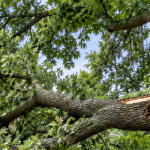
Brown leaf margins alone are usually not an emergency. A prompt safety response is needed when leaf symptoms appear alongside evidence that the tree or a major branch may be unstable.
Stay clear of the area if you notice:
- Active cracking
- A splitting trunk
- Large hanging branches
- Sudden leaning
- Root movement
- Heaving soil
- Major storm damage
- Branches contacting utility lines
- A tree threatening a home, vehicle, walkway, driveway, or road
Contact the appropriate utility provider when branches are touching or threatening electrical lines. Call emergency services if there is an immediate threat to people or occupied structures.
Tripoli Tree Care provides emergency tree service in Pittsburgh for urgent tree hazards. Property owners dealing with broken limbs or structural damage after severe weather can also review our storm damage cleanup services.
Frequently Asked Questions
Can brown leaf edges turn green again?
No. Brown leaf tissue is dead and cannot return to green. Watch the remaining foliage, buds, new growth, and branches to determine whether the tree’s overall condition is stabilizing.
Do brown edges mean my tree is dying?
No. Brown edges indicate stress or injury, but they do not prove that the entire tree is dying. The extent of the browning and the presence of branch, trunk, or root problems provide more useful context.
Can overwatering cause brown leaf tips?
Yes. Waterlogged soil can deprive roots of oxygen and reduce their ability to support the canopy. Check below the soil surface before assuming the tree needs more water.
How can I tell whether my tree needs water?
Check the moisture below the surface and consider recent rainfall, drainage, tree age, and site conditions. Dry-looking surface soil does not always mean the deeper root zone is dry.
Should I remove leaves with brown edges?
No. You generally do not need to remove individual brown leaves from a tree. Leaves that remain partly green may continue supporting the tree.
Should I fertilize a tree with brown leaves?
No, not without identifying a nutrient deficiency or another valid reason. Fertilizer may add salt, stimulate unsupported growth, or distract from drainage, root, disease, or chemical problems.
Can road salt cause leaf scorch?
Yes. Deicing salt and salty runoff can interfere with water uptake and contribute to marginal browning. The tree’s location, exposure, soil conditions, and timing of symptoms should be evaluated before salt injury is diagnosed.
When should an arborist inspect brown leaves?
Arrange an inspection when browning is widespread, keeps returning, progresses into branch dieback, or appears with root, trunk, or structural concerns. An arborist can evaluate the symptom pattern, soil, roots, weather, and property history together.
Get a Clear Assessment Before Treating the Tree
Brown leaf edges can result from dry soil, excess moisture, damaged roots, heat, salt, disease, or a combination of stresses. An accurate assessment helps you avoid watering saturated soil, fertilizing damaged roots, spraying without a diagnosis, or pruning living branches unnecessarily.
If browning is spreading, returning each year, or appearing with canopy thinning, dead branches, root problems, or structural concerns, contact Tripoli Tree Care or call (412) 659-8267. Our ISA Certified Arborists can evaluate the tree, its growing conditions, and the surrounding property before recommending an appropriate next step.