Tree topping can look like a quick way to shorten an overgrown tree or clear branches above a roof, but the visible reduction creates health and structural problems that develop for years. Topping cuts large limbs or the upper crown back to stubs that cannot take over the lost growth, which starves the tree of energy, opens it to decay, and triggers weak regrowth. That matters around Pittsburgh’s older neighborhoods like Mt. Lebanon, where mature trees grow close to homes, sidewalks, and utility lines. We do not top trees as a substitute for proper pruning. Before reducing a tree, we look at its species, condition, structure, location, and the homeowner’s goal.
What Is Tree Topping?
Tree topping cuts major branches or the upper crown back to stubs or small side branches that cannot take over the removed limb’s growth role, leaving a blunt outline rather than a natural canopy. Not every shortening cut is topping. Proper pruning uses intentional cuts based on branch structure and a clear objective.
Common professional approaches include crown cleaning to remove dead, broken, diseased, or weak branches; selective thinning for genuine canopy-density concerns; crown reduction that shortens limbs back to suitable laterals; and structural pruning that improves how a tree develops. Topping versus pruning is not about how much shorter the tree looks, it is about whether the work preserves a sound growth pattern.
Why Do Homeowners Sometimes Ask for Tree Topping?
Most topping requests begin with a reasonable concern. A tree may be taller than expected, extend over a roof, block light or a view, or raise worries about snow, ice, and wind. Topping may also seem faster or cheaper. We do not shame homeowners who agreed to it without knowing the effects, and our role is to explain what happens next and identify options based on the tree’s condition.
1. Topping Removes Too Much of the Leaf-Bearing Crown
Leaves produce the energy a tree uses for growth, defense, and recovery. Removing much of the living crown cuts that capacity while the tree is also responding to multiple wounds. The tree draws on stored reserves to replace foliage, and it may survive with rapid growth, but survival does not mean the practice was harmless. Whether topping kills a tree depends on species, age, health, site, and cut severity, and even a surviving tree may begin a longer decline, with signs a tree is declining showing up over several seasons.
2. Large Topping Cuts Can Lead to Decay
Topping often leaves large wounds or stubs the tree cannot close effectively, letting moisture and decay organisms enter the exposed wood. Trees do not heal like skin; they compartmentalize, forming boundaries around injured tissue and growing new wood around it. Correctly placed cuts give a healthy tree a better chance to manage damage, but large improper cuts can overwhelm that response, and decay may spread toward the trunk and weaken the wood supporting new growth.
3. A Stressed Tree Becomes More Vulnerable to Pests and Disease
Severe crown loss and open wounds demand stored energy, and the resulting stress reduces a tree’s ability to respond to insects, fungi, and disease. Topping does not automatically cause a specific infestation, since results vary by species, health, age, environment, and wound severity, but a weakened tree has fewer resources to isolate damage. Visible sprouts can also hide decay developing at the original cuts.
4. Topping Triggers Fast but Weakly Attached Sprouts
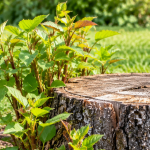
After severe crown removal, dormant buds produce clusters of fast-growing shoots called water sprouts or epicormic shoots. This emergency regrowth replaces lost leaves quickly, and it can look vigorous, but these shoots do not develop like normal branches with overlapping wood. They attach near the surface of the parent limb around a damaged area, and several may crowd one cut while growing long and heavy on weakened wood.
5. New Growth Can Increase Future Branch-Failure Risk
Topping temporarily reduces height, but it does not reduce long-term risk. Fast-growing shoots regain substantial length, and several may arise where one sound branch existed. As that growth gains weight, the attachment and the old cut matter more, and Pittsburgh’s wind, wet snow, and ice add load, especially when decay develops beneath the shoots. Not every topped tree fails, but the structure needs monitoring and corrective work. Homeowners worried about seasonal hazards can read our guide to preparing Pittsburgh trees for storm season.
6. Sudden Exposure Can Damage Bark and Interior Branches
A full canopy shades parts of the trunk and larger branches. Removing much of that cover at once exposes tissue that was not accustomed to direct sun and heat, which can contribute to sunscald, bark splitting, cankers, or dieback. Damage is not inevitable, and species, orientation, remaining canopy, and seasonal conditions all influence the result, which is why canopy reduction should be planned as a biological change, not treated as a haircut.
7. Topping Creates a Cycle of Repeated Work and Long-Term Decline
Vigorous shoots quickly undo the shortened appearance, and maintaining it means more cutting, more wounds, and more sprouts. Repeated topping increases weakly attached shoots, adds decay opportunities, raises maintenance needs, destroys the tree’s natural form, and shortens its useful life. Not every topped tree eventually needs removal, but in severe cases recurring decay or loss of usable structure can leave professional tree removal as the only practical option. That decision should follow an on-site assessment, and our guide on when removal is the better option than trimming explains how that call is made.
Does Topping Make a Tree Safer?
No, not reliably. Lowering the top does not solve the original concern, because tree safety depends on the trunk, roots, branch unions, decay, canopy, site conditions, and nearby targets. Topping may leave a root problem, split union, or decayed trunk unchanged while adding wounds and weak regrowth. The first step is identifying the actual problem, so it helps to know how to identify a hazardous tree first. If a tree is touching a power line, stay away and call for emergency help and the utility provider rather than attempting any cuts.
What Are Better Alternatives to Tree Topping?
The right alternative depends on the goal and what the tree can tolerate. Our arborists may consider crown cleaning for dead or diseased branches, selective thinning when density is a genuine concern, structural or clearance pruning, proper crown reduction using suitable laterals, phased pruning across seasons, monitoring, or removal and replacing it with a better-suited tree when a tree has outgrown an unsuitable spot. Crown reduction is not topping done more neatly; it preserves viable branch structure and directs growth through selected laterals. How often work is needed depends on the tree, and how often trees should be trimmed varies by species, age, and condition.
Can a Topped Tree Be Restored?
Some topped trees benefit from restoration pruning over time, while others have too much decay or too little sound structure for restoration to be reasonable. When we inspect a topped tree, we evaluate the time since topping, the size and condition of the old cuts, the amount of decay, the position and strength of new shoots, overall vitality, and trunk and root condition, along with nearby homes, vehicles, and utility lines. Restoration may involve selecting better-positioned shoots, reducing competing growth, and monitoring across multiple seasons. Our tree maintenance services cover that ongoing care and evaluation.
How Our Team Approaches Tree Pruning
Every pruning cut should have a reason. Our team looks at tree structure, health, clearance needs, surrounding property, and the homeowner’s goals before defining the work. We do not top trees. We may recommend selective pruning, proper reduction, restoration, or monitoring, supported by the tree’s condition, through our professional tree trimming and pruning in Pittsburgh.
Frequently Asked Questions About Tree Topping in Pittsburgh
Is tree topping ever acceptable?
As a routine way to shorten a tree, no. There are narrow cases, like reducing a hazardous stem before removal, where heavy cuts are made, but that is damage control, not maintenance, and it is decided on site by an arborist.
A tree on my property was already topped. What should I do now?
Have it assessed. Depending on decay, structure, and the strength of new shoots, we may recommend restoration pruning over a few seasons, ongoing monitoring, or removal if the structure is no longer sound.
Is crown reduction the same as topping?
No. Crown reduction shortens limbs back to suitable lateral branches that can take over, preserving the tree’s structure. Topping cuts back to stubs that cannot, which is what causes the decay and weak regrowth.
Will topping lower my storm risk?
Usually not. It leaves root or trunk problems unchanged and adds weakly attached regrowth that can fail in wind, snow, or ice. Proper structural pruning or reduction is the safer way to lower risk.
How can I reduce a tall tree’s height without topping?
Proper crown reduction, done in stages where needed, can lower height while keeping a sound branch structure. Whether it is appropriate depends on the species, size, and condition, which we check on site.
Does topping save money in the long run?
No. It tends to create a cycle of regrowth, repeat cutting, decay, and added risk, which costs more over time than correct pruning or, where warranted, removal and replacement.
Ask Us About Alternatives to Topping in Pittsburgh
If someone has recommended topping an overgrown tree, or a tree on your property was topped before, an on-site assessment can clarify the next step. The best option may be pruning, phased restoration, monitoring, or removal when the remaining structure no longer supports restoration. Tripoli Tree Care serves homeowners across Pittsburgh and Allegheny County, and our ISA Certified Arborists can assess the tree’s actual condition and explain the alternatives. Call (412) 659-8267 to request a free estimate.
External sources:
- University of California ANR, why topping trees is harmful
- International Society of Arboriculture, Why Topping Hurts Trees