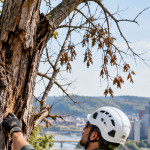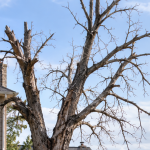
Dead branches hanging over your roof, limbs tangled in power lines, and a canopy so thick that wind cannot pass through are all signs your Pittsburgh trees need professional trimming before storm season. Waiting until after a storm hits means dealing with emergency removal costs, property damage, and potential injury. A simple pre-storm inspection and trimming session can prevent all of it.
Pittsburgh’s weather delivers everything from high-wind thunderstorms in late spring to heavy ice loads in winter. Trees that look healthy from the ground often hide structural problems that become obvious only after a limb crashes through your siding or takes out a fence. Learning what to look for now gives you the chance to act before the next storm decides for you.
Key Takeaways
• Dead or hanging branches are the most common cause of storm-related property damage from trees.
• Dense, unthinned canopies catch wind like a sail, increasing the chance of the entire tree uprooting during severe storms.
• Cracks, splits, and V-shaped branch unions are structural weak points that fail under wind, ice, or snow loads.
• Branches within 10 feet of your roof, power lines, or vehicles should be trimmed before storm season starts.
• Late winter through early spring is the best time to trim most tree species in Pittsburgh because trees are dormant and the branch structure is clearly visible.
• Professional trimming uses proper pruning cuts that help the tree heal quickly and grow back stronger, unlike topping, which weakens trees.
What Is Professional Tree Trimming?
Professional tree trimming is the selective removal of branches to improve a tree’s structure, health, and safety. According to Wikipedia’s entry on pruning, the practice involves targeting diseased, damaged, dead, or structurally unsound plant material from landscape plants. When done correctly, it encourages stronger growth patterns and reduces the risk of branch failure during high winds and heavy weather.
Trimming is not the same as topping. Topping strips a tree of its major limbs, leaving stubs that produce weak, fast-growing sprouts. These sprouts are poorly attached and far more likely to break in future storms. A professional crew makes precise cuts at the branch collar, allowing the tree to compartmentalize the wound and seal out decay naturally.
7 Signs Your Pittsburgh Trees Need Trimming Before Storm Season
1. Dead or Dying Branches in the Canopy
Dead branches are dry, brittle, and lack the flexibility of living wood. They have no buds, often show peeling bark, and may already be cracked. These are the first branches to snap during any storm, and they fall unpredictably. If you can see leafless, gray limbs while the rest of the tree is green, those branches need to come down before the next high-wind event.
2. Branches Overhanging Your Roof, Driveway, or Power Lines
Limbs that extend over structures or utility lines are the most dangerous during storms. Wind causes them to sway and scrape against roofing material, and heavy ice can bring them crashing down on vehicles, sheds, or electrical service lines. Trimming these branches back to a safe clearance distance is one of the most effective things you can do before storm season.
3. A Dense, Overcrowded Canopy
When a tree’s canopy is too thick, wind cannot pass through it. Instead, the tree acts like a sail, catching enormous forces that stress the trunk and root system. Crown thinning, the selective removal of branches throughout the canopy, reduces wind resistance while preserving the tree’s natural shape. This is one of the most effective storm prep techniques arborists use.
4. V-Shaped Branch Unions or Included Bark
Where two branches or stems meet at a tight, narrow angle, bark often gets trapped between them. This is called included bark, and it creates a weak attachment point. Unlike a wide U-shaped union that has strong, overlapping wood fibers, a V-shaped union can split apart under moderate wind or the weight of ice. If your tree has co-dominant stems (two trunks of similar size), this is especially concerning.
5. Cracks, Splits, or Cavities in Major Limbs
Visible cracks running along a branch or trunk indicate internal stress or decay. Cavities where wood has rotted away leave hollow sections that cannot bear the loads that storms produce. A tree professional can assess whether these defects make a limb or the whole tree a removal candidate, or whether targeted trimming can reduce the risk enough to keep the tree.
6. Leaning Trees or Exposed Roots
A tree that has developed a noticeable lean, especially if the lean appeared suddenly or worsened after recent weather, may have compromised roots. Exposed or heaving roots on the side opposite the lean suggest the tree is pulling out of the ground. While trimming alone will not fix a root problem, reducing the canopy weight through strategic pruning can lower the risk of a full blowdown while you plan for removal or stabilization.
7. Previous Storm Damage That Was Never Properly Repaired
Broken stubs, torn bark, and jagged branch remnants from past storms are invitations for decay and insect infestation. These weakened areas become the failure points in the next storm. Proper corrective pruning removes damaged wood with clean cuts that allow the tree to seal the wounds. Ignoring old damage compounds the risk every season.
Why Pittsburgh Trees Are Especially Vulnerable to Storm Damage
Pittsburgh’s landscape creates specific challenges for tree health and storm resilience. The city’s steep hillsides mean many trees grow on slopes where root systems develop unevenly, making them less stable in saturated soil. Clay-heavy soils common throughout Allegheny County hold water during heavy rain, loosening root grip right when wind loads are highest.
Many of Pittsburgh’s residential neighborhoods feature large, mature hardwoods that are 60 to 100 years old. Trees in this age range often develop internal decay, deadwood accumulation, and crown weight imbalances that younger trees have not yet experienced. Species like silver maple and Bradford pear, commonly planted decades ago, are particularly prone to branch failure because of their weak wood and tight branch angles.
Add Pittsburgh’s mix of thunderstorms, microbursts, ice storms, and wet snow events across multiple seasons, and the case for regular pre-storm trimming becomes clear.
How Professionals Trim Trees for Storm Preparation
The USDA Forest Service’s guide, How to Prune Trees, published through their Northeastern Area State and Private Forestry program (available here), outlines the core principles that professional arborists follow. The guide emphasizes that pruning cuts should remove only branch tissue without injuring the trunk or parent stem. Making proper cuts at the branch collar allows the tree to compartmentalize the wound and prevent decay from spreading into the main structure.
Storm-prep trimming typically includes several specific techniques:
• Crown thinning: Selectively removing branches throughout the canopy to reduce density and allow wind to pass through. No more than 25% of the living crown should be removed in a single session.
• Crown cleaning: Removing dead, dying, diseased, and broken branches to eliminate the most likely failure points.
• Crown raising: Removing lower branches to provide clearance above roofs, walkways, driveways, and vehicles.
• Structural pruning: Correcting weak branch attachments, co-dominant stems, and crossing branches in younger trees to build a stronger framework for the future.
When to Schedule Tree Trimming in Pittsburgh
For most deciduous tree species in the Pittsburgh region, late winter through early spring is the preferred trimming window. Trees are dormant, which means less stress from cutting. The bare canopy also gives arborists a clear view of the branch structure, making it easier to spot problems. Penn State Extension’s guide on pruning landscape trees notes that risk mitigation pruning targets dead, diseased, decayed, cracked, and broken branches, as well as limbs that are excessively long or large relative to the parent stem.
That said, dead and hazardous branches can and should be removed at any time of year. If you spot a large dead limb hanging over your deck in July, do not wait until winter to deal with it. Pittsburgh’s storm season does not follow a strict calendar, and neither should your safety response.
What to Expect During a Professional Tree Trimming Visit
Assessment
The crew walks your property and inspects each tree for structural defects, deadwood, canopy density, and proximity to structures and utility lines. They identify which trees need work and what type of pruning each one requires.
Work Plan
Before any cutting starts, the crew explains the scope: which branches are coming off, the technique being used, and the expected outcome. You should know exactly what you are paying for before the first saw starts.
Trimming
Using bucket trucks, climbing gear, hand saws, and chainsaws as appropriate, the crew makes precise cuts following industry standards. Branches are lowered carefully in tight spaces to avoid damage to landscaping, fences, and structures below.
Cleanup
All debris is chipped, hauled, or stacked, depending on your preference. The job site should be left clean, with no stubs, hanging bark strips, or scattered wood chips left behind.
Frequently Asked Questions About Tree Trimming Before Storm Season
How do I know if my tree needs trimming before storm season?
Walk your property and look up into the canopy. Dead branches that lack leaves, bark, or buds during the growing season are the clearest indicator. Also check for limbs crossing over each other, branches touching your roof or power lines, and any visible cracks or splits where major limbs meet the trunk. If you see any of these signs, schedule a professional inspection before storm season arrives.
What is the difference between tree trimming and tree pruning?
In practice, the terms overlap significantly. Trimming generally refers to cutting back overgrowth to maintain a tree’s shape and keep it within boundaries. Pruning focuses on removing specific branches for health, safety, or structural reasons, like dead limbs, diseased wood, or weak attachments. Storm preparation work is technically pruning because it targets hazard reduction, but most homeowners and tree companies use the terms interchangeably.
Can I trim my own trees before a storm?
You can safely handle small tasks from the ground, like cutting back low-hanging branches under two inches in diameter with hand pruners or loppers. Anything that requires a ladder, a chainsaw, or climbing should go to a professional. Improper cuts weaken trees and create future hazards. Working near power lines is especially dangerous and should always be left to trained crews.
How much does professional tree trimming cost in Pittsburgh?
Costs vary depending on tree size, number of trees, accessibility, and the scope of work needed. A single medium-sized tree might cost a few hundred dollars, while trimming several large mature trees across a property could run into the low thousands. Get at least two written estimates and make sure the price includes debris cleanup. Cheaper quotes that skip proper technique create more problems long term.
When is the best time to trim trees in the Pittsburgh area?
Late winter through early spring, while trees are still dormant, is ideal for most species. You get a clear view of the branch structure, the tree experiences less stress from cutting, and you are ahead of the spring and summer storm season. However, hazardous deadwood and broken limbs should be removed immediately, regardless of the time of year.
Will trimming hurt my tree?
Proper trimming done by a trained professional actually strengthens your tree. Clean cuts at the branch collar allow the tree to seal the wound and redirect growth energy into healthy branches. What hurts trees is topping, flush cutting, or removing too much of the canopy at once. A general rule is to never remove more than 25% of the living crown in a single session.
What happens if I skip tree trimming before storm season?
The risk goes up significantly. Dead branches become projectiles in high winds. Dense canopies catch wind and increase the chance of uprooting. Cracked limbs that held on through mild weather may fail during the next major storm. You also face higher emergency removal costs after damage occurs, which are typically two to three times more expensive than preventive trimming.
Do I need a permit to trim trees on my property in Pittsburgh?
Routine trimming of trees on private residential property generally does not require a permit. However, if the tree is within the city’s right-of-way, near a public sidewalk, or classified as a heritage or street tree, you may need approval from the City of Pittsburgh’s Forestry Division. If your project involves removing a tree entirely rather than trimming it, permit rules may also apply depending on your municipality. Check with your local government before scheduling any major tree work.
How often should trees be trimmed for storm safety?
Most mature trees benefit from professional inspection and trimming every three to five years. Younger, faster-growing trees may need attention every two to three years to correct structural issues early. Trees close to your home, garage, or power lines should be checked annually, even if full trimming is not needed every year. Regular maintenance is always cheaper than emergency storm damage repair.
What should I look for when hiring a tree trimming company?
Verify that the company carries general liability insurance and workers’ compensation. Ask whether their crew follows industry pruning standards and avoids practices like topping, which weakens trees. A reputable company will provide a written estimate, explain the work plan, and never pressure you into unnecessary removals. Local experience matters because Pittsburgh’s terrain, tree species, and weather patterns require specific knowledge.
Don’t Wait for Storm Damage. Trim Your Trees Before It Starts
The best time to trim your trees for storm safety is before you need to. Dead branches, dense canopies, cracked limbs, and old, unrepaired damage do not fix themselves. They get worse with every storm cycle. A professional trimming session now protects your property, your family, and the long-term health of your trees.
If your Pittsburgh property has trees showing any of the warning signs covered in this guide, Tripoli Tree Care can help. Our experienced crews handle everything from single-tree trimming to full-property storm preparation. Call (412) 659-8267 to schedule a free on-site estimate.