Key Takeaways:
- Emergency removals in Cranberry often involve high-risk factors like utility lines or structural impact.
- Local ordinances in Cranberry Township may require specific permits for non-emergency removals.
- Documentation is vital for insurance claims regarding storm-damaged trees on residential property.
- 24/7 rapid response is essential to prevent secondary water damage or structural collapse.
- Certified arborists prioritize hazard mitigation to ensure the safety of the remaining landscape.
Cranberry Township is known for its beautiful residential canopies and lush landscapes, but the local climate in Western Pennsylvania can turn a majestic oak into a major liability in a matter of hours. When severe thunderstorms, heavy snow, or high winds strike Butler County, trees that appeared healthy may suddenly fail. Understanding the mechanics of emergency tree removal is not just about clearing debris; it is about rapid risk assessment, navigating local regulations, and managing the financial implications of unexpected property damage. For a homeowner, the moments following a tree failure are often chaotic, making a clear plan of action essential for safety and restoration.
Identifying a Tree Emergency
Not every fallen branch constitutes an emergency, but knowing when to call for immediate help can save your home from catastrophic damage. A true emergency exists when a tree or a significant limb has already fallen onto a structure, such as a house, garage, or shed. Furthermore, if a tree is leaning at a sharp angle with newly disturbed soil at the base, it is considered unstable and poses an imminent threat to anything within its fall zone.
In Cranberry, we also deal with near-miss emergencies. These occur when a tree hasn’t fallen yet but shows signs of structural failure, such as deep vertical trunk splits or widow-makers, large dead branches hanging precariously in the upper canopy. If a tree is tangled in power lines, it is a critical life-safety emergency. In these cases, your first call should always be to the utility provider (such as Penn Power or FirstEnergy) to de-energize the lines before any tree crew arrives on the scene.
Understanding the Costs of Emergency Removal
The cost of removing a tree in an emergency in Cranberry, Pennsylvania, is generally higher than a scheduled, non-urgent removal. This is due to the specialized nature of the work. Emergency crews often operate outside of standard business hours, requiring overtime pay for skilled laborers. Additionally, the complexity of the job usually increases; if a tree is resting on a roof, it cannot simply be felled. It must be meticulously disassembled using cranes or high-reach buckets to prevent further damage to the shingles, rafters, and siding.
On average, homeowners in the Pittsburgh metro area might see emergency costs ranging from $1,500 to $5,000 or more, depending on the size of the tree and the equipment required. Factors that influence the final invoice include the proximity to power lines, the level of risk to the crew, and the amount of debris that needs to be hauled away. Many homeowners find that their insurance policies cover a portion of these costs if the tree fell due to a covered peril like wind or lightning, but it is important to verify your specific deductible and coverage limits.
Navigating Permits and Regulations in Cranberry Township
Cranberry Township has specific guidelines regarding land use and environmental preservation. While the township encourages the maintenance of its Green identity, they prioritize public safety. For standard tree removals, homeowners may sometimes need to verify if their property is part of a protected buffer zone or a specific development plan that restricts tree cutting.
However, in a bona fide emergency where a tree is blocking a public right-of-way or resting on a bedroom, safety takes precedence over paperwork. Local authorities generally allow for immediate action to mitigate hazards. It is highly recommended to take several photographs of the hazardous tree from different angles before it is cut. This provides proof of hazard for both local code enforcement and your insurance adjuster. Once the immediate danger is cleared, you can then follow up with the township or your HOA to ensure all post-removal requirements are met.
The Importance of a Fast Response
Time is the enemy when a tree has compromised a structure. If a limb has punctured a roof, every hour that passes increases the risk of water damage from rain. Furthermore, an unstable tree is unpredictable; soil saturation from heavy rain can cause a leaning tree to shift or fall completely without warning. A professional response team doesn’t just show up with chainsaws; they arrive with a strategy to stabilize the situation.
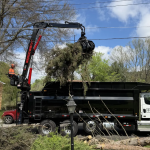
Fast response also means quicker restoration of your daily life. A fallen tree blocking a driveway can trap vehicles, preventing residents from getting to work or accessing emergency services. In Cranberry’s busy residential corridors, clearing access is a top priority. Professional crews use specialized equipment like loaders and chippers to turn a massive obstruction into a clean, safe space in a fraction of the time it would take an untrained individual.
Insurance Documentation and Claims Assistance
Dealing with insurance companies after a storm can be a secondary headache. Most homeowners’ insurance policies in Pennsylvania cover tree removal if the tree hits a covered structure. They may also cover the cost of clearing a tree that is blocking a driveway or a handicap-accessible ramp. However, they rarely cover trees that fall in the middle of a yard without hitting anything.
To simplify the claims process, work with a tree service that understands insurance requirements. This includes providing a detailed, itemized estimate and high-resolution photos of the damage. A certified arborist can provide a written statement explaining why the removal was an emergency, which is often the missing link that helps a claim get approved quickly. Documenting the diameter of the tree and the specific type of damage it caused is standard practice for professional emergency teams.
When a tree emergency strikes in Cranberry, you need a local team that reacts with the same urgency you feel. Tripoli Tree Care is your local authority for comprehensive storm assessments and emergency hazard mitigation. As ISA Certified Arborists and Tree Care Industry Association (TCIA) members, we provide the Cranberry area with a full range of services — from tree service in Cranberry and trimming to stump grinding, storm damage cleanup, debris removal, land clearing, and more.
Emergency Tree Removal in Cranberry
Storms don’t wait for business hours, and neither do we. When a tree comes down on your roof, blocks your driveway, or threatens a utility line, you need someone on-site fast. We’re available 24/7 — nights, weekends, and holidays included.
We show up with the right equipment and get straight to work. Whether it’s a tree against your house, a limb blocking your exit, or a fallen trunk that’s taken out your fence, we handle it safely and efficiently. As ISA Certified Arborists, we also inspect the surrounding trees for hidden storm damage that could cause the next problem before you even see it coming.
After the hazard is cleared, we take care of debris removal and cleanup, and we can help with the insurance paperwork too — providing the itemized estimates and written assessments most carriers require. If you’re dealing with a tree emergency in Cranberry, give us a call.
Frequently Asked Questions by Homeowners in Cranberry, Pennsylvania
1. Does insurance always cover emergency tree removal in Cranberry, Pennsylvania?
Insurance typically covers removal if the tree damages a covered structure like your home or a detached garage. It usually does not cover trees that fall in open lawn areas.
2. How fast can a crew get to Cranberry for a fallen tree?
Tripoli Tree Care prioritizes emergency calls, often arriving within hours of the initial contact to stabilize the site and assess the risk.
3. Do I need a permit to remove a tree that fell on my house in Cranberry, Pennsylvania?
In an immediate safety emergency, you can remove the hazard first. However, documenting the damage with photos is essential for later verification with Cranberry Township.
4. Can a leaning tree be saved, or must it be removed?
If the root ball has physically lifted (heaved), the tree is usually beyond saving and must be removed for safety. An arborist can evaluate if cabling is an option for less severe leans.
5. What equipment is used for emergency removals in Cranberry, Pennsylvania?
Depending on the location, we may use cranes, bucket trucks, and specialized loaders to lift sections of the tree off of structures without causing more damage.
6. Is stump grinding included in emergency services in Cranberry, Pennsylvania?
Usually, the emergency phase focuses on removing the hazard. Stump grinding is typically scheduled as a follow-up service once the site is stabilized.
7. Who is responsible if my neighbor’s tree falls on my house in Cranberry, Pennsylvania?
In Pennsylvania, if your neighbor’s tree falls on your house due to an Act of God (like a storm), you usually file the claim through your own insurance.
8. What should I do if a tree is touching power lines?
Do not go near the tree. Call your utility company immediately. Professional tree crews cannot work on a tree until the utility provider confirms the power is off.
Summary Checklist: Emergency Tree Removal
| Condition | Risk Level | Recommended Action |
|---|---|---|
| Tree Resting on Roof | Critical | Evacuate the area and call for emergency removal immediately. |
| Uprooted/Heaving Base | High | Cordon off the fall zone and schedule urgent professional removal. |
| Hanging Large Limbs | High | Avoid walking under the canopy; have limbs removed by a climber. |
| Blocked Driveway | Moderate | Schedule fast-response clearing to restore property access. |
| Minor Storm Debris | Low | Collect small branches for standard debris hauling or pickup. |
Final Advice
Emergency tree removal in Cranberry, Pennsylvania, requires a strategic balance of immediate action and careful documentation to protect both your physical property and your financial interests. The most important step for any homeowner is to recognize that an unstable tree is a dynamic hazard; it can shift or fall further with the slightest change in wind or soil moisture. You should never attempt to clear large fallen trees yourself, as the internal tension in the wood can cause spring-back or unexpected rolling that leads to severe injury. Instead, immediately secure the area to keep family and pets away from the fall zone and contact a certified arborist who offers 24/7 emergency services. By choosing a licensed and insured professional, you ensure that the removal is performed using the correct physics and equipment, which prevents secondary damage to your shingles or foundation. Once the immediate threat is mitigated, ensure you receive a full cleanup and a structural assessment of your remaining trees to prevent the next storm from causing a similar emergency. Corrective pruning and routine health checks are the best ways to ensure your landscape remains an asset rather than a liability.