
Key Takeaways
- The Spotted Lanternfly (SLF) is an invasive insect threatening trees, shrubs, and crops in Western Pennsylvania.
- Monitoring, early detection, and proper tree care are critical to preventing severe landscape damage.
- Homeowners should avoid moving firewood or infested plant material to reduce the spread.
- Tripoli Tree Care offers professional assessment and treatment to help protect your trees from SLF infestations.
Western Pennsylvania homeowners are facing an ongoing challenge this summer: the spread of the Spotted Lanternfly (Lycorma delicatula). Originally detected in the mid-Atlantic states, this invasive species has steadily expanded its range and poses a threat to fruit trees, hardwoods, ornamentals, and even vineyards.
SLF feeds on sap from tree trunks and stems, weakening trees and making them more susceptible to disease and stress. In heavily infested areas, trees may experience dieback, reduced growth, and, in some cases, mortality. For residential landscapes, this pest can damage everything from ornamental maples to prized fruit trees, creating aesthetic and financial concerns.
Understanding the Spotted Lanternfly’s habits, lifecycle, and the latest containment strategies is essential for protecting your property and local ecosystems.
Why Spotted Lanternflies Are a Concern
The Spotted Lanternfly poses risks to both natural and urban landscapes:
- Tree Health: SLF feeding weakens trees, causing oozing sap, leaf wilting, and reduced vigor.
- Property Damage: Honeydew secreted by SLF attracts mold and insects, creating sticky surfaces on decks, patios, and vehicles.
- Agricultural Threat: SLF targets grapes, fruit trees, and hardwoods, putting local crops at risk.
- Rapid Spread: Adults and egg masses can be inadvertently transported via vehicles, firewood, and outdoor furniture.
Their adaptability to multiple host plants makes them particularly difficult to control. Homeowners must remain vigilant throughout the growing season, from nymph emergence in late spring to adult activity in summer and fall.
Lifecycle and Identification
Understanding SLF biology helps with early detection:
- Egg Masses: Laid in fall on tree trunks, stones, and outdoor objects. Egg masses are grayish-brown and resemble mud.
- Nymphs: Hatch in late spring; small, black, and wingless, with distinctive white spots. They go through multiple instar stages before maturing.
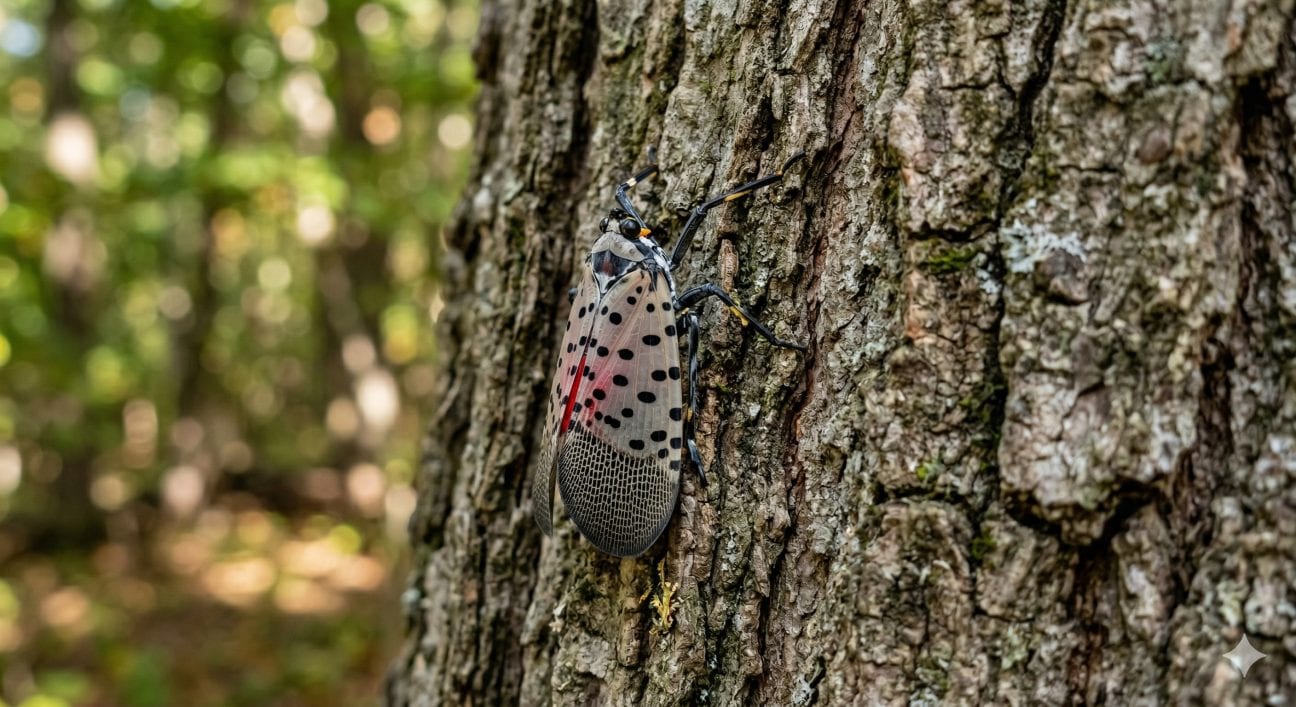
- Adults: Appearing in mid-summer, adults have gray forewings with black spots and bright red hind wings visible in flight.
By recognizing the insect at all life stages, homeowners can respond quickly before populations become established.
How Homeowners Can Protect Their Trees
- Regular Inspection
Check trees weekly for egg masses, nymphs, and adults. Pay close attention to Ailanthus (Tree of Heaven), maples, oaks, and fruit trees, which are preferred hosts. - Egg Mass Removal
Scrape egg masses onto a piece of paper and destroy them. This simple step can reduce populations significantly. - Tree Banding
Sticky bands around trunks can trap nymphs moving up the tree. Be sure to monitor bands daily to prevent harm to beneficial insects. - Proper Disposal
Never transport firewood, yard debris, or potted plants from infested areas. Moving these materials spreads SLF to new neighborhoods. - Professional Treatment
For severe infestations, certified arborists can provide safe and effective insecticidal treatments. Companies like Tripoli Tree Care offer expert guidance and services to protect trees while maintaining landscape health.
Additional Prevention Tips
- Plant Selection:
Avoid relying too heavily on one tree species across your property. Spotted Lanternfly (SLF) tends to target specific hosts like Tree of Heaven, maples, black walnut, and grapevines. Mixing in a wider range of tree and shrub species helps reduce the risk of large-scale damage and makes your landscape more resilient overall. - Mulching and Soil Care:
Tree health plays a big role in how well it can handle pest pressure. Apply 2–3 inches of mulch around the base (without piling it against the trunk), water deeply during dry periods, and maintain proper soil conditions. Healthy, well-rooted trees are better equipped to recover from feeding damage and stress caused by SLF. - Routine Inspection:
Make it a habit to check your trees regularly, especially during peak SLF seasons (spring through fall). Look for egg masses, sap weeping, black sooty mold, or increased insect activity on trunks and branches. Early detection makes control much more effective. - Education and Local Updates:
Stay informed about SLF activity in your area through updates from the Pennsylvania Department of Agriculture. Local advisories often include treatment timing, quarantine zones, and reporting guidelines that can help you act quickly and correctly. - Physical Control Methods:
Scrape and destroy egg masses during the off-season (late fall through early spring). You can also use tree banding to trap nymphs as they climb, but make sure bands are installed properly to avoid harming beneficial wildlife. - Community Collaboration:
SLF spreads quickly between properties, so individual efforts only go so far. Coordinating with neighbors to monitor, remove host trees, and apply treatments improves control across the entire neighborhood and reduces reinfestation risks. - Professional Support:
If you’re dealing with repeated infestations or high-value trees, consider bringing in a certified arborist. They can assess tree health, recommend targeted treatments, and apply solutions safely—especially for larger trees or severe cases.
Frequently Asked Questions
Can Spotted Lanternflies kill my trees?
They weaken trees and make them more vulnerable to stress and disease, but with proper care, many trees survive infestations.
How do I know if my property has SLF?
Look for egg masses on trunks, nymphs with white spots, and adults with gray wings and red hind wings. Honeydew and black sooty mold are also indicators.
Is it safe to treat trees myself?
Homeowners can use some products, but professional arborists are recommended for larger trees, multiple host species, or concentrated infestations.
When is the best time to act?
Early Spring and throughout summer for nymph and adult monitoring. Fall egg mass removal is critical to reducing next year’s population.
How can Tripoli Tree Care help with SLF management?
They provide assessment, pruning, and environmentally responsible treatments to help protect your trees and landscape efficiently.
Conclusion
The Spotted Lanternfly is an ongoing threat to Western Pennsylvania landscapes, but homeowners can take meaningful steps to protect their trees. Regular monitoring, egg mass removal, proper tree maintenance, and responsible pest treatments are key to reducing damage and preventing the spread.
Partnering with Tripoli Tree Care for tree service in Pittsburgh, PA means you get clear guidance and safe, effective care to keep your trees and property protected throughout the SLF season.
Reviewed by a Certified Arborist
This safety analysis has been reviewed by an ISA Certified Arborist to ensure all information regarding soil mechanics and tree failure meets the standards of the International Society of Arboriculture.