Most people call about a tree removal, not a tree inspection. Something looks wrong, a neighbor mentioned it, or a storm knocked down a limb, and the instinct is to get the whole thing taken out before it causes real damage. That instinct is understandable, but it skips a step that changes the outcome more often than you’d expect: an actual inspection to find out what’s going on before anyone commits to cutting the tree down.
We’ve walked up to plenty of “this tree has to come down” calls in Pittsburgh and found a tree that needed one cabling job, or a round of deadwood removal, or nothing more than monitoring through the next growing season. We’ve also walked up to “it’s probably fine” trees and found root rot that made removal the only responsible option. The point of an inspection isn’t to talk you into keeping a tree or talk you into removing one. It’s to find out which situation you’re actually in before spending money on the wrong fix.
Quick Answer
An arborist inspection before tree removal identifies whether a tree is structurally sound, diseased, or genuinely hazardous, using a visual assessment of the trunk, root flare, canopy, and surrounding site conditions. This matters because trees that look dangerous are sometimes stable, and trees that look fine sometimes have hidden decay or root failure. Skipping the inspection means deciding to remove, or not remove, based on guesswork instead of evidence.
Table of Contents
- What an Arborist Inspection Actually Involves
- What We’re Looking For
- Why Skipping This Step Costs People Money
- When Removal Really Is the Right Call
- When a Tree Can Be Saved Instead
- What We Commonly See in the Field
- How Pittsburgh’s Climate Affects This Decision
- What Homeowners Can Do Now
- Frequently Asked Questions
- Key Takeaways
What an Arborist Inspection Actually Involves
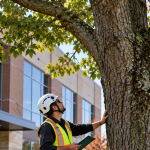
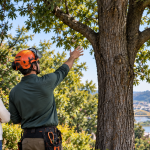
A proper inspection starts at the base of the tree and works up, not the other way around. That’s because the majority of stability problems begin at the root flare and lower trunk, and a canopy can look completely healthy while the structure holding it up is failing underneath.
The process generally includes a visual check of the root flare for heaving, girdling roots, or fungal growth like conks or mushrooms, which are often a sign of internal decay. It includes a check of the trunk for cracks, cavities, included bark where two stems meet at a narrow angle, and old wounds that haven’t closed properly. It includes a look at the canopy for deadwood, one-sided growth, and dieback patterns that point to root or vascular problems. And it includes a look at the site itself: recent grade changes, construction disturbance, drainage patterns, and how close the tree sits to a structure, driveway, or power line.
Arborists trained in tree risk assessment, often through the International Society of Arboriculture’s Tree Risk Assessment Qualification, follow a structured process rather than an informal opinion. That structure matters because it turns “this tree looks scary” into a documented set of specific findings that support a specific recommendation.
What We’re Looking For
Not every defect means a tree is coming down, and that’s worth saying plainly. Some findings point toward monitoring or targeted pruning. Others point toward removal. A few examples of what shifts the answer one way or the other:
A single dead branch in an otherwise healthy canopy usually means a pruning job, not a removal. A tree with extensive canopy dieback across multiple sides, paired with fungal growth at the base, usually means the root system is already failing and removal is the safer call. A lean that has existed for years without change is often just how the tree grew, especially common in trees that responded to past sun exposure changes. A lean that’s new, or one paired with soil heaving on the opposite side of the lean, is a different situation entirely and often signals the root plate is starting to lift.
Included bark at a branch union, where two stems grow tightly together instead of forming a strong attachment, is a structural weak point that can split during high wind or ice loading, and it’s a common finding on Pittsburgh silver maples and Bradford pears specifically.
Why Skipping This Step Costs People Money
There are two ways skipping the inspection costs homeowners money, and they pull in opposite directions.
The first is removing a tree that didn’t need to come down. A mature tree adds real value to a property, both in shade and in curb appeal, and replacing that canopy with a new planting means waiting years, sometimes decades, to get back to where you started. If a proper inspection would have identified a fixable issue like a cabling opportunity or a pruning correction, removal was an expensive overreaction.
The second is keeping a tree that should have come down. This is the more serious direction, because it’s a liability problem, not just a cost problem. A hazard tree that fails onto a house, a car, or a person is a different category of expense entirely, and homeowners insurance doesn’t always cover damage from a tree that had visible warning signs beforehand. An inspection puts a professional judgment on record, which matters both for safety and for how an insurance claim gets handled if something does happen later.
When Removal Really Is the Right Call
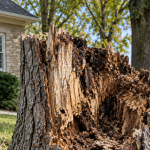
An inspection isn’t designed to save every tree. Some trees genuinely need to come down, and being honest about that is part of doing this work well. Removal is typically the right call when there’s extensive trunk decay confirmed by sounding or probing the wood, when more than half the root system has been compromised by construction, grade change, or disease, when a tree has failed structurally already and shows a fresh crack or split that hasn’t fully separated, or when a tree is a known high-risk species for the site, like a large silver maple with a documented split-trunk structure growing directly over a home.
In these cases, an inspection isn’t slowing anything down. It’s confirming the decision and often documenting exactly why, which is useful if a homeowners association, insurance company, or neighbor asks questions later.
When a Tree Can Be Saved Instead
The more common outcome, honestly, is somewhere in the middle. A tree with one structural weak point can often be supported with cabling rather than removed outright. A tree with a heavy, unbalanced canopy can be reduced through proper pruning rather than taken down entirely. A tree showing early stress signs from soil compaction or root disturbance can sometimes recover with mulching, aeration, and reduced foot traffic around the root zone, especially if the issue is caught before decline sets in.
This is where the inspection earns its cost. If our tree trimming and pruning team can resolve the actual problem, that’s a smaller job and a healthier tree. If removal really is necessary, our tree removal crew has the assessment already done and knows exactly what they’re dealing with before the first cut.
What We Commonly See in the Field
The single most common surprise in Pittsburgh inspections is root flare decay hidden by mulch or soil piled too high against the trunk, sometimes over years. Homeowners mulch generously, often right up against the bark, and that moisture against the trunk creates conditions for decay that isn’t visible from a distance. By the time it’s noticeable above ground, it’s often already significant below ground.
The second most common finding is storm-related. After a wind event, a tree can look fine from the street but have a fracture starting partway up the trunk or in a major limb union that isn’t visible without a closer look. We saw a sharp increase in these calls after the widespread wind damage that hit the Pittsburgh region in spring 2025, when straight-line winds estimated at 90 to 95 miles per hour tore through neighborhoods east of the city. Trees that survived that event outwardly sometimes had internal damage that only showed up months later.
How Pittsburgh’s Climate Affects This Decision
Western Pennsylvania’s freeze-thaw cycles put real stress on tree structure over time. Water that gets into a crack or wound, freezes, and expands does slow, repeated damage that’s easy to miss between inspections, especially over several winters. Add in the clay soil common across Allegheny County, which drains slowly and holds moisture against root systems longer than sandier soil would, and you get conditions that can mask early root decay until a tree is already in real decline.
This is part of why a one-time look isn’t always enough for a tree with known risk factors. A tree with a documented minor issue, like early-stage included bark or slight lean, often benefits from a follow-up check every year or two rather than a single verdict and no further monitoring.
What Homeowners Can Do Now
If you’re looking at a tree and trying to decide whether it needs to come down, a few signs are worth flagging before you call anyone: mushrooms or conks growing at the base of the trunk, a lean that’s new or getting worse, large cracks in the trunk or major limbs, dieback across more than a quarter of the canopy, and soil heaving on one side of the trunk paired with a lean on the same side.
None of these signs alone are an automatic removal verdict, and that’s the point. They’re reasons to get a professional look rather than guess in either direction. If a storm has already caused visible damage, that’s a different timeline, and our storm damage cleanup and 24/7 emergency tree service teams handle that separately from routine inspections.
For further reading on tree safety and risk assessment, you can reference professional resources such as the International Society of Arboriculture for professional tree risk assessment standards, the USDA Forest Service for national tree health and safety guidelines, and the University of Florida IFAS Extension for identifying hazardous tree signs.
Frequently Asked Questions
How much does an arborist inspection cost in Pittsburgh?
Costs vary based on the scope of the visit and whether it includes a written report, but a standalone inspection is typically far less expensive than a removal, and many companies, including ours, apply the inspection fee toward the cost of any recommended work.
Can a tree be saved after an arborist recommends removal?
Sometimes, but not always. If the recommendation is based on extensive root or trunk decay, a second opinion is reasonable, but the underlying physical condition of the tree won’t change based on who’s looking at it. If the concern is about canopy balance or a single structural defect, options like cabling or reduction pruning may still apply.
What’s the difference between a tree risk assessment and a general inspection?
A formal tree risk assessment, often following a structured method like the ISA’s Tree Risk Assessment Qualification process, evaluates the likelihood of failure, the size of the part likely to fail, and what it would hit if it did. A general inspection is less formal but covers similar ground: trunk, roots, canopy, and site conditions.
How often should a mature tree near my house be inspected?
For a healthy tree with no known issues, every two to three years is reasonable. For a tree with a documented minor concern, like a small crack, past storm damage, or early decay, an annual check is a better idea until the situation is clearly stable or resolved.
Does insurance require an arborist inspection before tree removal?
Most policies don’t require one, but having a documented inspection can matter if a tree later causes damage and a claim is filed. A written assessment showing the tree’s condition at a given point in time is useful evidence either way.
What are the warning signs that a tree might be dying?
Thinning canopy with more visible sky through the branches than in past years, bark that’s peeling or falling away in patches, fungal growth at the base or on the trunk, and branches that fail to leaf out in spring while the rest of the tree does are all signs worth having checked.
Is it cheaper to remove a tree myself instead of paying for an inspection first?
It can seem that way upfront, but removing a tree that didn’t need to come down means losing decades of canopy value and starting over with a new planting. And removing a hazardous tree without a proper assessment of its lean and structure raises real safety risk during the felling process itself. The inspection cost is small relative to either of those outcomes.
Do certified arborists ever disagree on whether a tree should be removed?
Occasionally, especially in borderline cases where the tree has some risk factors but isn’t in obvious decline. That’s a reasonable case for a second opinion. What shouldn’t vary between arborists is the underlying documented condition of the tree: the presence of decay, the size of a crack, or the degree of a lean are observable facts, even if the judgment call built on top of them leaves some room for professional discretion.
Key Takeaways
An arborist inspection exists to replace guesswork with an actual assessment of trunk, root, canopy, and site conditions before any decision gets made about removal. Skipping it risks two opposite mistakes: removing a healthy tree that could have been saved, or keeping a hazardous tree that should have come down. Most inspections land somewhere in the middle, identifying a fixable problem like a structural weak point or early decline rather than confirming an all-or-nothing verdict. Pittsburgh’s clay soil, freeze-thaw winters, and storm history all add stress that can hide developing problems until an inspection catches them. If you’re staring at a tree and genuinely unsure which direction it needs to go, that uncertainty is exactly what an inspection is for.
Need an Arborist Inspection Before Deciding?
Not every tree that looks unhealthy needs to be removed. A professional arborist inspection can identify hidden structural problems, confirm whether a tree can be saved, and help you avoid unnecessary removal costs. If removal is the safest option, you’ll receive clear recommendations based on the tree’s actual condition.
Whether you’re concerned about storm damage, decay, a leaning tree, or branches over your home, Tripoli Tree Care’s ISA Certified Arborists provide honest assessments and practical solutions throughout the Pittsburgh area.