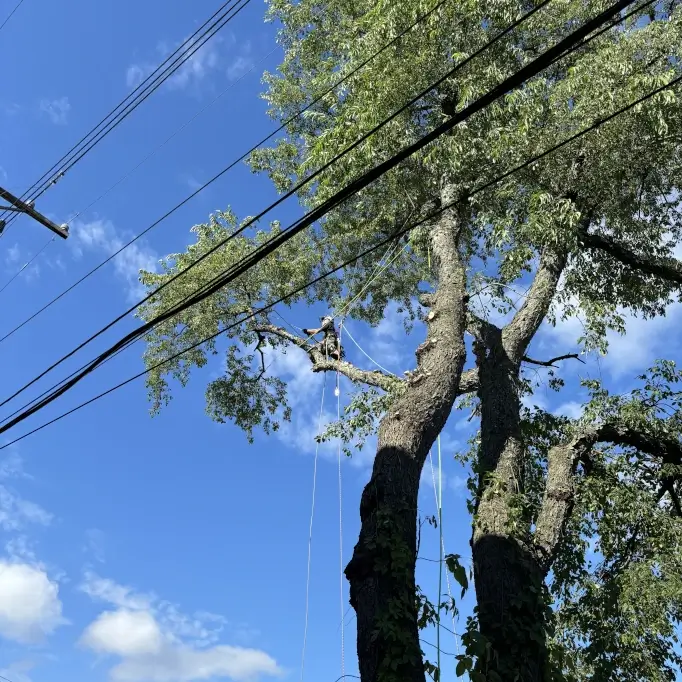
When a thunderstorm rolls through the East End or a heavy wet snow loads down the mature trees along your block, property owners in Squirrel Hill need a reliable partner to manage their landscape. Tripoli Tree Care provides expert tree removal, tree trimming and pruning, tree maintenance, stump grinding, 24/7 emergency tree service, storm damage cleanup, debris removal, commercial tree services, large tree removal, land clearing, tree planting, shrub planting, and top soil and grass seeding necessary to protect your home. Our deep roots in the Pittsburgh metro mean we understand the local landscape better than anyone, from the historic tree-lined streets along Beechwood Boulevard and Beacon Street to the residential blocks around Fair Oaks and the older homes near Forbes and Murray Avenues, plus the properties bordering Schenley Park, Frick Park, and the Chatham University campus, where high-elevation wind exposure, century-old canopy trees, and tight urban lot conditions put real stress on the mature oaks, maples, and beeches that make this neighborhood what it is.

Call us today at (412) 659-8267 for your free estimate

About Tree Care in Squirrel Hill, PA

Squirrel Hill is Pittsburgh’s largest neighborhood by both area and population, with around 26,500 residents spread across 3.89 square miles on some of the highest ground in the city. The section of Beacon Street near Beth Shalom sits at roughly 1,200 feet above sea level, which makes Squirrel Hill noticeably higher than the surrounding neighborhoods. That elevation matters more than most homeowners realize, both for the kind of wind exposure that trees here experience and for the way storms move across the East End.

The other defining feature of Squirrel Hill, beyond the elevation, is the tree canopy itself. The neighborhood was developed primarily in the early 20th century as a residential community for Pittsburgh’s growing professional class, and the trees planted alongside those homes are now in the 80 to 120 year old range. Tree-lined streets are not a coincidence here. They are part of what was deliberately built into the neighborhood from the beginning, and they are part of what people value about living here. The flip side is that those mature trees are now reaching the end of their structural prime for many common species, which means careful evaluation matters more than it ever has.

The tree population in Squirrel Hill reflects the planting choices of a century ago: red oak, white oak, pin oak, sugar maple, red maple, silver maple, Norway maple, tulip poplar, American beech, American linden, eastern hemlock, sycamore, ginkgo, and the scattered ash trees that remain after emerald ash borer pressure. Properties bordering Schenley Park and Frick Park benefit from the adjacent mature park canopy, but they also share its risks: park trees that fail can fall onto adjacent properties, and root systems extending out of the parks can interact with home foundations and infrastructure in ways that need careful management.

The challenges specific to Squirrel Hill come down to three things. First, the lots are tight. Even the larger properties in Fair Oaks and on Beechwood Boulevard are close to neighbors, structures, and power lines, which means almost every removal needs sectional dismantling or crane work. Second, the trees are old. A 100-year-old oak in front of a 1920s Colonial Revival is structurally a different animal than a 30-year-old oak in a newer suburb, and it needs to be treated accordingly. Third, the homes are valuable, both monetarily and historically, which means a tree service mistake here is more expensive than it would be almost anywhere else in the region.

Tree Removal in Squirrel Hill, PA

Most of the removals we do in Squirrel Hill fall into a few categories. Dead and dying ash trees taken out by emerald ash borer make up a large share right now, since most untreated ash in Allegheny County is either already dead or in active decline. Mature hardwoods showing significant structural decline (oaks with co-dominant leader failure, silver maples with hollow trunks, Norway maples with extensive root rot, tulip poplars losing major limbs in storms) account for another big share. Storm-damaged trees that cannot be saved fill in the rest, with these calls concentrated after summer thunderstorms and heavy winter snow events.

For the tight residential lots common throughout Squirrel Hill, we use sectional dismantling on essentially every removal. The climber takes the tree down in pieces and rigs each section so it lands where the crew controls it, not where gravity wants to put it. For the largest trees, removals over structures, or anything that is just too risky to climb conventionally, we bring in crane assistance through our large tree removal service. On a 30-foot-wide lot with a 75-foot oak between the house and the neighbor’s garage, the crane is often the only realistic way to remove the tree without doing more damage than the tree was worth.

For trees near power lines, which is most trees in Squirrel Hill given how the utility corridors run, we coordinate carefully with Duquesne Light on clearance and timing before any climbing happens.

Our tree removal service covers every category from small ornamentals to the largest specimen hardwoods, with full debris cleanup and hauling included on every job.

Tree Trimming and Pruning in Squirrel Hill, PA

Pruning in Squirrel Hill is where the work gets interesting. With century-old trees on tight lots near valuable homes, pruning decisions matter more here than in most places. Our tree trimming and pruning service follows ANSI A300 industry standards on every job, which means proper cut placement at the branch collar, no topping, and conservative removal levels that respect what a tree can recover from in a single season.

For Squirrel Hill specifically, the most common pruning work involves selective deadwood removal, crown thinning to reduce wind-loading from the higher elevation, end-weight reduction on long horizontal limbs over structures, and structural pruning to address the architectural issues that show up in century-old trees: co-dominant leaders, included bark, weak attachment points, and the kind of decay pockets that develop in old wood. Done correctly, this kind of preventive pruning extends the safe life of valuable specimen trees by decades.

A note on topping. We see a lot of topped trees in Squirrel Hill, often from earlier services that did not know better or from utility line crews working in tight quarters. Topping creates weak attachment points, invites decay into the cut stubs, and produces dense water-sprout regrowth that ends up more dangerous than the original limbs. Some topped trees can be brought back through restoration pruning over several seasons. Others are past saving, and we will tell you that honestly.

For mature oaks specifically, all major pruning should be scheduled for the dormant season (November through March) to reduce the risk of oak wilt transmission. Oak wilt is active in Western Pennsylvania, and we schedule all oak work in winter for that reason.

Emergency Tree Service and Storm Damage Cleanup in Squirrel Hill, PA

Pittsburgh weather does not keep office hours. Summer thunderstorms with damaging winds, ice events that load every branch with extra weight, heavy wet snows that snap unpruned limbs, and the kind of high-wind events that hit the higher elevation neighborhoods harder than the river valleys all produce trees down at the worst possible moment.

Our 24/7 emergency tree service covers Squirrel Hill and the surrounding East End neighborhoods around the clock. Priority on emergency calls is structural safety first: assess what is holding what, stabilize anything that could shift, then begin removal. We coordinate with Duquesne Light on anything involving power lines, which is common in Squirrel Hill given how the utility infrastructure runs through the neighborhood.

For follow-up work after a major event, our storm damage cleanup service handles the complete picture: clearing fallen trees and broken limbs, evaluating remaining trees for hidden damage, removing anything structurally compromised, and documenting everything you need for your insurance claim. We work directly with adjusters and help simplify the paperwork side of storm recovery.

Stump Grinding in Squirrel Hill, PA

After a tree comes down, the stump is the next problem. Left alone, it sprouts new growth, attracts carpenter ants and termites, makes lawn care a hassle, and eventually settles into a sinkhole. Our stump grinding service takes stumps 6 to 12 inches below grade with commercial equipment, deep enough to plant grass over, run a flower bed across, or just have a level spot in the yard again. Most residential stumps finish in under an hour, and we follow up with top soil and grass seeding on request to get the lawn back faster.

For trees that have been part of the streetscape for generations, the stump grinding is sometimes the harder emotional decision than the removal itself. We treat the work that way.

Tree and Shrub Planting in Squirrel Hill, PA

Replacing a removed tree with the right species in the right place is how Squirrel Hill keeps its tree-lined character for the next generation. Our tree planting service and shrub planting service cover species selection for Western Pennsylvania conditions, proper site preparation, correct planting technique, and early-stage care guidance.

For Squirrel Hill specifically, we recommend species that handle urban conditions well and that will look right alongside the existing canopy. Native oaks (white, red, swamp white) are still excellent choices where space allows. Sugar maple, American hornbeam, hackberry, ginkgo, serviceberry, Eastern redbud, and Kentucky coffeetree all perform reliably in the neighborhood’s soil and exposure conditions. For tighter street tree spots, smaller species like serviceberry and redbud, or upright varieties of hornbeam, often make better sense than another big shade tree that will outgrow the location.

We do not recommend planting another ash given EAB pressure, and we are cautious about Norway maple given its tendency to develop structural issues over time and its status as a non-native invasive in some Western PA contexts.

Commercial Tree Services in Squirrel Hill, PA

Squirrel Hill’s business district along Forbes and Murray Avenues, the Chatham University campus, the synagogues, schools, medical buildings, and apartment communities scattered throughout the neighborhood all have tree care needs that go beyond residential work. Our commercial tree services division handles property managers, HOAs, religious institutions, schools, retail centers, and small business properties with scheduled maintenance, hazard inspections, seasonal trimming, and storm preparedness. We work around your operating hours and minimize disruption to tenants, students, congregants, and customers.

Land Clearing and Debris Removal in Squirrel Hill, PA

For larger Squirrel Hill properties with wooded sections that need clearing, whether to expand a yard, prep a building site, or just push the woods back from the house, our land clearing service handles projects of all sizes. Tree removal, stump grinding, brush clearing, and debris hauling, with the site left ready for whatever comes next.

For ongoing brush, fallen wood, or general property cleanup that does not involve active tree work, our debris removal service handles it efficiently with minimal disruption to your property.

Recent Projects in Squirrel Hill, PA

  • Historic home off Beechwood Boulevard: Crane-assisted removal of a large declining oak directly between two homes with no good landing zone. Full sectional takedown with the crane, careful protection of both adjacent properties, complete cleanup, and stump grinding.
  • Property near Fair Oaks: Structural pruning on six mature trees across a corner lot, including two century-old oaks shading the front yard. Focused on deadwood removal, weight reduction over the house and detached garage, and clearance from the utility corridor. Scheduled in the dormant season.
  • Block near Murray Avenue: Removal of four dead ash trees taken out by emerald ash borer, plus stump grinding and replanting recommendations using native oaks and a Kentucky coffeetree to maintain the streetscape canopy.

Tree Facts About Squirrel Hill, PA

  • High elevation: Squirrel Hill sits on some of the highest ground in Pittsburgh, with Beacon Street near Beth Shalom reaching roughly 1,200 feet above sea level. This higher elevation produces more wind exposure than the surrounding river-valley neighborhoods.
  • Century-old canopy: Most of the largest trees in Squirrel Hill date to the neighborhood’s primary build-out in the early 20th century. They are now 80 to 120 years old, which is the structural decline window for several common species.
  • Tight urban lots: Squirrel Hill’s lot sizes are urban-residential, meaning most trees are close to structures, neighbors, fences, and power lines. Almost every removal here needs sectional dismantling or crane work.
  • Park-adjacent properties: Schenley Park and Frick Park border the neighborhood on different sides. Park-adjacent properties share canopy benefits with the parks but also share risks when park trees fail.
  • Emerald ash borer: EAB has moved through Allegheny County, and most untreated ash trees in Squirrel Hill are either already dead or in active decline. Standing dead ash brittles out fast and needs to come down before it falls on its own.
  • Oak wilt risk: Oak wilt is active in Western Pennsylvania, which is why oak pruning needs to happen in the dormant season (November through March) to avoid spreading the disease through pruning wounds.
  • City of Pittsburgh tree regulations: As a city neighborhood (not a borough), Squirrel Hill is subject to City of Pittsburgh ordinances. Street trees and trees in the right-of-way may require permits before removal.

Why Squirrel Hill Property Owners Choose Tripoli Tree Care

  • ISA Certified Arborists evaluating and caring for every tree.
  • TCIA member following strict industry safety and ethical standards.
  • BBB A+ rated with consistent 5-star customer reviews across the Pittsburgh metro.
  • Fully licensed and insured with general liability and workers’ compensation coverage. Certificate available before any job starts.
  • 24/7 emergency response across Allegheny County.
  • Locally owned and operated, based at 2525 Winchester Dr in Pittsburgh, a short drive across town to any address in Squirrel Hill.
  • Crane-assisted removal capability for the tight-lot work that defines almost every Squirrel Hill removal.
  • Century-old tree experience specifically, including the structural pruning, cabling, and bracing that valuable mature specimens often need.
  • Insurance claim support with direct adjuster communication and documentation handling.
  • Workmanship guarantee on every job, plus financing options available.
  • Free, no-obligation written estimates with clear pricing upfront.

Helpful Resources in Squirrel Hill, PA

Frequently Asked Questions

Q1. Do I need a permit to remove a tree in Squirrel Hill, PA? For trees entirely on private property, generally no, though there are situations where the City of Pittsburgh requires notification or permits. For street trees, trees in the city right-of-way (the strip between the sidewalk and the street), or trees in protected zones, you do need permission from the City of Pittsburgh Forestry Division. We help you check before any work starts and handle any permit paperwork if needed.

Q2. How much does tree removal cost in Squirrel Hill? Pricing depends on the tree’s size, species, lot access, proximity to structures and neighbors, and whether crane work is needed. Squirrel Hill’s tight urban lots and century-old trees almost always require crane assistance for safe removal, which costs more than a conventional removal in an open yard. We provide free written estimates with clear pricing upfront.

Q3. Can you handle removals between two houses with almost no room to work? Yes. Tight urban removals are routine for us. The crane lets us lift sections directly out of the canopy and place them precisely, even on lots where there is no good landing zone on the ground at all.

Q4. When can I have my oak trees pruned in Squirrel Hill? Oak pruning should be scheduled for the dormant season (November through March) to avoid oak wilt transmission. We schedule all oak work in this window for that reason. Other species can be pruned in late winter or early spring for major structural work, with dead or hazardous limbs addressed any time of year.

Q5. What about my ash trees? Most untreated ash trees in Allegheny County are already dead or dying from emerald ash borer. Standing dead ash gets brittle and dangerous fast, especially on tight Squirrel Hill lots where falling debris can hit multiple structures. Removal is usually the right call once decline is visible.

Q6. Can you preserve a valuable specimen tree that is showing structural problems? Often, yes. For century-old trees with co-dominant leaders, included bark, or weak attachment points, cabling and bracing can extend the safe life by decades. Selective structural pruning addresses other issues without sacrificing the tree. We evaluate each situation honestly and tell you whether preservation makes sense or whether removal is the right call.

Q7. Are you licensed and insured for work in Pittsburgh city limits? Yes. We carry full general liability and workers’ compensation insurance, with a current certificate of insurance available before any work begins. Always ask any tree service for this documentation before hiring.

Q8. How fast can you respond to an emergency? Same-day dispatch whenever possible for active hazards (trees on structures, blocking roads, or down on power lines). Call (412) 659-8267 directly any time, day or night, for emergencies.

Other Communities We Serve in the Pittsburgh Metro

Shadyside, Point Breeze, Regent Square, Greenfield, Hazelwood, Oakland, Lawrenceville, Highland Park, Bloomfield, Fox Chapel, Allison Park, Wexford, Cranberry, Sewickley, Sewickley Heights, Mt. Lebanon, Upper St. Clair, Bethel Park, Carnegie, Green Tree, Oakmont, Ross Township, Coraopolis, McKeesport, Braddock, Homestead, White Oak, and Peters Township in Washington County.

Schedule Tree Service in Squirrel Hill, PA

Whether it is a century-old oak that needs careful structural pruning, a hazardous ash that has to come down between two houses, a property bordering Schenley or Frick Park that needs evaluation, or an emergency after a storm, Tripoli Tree Care has the equipment, the credentials, and the local roots to handle it. Free estimates, transparent pricing, and total cleanup on every job.